Home » Jazz Musicians » The Beatles
The Beatles
Nickname: The Fab Four
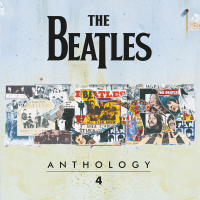
The Beatles are the greatest popular group of all-time. Arguably the most successful entertainers of the 20th century, they contributed to music, film, literature, art, and fashion, made a continuous impact on popular culture and the lifestyle of several generations. Their songs and images carrying powerful ideas of love, peace, help, and imagination evoked creativity and liberation that outperformed the rusty Soviet propaganda and contributed to breaking walls in the minds of millions, thus making impact on human history.
In July of 1957, in Liverpool, Paul McCartney met John Lennon and joined his group, The Quarrymen. George Harrison joined them in February of 1958. In 1959 they played regular gigs at a club called The Casbah. They were joined by vocalist Stuart Sutcliffe, and by drummer Peter Best, whose mother owned The Casbah club. Early incarnations of the band included The Quarrymen, Johnny & the Moon Dogs, and The Silver Beetles. John Lennon dreamed up the band's final name, The Beatles, a mix of beat with beetle. In 1960 The Beatles toured in Hamburg, Germany. There they were hired by singer Tony Sheridan as a backing band for his recordings for the German Polydor label. During the year of 1961 they played regular gigs at the Cavern club and were looking for a new manager. By the mutual decision of the Beatles' members, their first manager, named Allan Williams, was replaced.
Brian Epstein was invited to be the manager of the Beatles in November 1961. His diplomatic way of dealing with the Beatles and with their previous manager resulted in a December 10, 1961, meeting, where it was decided that Epstein would manage the band. A 5-year management contract was signed by four members at then-drummer Pete Best's home on January 24, 1962. Epstein did not put his signature on it, giving the musicians the freedom of choice. At that time McCartney and Harrison were under 21, so the paper wasn't technically legal. None of them realized this and it did not matter to them. What mattered was their genuine trust in Epstein. He changed their early image for the good. Brian Epstein made them wear suits and ties, classic shoes, and newer haircuts. They were advised to update their manners on stage and quit eating and drinking in public. Brian Epstein worked hard on both the Beatles' image and public relations. He improved their image enough to make them accepted by the conservative media of their time. Most if not all of their communication off-stage was managed by Brian Epstein.
Read moreTags
The Beatles—Future Perfect, Part 14
by Blue Note Portal
Chapters 1 | 2 | 3 | 4 | 5 | 6 | 7 | 8 | 9 | 10 | 11 | 12 | 13 | 14Year 1969--Captured Magic Xap and Julian were relieved by the arrival of Ray, who had used his connections to ensure that local deputies kept a close eye on the rental homes during their routine rounds. Things finally felt normal again, and the days began to whiz by; the creativity was off ...
Continue ReadingThe Beatles—Future Perfect, Part 13

by Blue Note Portal
Chapters 1 | 2 | 3 | 4 | 5 | 6 | 7 | 8 | 9 | 10 | 11 | 12 | 13 | 14 Year 1969--Two Riders Ray had been driving cabs since he came back from Korea, and in that time he'd developed a sense that never wasted words on him. He didn't call it a gift. He called it paying attention, which was free and most people didn't bother with it.
Continue ReadingThe Beatles—Future Perfect, Part 11
by Blue Note Portal
Chapters 1 | 2 | 3 | 4 | 5 | 6 | 7 | 8 | 9 | 10 | 11 | 12 | 13 | 14Year 1969--The Morning After Morning over Lake Tahoe arrived as if nothing had happened. The lake was still that impossible cobalt blue, the pines still motionless in the cold, high air, the far Sierra ridgelines still cut sharp against a pale gold sky. But inside House B, the mood had altered ...
Continue ReadingThe Beatles—Future Perfect, Part 8

by Blue Note Portal
Chapters 1 | 2 | 3 | 4 | 5 | 6 | 7 | 8 | 9 | 10 | 11 | 12 | 13 | 14 Lifting the Veil The second night at the Teatro Municipal Baltazar Dias began the way the first had ended--with the sense that the room itself was listening. Three hundred people filled the horseshoe of red velvet boxes, close enough that George could see individual faces catching the light ...
Continue ReadingThe Beatles—Future Perfect, Part 7
by Blue Note Portal
Chapters 1 | 2 | 3 | 4 | 5 | 6 | 7 | 8 | 9 | 10 | 11 | 12 | 13 | 14 Intimate Immersion By the spring of 1969, the Apollo had ceased to be merely a theater in Harlem. It had become a point of origin. The film--Apollo: Future Perfect--opened to excited audiences around the globe. George Lucas's cameras had caught magic discovering itself in real time--the raw, triumphant ...
Continue ReadingThe Beatles—Future Perfect, Part 4
by Blue Note Portal
Chapters 1 | 2 | 3 | 4 | 5 | 6 | 7 | 8 | 9 | 10 | 11 | 12 | 13 | 14Tuff Gong London In the weeks leading up to London, Xap had executed his strategy with pure managerial brilliance. From their new studio in Kingston, he had shipped two separate white-label test pressings directly to the pirate radio ship MV Caroline, idling in the North Sea.Single A was a ...
Continue ReadingThe Beatles—Future Perfect, Part 3

by Blue Note Portal
Chapters 1 | 2 | 3 | 4 | 5 | 6 | 7 | 8 | 9 | 10 | 11 | 12 | 13 | 14 The Beat Goes On--Year 2092 The intense glare of the live broadcast had faded hours ago, leaving the control room bathed in the amber glow of background standby. Outside the high-altitude windows of 2092, solar arrays silently tracked the Sun, keeping the CCE's baseline status idling. A week had ...
Continue ReadingThe Beatles: 'Revolver' Reissue

Source:
JazzWax by Marc Myers
Revolver was recorded between April and June in 1966 and released that August 5th. I was 9 when Revolver came out but the album never wound up in my hands. I'm not sure why. The omission might have had to do with my gift-giving extended family's disapproval of an album named for a gun. Or maybe it was because I was in day camp that July. Or perhaps it was the confusion created by the minuscule gap between Yesterday and ...
read more
Sweden Meets the Beatles, 1963

Source:
JazzWax by Marc Myers
On October 13, 1963, Beatlemania—the youthful hysteria over appearances by the impossibly charismatic Fab Four—began in London after their afternoon rehearsal at the London Palladium. Suburban teens rushed the Fab Four as they headed to their limo and newspapers picked up on the mania the next day. Ten days later, on October 23, the Beatles flew to Stockholm for their first real tour outside the U.K. On October 30, they went on Swedish television, following a series of local pop ...
read more
The Beatles: Let It Be
Source:
JazzWax by Marc Myers
In May 1970, the Beatles released Let It Be a month after they disbanded. I remember hearing it for the first time at age 13 on the driveway of my next-door neighbor in the suburbs. The neighbor was on his bike, I was on my green Schwinn Sting-Ray and two other friends were on theirs. His older sister was in her room with her boyfriend and they were blasting Get Back. The four of us listened and exchanged glances until one ...
read more
50 Year After Abbey Road: Two Worlds Of Music Listening

Source:
HypeBot
With the Beatle's Abbey Road near the top of the charts 50 years after release, MIDiA analyst Mark Mulligan explores how older, physical-focused music fans remain the quickest route to high-value, large-scale revenue, as well as, much and how little has changed in the music industry. By Mark Mulligan of MIDiA and the Music Industry blog Half a century after it first after it first topped the charts, the Beatles’ Abbey Road is back at the summit of the UK charts. With the ...
read more
The Beatles: Abbey Road

Source:
JazzWax by Marc Myers
Abbey Road was the last Beatles album on which all four members recorded together. By the time they gathered to work on their 11th studio album at the Abbey Road Studios between February and August 1969, they had done it all, seen it all and owned virtually everything they ever wanted. In fact, they had become so famous they were detached from the culture they helped start back in '64. Giving up touring in 1966 to become studio cobblers, the ...
read more
Doc: The Beatles Decade

Source:
JazzWax by Marc Myers
For American teens in the 1960s, the Beatles represented the dawn of unrestrained excitement and parental rejection, a time when screaming, long hair, loud music, risque fashion, snarky humor and drugs mocked authority and convention. But through a British lens, the Fab Four were something more—an escape from glum parents, a bleak economy, a class-conscious society and a country still bound by stuffy tradition and set ways. Yesterday I found a fascinating multi-part documentary on the Beatles and the 1960s ...
read more
The Beatles: Sgt. Pepper at 50

Source:
JazzWax by Marc Myers
Fifty years ago today, Capitol Records released the Beatles' Sgt. Pepper's Lonely Hearts Club Bandin the U.S. Two months later, my Aunt Mary gave me the album for my birthday. Astonishingly, nothing from the album was released as a single for AM radio. At 11, I was a big Beatles fan, but I couldn't figure out what I was listening to or looking at while holding the cover. First, the Fab Four had facial hair and had become adults. I ...
read more
Apple Music: Inside The Music Industry’s First Artist-Backed Startup
Source:
HypeBot
This piece takes an in-depth look at the creation and history behind The Beatles' Apple Music, a company which was in many ways the industry's first artist backed startup. Guest post by Barry Miles, excerpted from The Zapple Diaries: The Rise and Fall of the Last Beatles Label The Beatles’ Apple Music was created in 1967 to bring the band’s enterprises together for tax purposes, so that instead of paying nineteen and sixpence in the pound the Beatles paid only ...
read more
American 'Rubber Soul' Rules

Source:
JazzWax by Marc Myers
The Beatles' Rubber Soul turns 50 this Sunday—the American version, that is. The British version of the album came out out three days earlier in 1965. As I write in my Wall Street Journal essay (go here), the two versions were a bit different in tracks and tone. For one, the U.K version held 14 songs while the American album featured 12. More important, the American LP dropped two songs from the British version and replaced two others for what ...
read more
The Beatles at Shea: 1965
Source:
JazzWax by Marc Myers
Fifty years ago on Aug. 15, 1965, the Beatles performed at New York's Shea Stadium. The Mets were in Houston playing the Astros that weekend, and the Fab Four appeared before a full house—55,600 fans, mostly screaming teenage girls. In today's Wall Street Journal (go here), I write about the concert—not about how the music was drowned out by the hysteria but how the event kick-started the sexual revolution and the rock concert business. When the Beatles took the stage ...
read more

Michael Jefry Stevens
piano

Brad Mehldau
piano
Pat Metheny
guitar
Paul Peress
drums
Marco Pacassoni
vibraphone
Wolfgang Seligo
piano
Daniel Reyes Llinás
guitar
Julius Rodriguez
piano
Estrella Acosta
vocals
Gretchen Elise
composer / conductor
Roz Harding
saxophone, alto
Christopher Dominique
piano
Danil Zverkhanovsky
guitar, electric
Meena Batish
vocals
Shambhu
guitar, acoustic
Roz
saxophone, alto
Peter Hostage
piano
Omar Kamal
vocals
Illya Gomola
keyboards
LP And The Vinyl
vocalsRubber Soul Quartet
band / ensemble / orchestra
Jason Luckett
guitar
Noam Shapira
saxophone
MoonArra World Fusion
band / ensemble / orchestra
E.G. Phillips
author
Pat Metheny Group
band / ensemble / orchestra
Jessie Street Band
vocals
Elisha Henis Miklosh
synthesizer
Adam Rose
guitar
Marla Lewis
vocals
Gary Van Miert
guitar and vocals
Mark Prest
bass, electric
Darrin James
guitar
Dan Webb
keyboardsPhotos
Music


Videos
Similar
The Rolling Stones
band / ensemble / orchestra
Led Zeppelin
band / ensemble / orchestra
Elvis Costello
vocals
The Beatles
Instrument: Band / ensemble / orchestra