Home » Jazz Articles » Mr. P.C.'s Guide to Jazz Etiquette and Bandstand Decorum » May 2015
May 2015
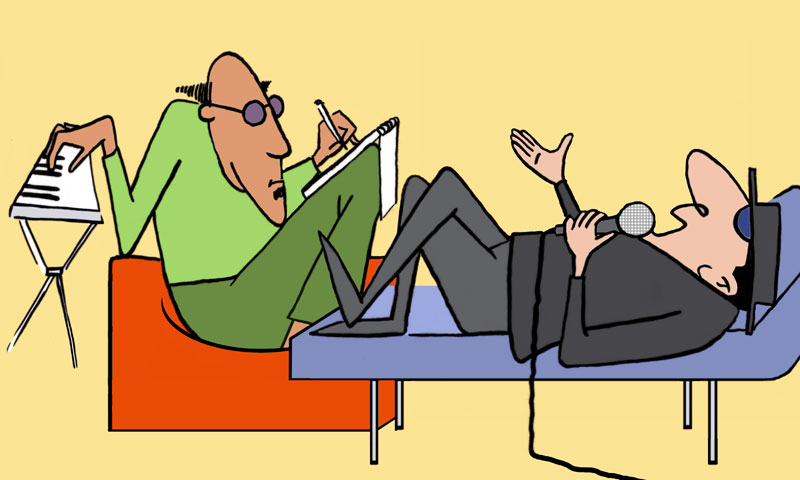
I bought a trombone they said had seven positions, but I can find only one long one. Was I ripped off?
—Jazzprof
You weren't exactly ripped off, but perhaps misled. There are indeed seven positions, but they are positions between you and the trombone, not built into the trombone itself.
This is intricately described in The Joy of Sax, and the positions are pretty universal regardless of instrument. So one position has you on top of the trombone, another has you beneath it, another puts you behind it, one puts your fist in its bell, one has you in the inexplicably popular mouth-to-mouthpiece stance, and so on.
You may find that you can come up with your own variations by manipulating the "slide," which is a moving part. But there's a danger to it: To some extent the trombone can also be a musical instrument; it can play and sustain a note except when the slide is being moved. From a musical perspective, integrating the slide into the seven "positions" is to be be avoided at all costs, no matter how much it might spice up your love life.
Dear Mr. P.C.:
Why is it that as an artist ages, when he plays fewer notes they say he's matured? Isn't he just worn out?
—Tank Is Really Empty, Dammit
Exactly! That's why there's a direct correlation between remaining life expectancy and notes per solo. Note count can even be used diagnostically: When a patient reports a dramatic decrease, his doctor knows it's time to order a battery of tests. In the final months, weeks or days, note count should be regularly monitored along with other vital indicators like pulse, blood pressure and blood count. With the right medication, note count can temporarily go back up, but of course the long-term prognosis is for no notes whatsoever.
Saying an artist has "matured" is really just a polite way of explaining his fatigue; typically it's a gesture of respect to a determined elderly player who has already outlasted all expectations.
Dear Mr. P.C.:
Why do musicians always complain about gigs? Then when they don't have gigs, they complain about that too. Is there anything that makes them happy?
—Gigs Rarely Induce Positive Enjoyment
I know you expect me to say "alcohol" or "drugs," but in fact those are not the only things that make musicians happy. Some musicians like following sports. Some like watching television. Most of them like sex. And, although the percentage decreases sharply with age, a few even like listening to music.
Your question is totally unfair, GRIPE, because you try to make generalizations about their whole lives when they really have only one problem: being musicians. Some are actually very happy, especially the ones who have found another way to make a living.
Have a question for Mr. P.C.? Ask him
 FOLLOW Mr. P.C.
and get notified whenever a new article published.
FOLLOW Mr. P.C.
and get notified whenever a new article published.
Inspired by the cutting edge advice of Abigail Van Buren, the storied bass playing of Paul Chambers, and the need for a Politically Correct doctrine for navigating the minefields of jazz etiquette, I humbly offer my services.
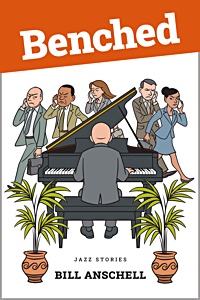
Get 'Benched!'
Benched, Bill Anschell's debut book of short stories / jazz humor. The stories are interspersed with the very best of Mr. P.C., hand-picked from the 400+ questions answered over the column's 16-year history. Benched is available on Amazon (paperback and Kindle) and most online booksellers.
Tags
PREVIOUS / NEXT


Become a Sustaining Member

Since 1995, All About Jazz has championed jazz as an art form and supported the musicians who create it. Over three decades, it has grown into one of the world's leading jazz resources, serving hundreds of thousands of readers, musicians, presenters and industry professionals each month.
Help Build the Future of All About Jazz
Your support helps us continue building All About Jazz for the next generation—expanding our editorial coverage, preserving jazz history, developing new community features and creating better ways to discover the music and the people behind it.
Become a sustaining member for as little as $20 per year and you'll immediately enjoy an ad-free experience along with access to subscriber features and future articles for a full year.
Together, we're not simply sustaining All About Jazz—we're building its future. Thank you for being part of the journey.