Home » Jazz Articles » Album Review » Majid Bekkas: Mabrouk
Majid Bekkas: Mabrouk
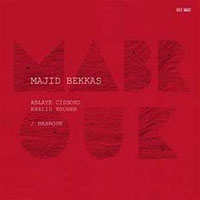
On Mabrouk, Bekkas is joined by Ablaye Cissoko, who plays the kora, the beautiful West African stringed instrument with a crystalline sound, here tuned specially to play along in Moroccan musical settings. Percussionist Khalid Kouhen plays plenty of Moroccan drums, but also Indian tabla. In short, it's a passionate and smart mélange of elements in which Bekkas draws upon a vast musical geography extending far beyond his Moroccan origins. There are healthy doses of the virile vocal style and bracing, driving beats familiar to devotées of Moroccan musical styles, but several quiet, reflective moments as well, like the opening moments of "Masmoudi." The mournful acoustic guitar on "Le Monde à l'envers" even sounds a little like The The Rolling Stones' "Lady Jane."
Despite the hefty jazz side of Bekkas' curriculum, and this record's appearance on the French Bee Jazz label, no one is going to mistake these performances for Stan Getz or Muggsy Spanier. And though it doesn't really matter whether the record is jazz or not, it's illuminating to consider the features Bekkas' trio share with jazz performers.
Like many a jazz date, the performances on Mabrouk are structured around the statement of a theme followed by improvisation over an insistent and ingratiating beat; Bekkas' guembri plays the role of the bass. As often as not, it's Cissoko's florid kora that takes the most striking solos (as on "Bala Moussa"). Within this structure, the players express an easy empathy and interaction—like many a great small jazz group.
Moreover, Bekkas' open-minded and open-hearted melding of Moroccan, West African, Indian and other musical elements highlights the degree to which Moroccan music itself is already a syncretism of various distinct strands: the give-and-take among indigenous Berber song, courtly Arabian music, and the Gnawa music, sub- Saharan in origin, mastered by Bekkas. Jazz, too, arose from musical cohabitation—of European and African practices in New Orleans' Storyville district in the nineteenth century.
Mabrouk can be set alongside Club d'Elf's Electric Moroccoland (Face Pelt, 2011) and Randy Weston's Blue Moses (CTI, 1972), records that cast in stark relief the salutary components shared by jazz and Moroccan (especially Gnawa) music. Their parallel histories of musical synthesis make these varied fusions fruitful and rewarding.
 FOLLOW Jeff Dayton-Johnson
and get notified whenever Jeff has a new article published.
FOLLOW Jeff Dayton-Johnson
and get notified whenever Jeff has a new article published.
Jeff Dayton-Johnson is a rapidly-aging economist and return migrant to California
Track Listing
Banya; Fangara; Mabrouk; Salya; Masmoudi; Bala Moussa; Le Monde à l'envers; Hommage aux ancêtres.
Personnel

Majid Bekkas
luteMajid Bekkas: guembri, oud, guitar, lead vocals; Ablaye Cissoko: kora, backing vocals; Khalid Kouhen: percussion, backing vocals.
Album information
Title: Mabrouk | Year Released: 2012 | Record Label: Bee Jazz
About Majid Bekkas
Tags
PREVIOUS / NEXT

Become a Sustaining Member

Since 1995, All About Jazz has championed jazz as an art form and supported the musicians who create it. Over three decades, it has grown into one of the world's leading jazz resources, serving hundreds of thousands of readers, musicians, presenters and industry professionals each month.
Help Build the Future of All About Jazz
Your support helps us continue building All About Jazz for the next generation—expanding our editorial coverage, preserving jazz history, developing new community features and creating better ways to discover the music and the people behind it.
Become a sustaining member for as little as $20 per year and you'll immediately enjoy an ad-free experience along with access to subscriber features and future articles for a full year.
Together, we're not simply sustaining All About Jazz—we're building its future. Thank you for being part of the journey.