Home » Jazz Articles » My Blue Note Obsession » Johnny Griffin: Introducing Johnny Griffin – Blue Note 1533
Johnny Griffin: Introducing Johnny Griffin – Blue Note 1533
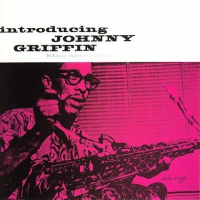 In jazz and rock—heck, even in classical music—there is a sacred throne for those who play fast. Dizzy Gillespie and Oscar Peterson occupy such thrones. So do Jimmy Page and Eddie Van Halen. Fast is fun.
 Johnny Griffin played fast—very fast.
The evidence is here in Griffin's very first album, Introducing Johnny Griffin. It's a 1956 date with a quartet that includes Wynton Kelly on piano, Curly Russell on bass and Max Roach on drums. For 70 years, Griffin was a jazz giant, and this album, his first as a leader, is among his very best.
And fastest.
Griffin could play the hell out of a ballad. His sound is soulful and full-bodied. Two numbers in particular—"These Foolish Things" and "Lover Man" (yes, the same "Lover Man" that Billie Holiday immortalized a few years earlier)—show off Griffin's beautiful tone.
But it's speed you're looking for, and you've come to the right place. The very first number, a Griffin original called "Mil Dew," is blazingly fast. So is "Cherokee," the album's closer, but you expect that on "Cherokee." You don't expect it on Jerome Kern's "The Way You Look Tonight," which may be the fastest take of that song ever recorded. And you don't expect a blazing solo on Cole Porter's "It's Alright With Me," but Griffin delivers.
He is fast, absolutely, but also crystal clear, and clever. He is a bebopper (or hard bopper?) of the first order.
Johnny Griffin would go on to create many great albums. Arguably his best—"A Blowin' Session" with fellow tenors John Coltrane and Hank Mobley—came just one year later. But it's clear from the very beginning, from this album, that Johnny Griffin was destined for a legendary career. It starts here.
Rating: 5 stars (out of 5)
Availability: Easy to get
Cost: $4 used
 FOLLOW Marc Davis
and get notified whenever Marc has a new article published.
FOLLOW Marc Davis
and get notified whenever Marc has a new article published.
Lover of bebop, hard bop and just about anything on a keyboard.
About Johnny Griffin

Tags
PREVIOUS / NEXT


Become a Sustaining Member

Since 1995, All About Jazz has championed jazz as an art form and supported the musicians who create it. Over three decades, it has grown into one of the world's leading jazz resources, serving hundreds of thousands of readers, musicians, presenters and industry professionals each month.
Help Build the Future of All About Jazz
Your support helps us continue building All About Jazz for the next generation—expanding our editorial coverage, preserving jazz history, developing new community features and creating better ways to discover the music and the people behind it.
Become a sustaining member for as little as $20 per year and you'll immediately enjoy an ad-free experience along with access to subscriber features and future articles for a full year.
Together, we're not simply sustaining All About Jazz—we're building its future. Thank you for being part of the journey.