Home » Jazz Articles » The Blue Note Portal » Future Perfect—2. Dust My Broom
Future Perfect—2. Dust My Broom

Courtesy AI
Year 1969
Elvis was watching the Beatles' Apollo film with Future Perfect for the third night in a row. It was an after hours private showing at a local theater for the King and his court jesters, more of a necessity than a perk—the bubble that is fame. His entourage's cheap wisecracks drew a harsh rebuke from Elvis: "Get out, everybody but Joe."Joe looked tired; he'd seen Elvis in this frustration induced mood before—the restless, predatory silence that preceded a major shift.
"It's not just the songs, Joe," Elvis said, his voice barely a rasp. He didn't look away from the screen. "It's not the production. It's not the suits. It's that... connection. You see the way those kids look at each other? Like the music is a live thing they're pulling out of the air. It's like they aren't even playing for the audience; their playin' comes from a deeper place."
"They're a gimmick, E," Joe said, doing his best to sound convincing. "It's a film, hype. They're just exploiting the myth."
Elvis shook his head, finally turning his gaze to his friend. His eyes weren't dull or sedated; they were sharp, searching, and deeply unsettled.
"That's where you're wrong. I've spent the last six years making movies where I kiss the girl and sing to a dog. I've been playing the part of Elvis Presley for so long I'm starting to forget who the hell I am and what matters. But those kids... they play like they're back on a porch in Tennessee on instruments they just got for Christmas, like it's the only thing in the world that matters. They're tapping into something. Listening to them is like reading those Kahlil Gibran books I used to give to everyone. This touches my soul."
He gestured toward the screen. "The Beatles—they stop being 'The Beatles' and start being musicians again—look at them, they're having fun, they've taken it to a higher level. Backed by kids whose playing... hell, I've got great guys, but this... " He trailed off, letting the thought hang. "Each time I've watched this, I've concentrated on a different musician. The girls, yeah, you can't miss those chops. But watch that Zack on bass, flute, dobro, fiddle—unfreakin' real, Joe. Every single one of them."
Elvis stood up, looking directly into Joe's eyes. "I need them, I need to find them."
"Find them? E, they're one of the hottest things in the country right now. You can't just call up Future Perfect."
Elvis gave Joe a sharp look that made him avert his eyes, letting out a laugh of sheer disbelief. "I can get the dang president on the phone if I want to. You don't think I can talk to these kids?" He stiffened his posture, refocusing on the screen as he flicked a wrist toward the door for Joe to leave.
He smiled to himself as Maya and Chloe were back-to-back, trading solos into the flickering light.
Ten Days Later—Lake Tahoe, West Shore Estate
The Cadillac Fleetwood didn't pull up so much as arrive, its engine a low, velvet growl against the silence of the pines. When the door opened, the man who emerged wasn't the rhinestone-studded icon of the Vegas strip; he was wearing a slim black turtleneck and tailored trousers, his eyes shielded by sunglasses he peeled off the moment his boots hit the gravel.Year 2092 Xample Global
It almost hadn't happened. When George Lucas first reached out on behalf of Elvis, Xap and Maya had scoffed at the idea, and imagined hilarious scenes of tacky costumes and zombie fans. Julian, ever the music geek, had remained silent. He waited until they returned to 2092. In the executive lounge of Xample Global, he simply said, "I want you to see something." Julian activated a holograph of Elvis singing "Steamroller Blues" in 1973. Julian, "This is four years in the future from our CCE timeline. Look past the silly outfit, this is Elvis doing a song by James Taylor, the Apple Records guy we saw in the studio." Zack and Kyle both make a sour face, "The groove is all wrong, and he's not feelin' it." Julian, nods just wait. Then comes a guitar solo, Maya rolls her eye, Julian signals patience. Then Elvis kicks in and starts belting, suddenly Future Perfect are listening, and looking at each other. Julian, "Now check out this Gospel performance... "Year 1969
As Elvis Presley stepped onto the stone porch with a feline, unstudied grace, he didn't carry the weight of an entourage; he carried only a quiet, palpable tension. Julian gave Xap a knowing look, Xap's expression made words unnecessary.When the door opened, Chloe felt the entire room shift. There was no fanfare—just a sudden, heavy increase in gravity. Maya and Chloe were sitting near the hearth, the smell of cedar smoke lingering in the air. For a heartbeat, the room went still, the air thick with a warmth that felt less like celebrity and more like raw, kinetic energy.
"Ma'am," Elvis said, bowing his head respectfully to Maya, then Chloe. "Gentlemen," he added with a slight wink to Xap and Julian. "I've heard rumors of otherworldly sound coming out of this house."
His voice was a soft, Mississippi drawl, entirely devoid of stage posture. It was the voice of a man who had been lonely for a very long time.
"Welcome to the mountain, Elvis," Xap said, offering a warm hand. "Come sit by the fire. We've got coffee, and we've got time."
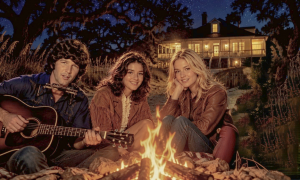
They sat, and for the first half hour, no one played a note. They talked—not of charts, contracts, or box office numbers, but of old gospel 78s, muddy Mississippi blues, and how the crisp mountain air in Tahoe felt like the high country of East Tennessee. It was only when the fire had burned down to glowing embers that Elvis leaned back, his gaze fixed on the heavy ceiling beams.
"I watched the Apollo film," Elvis said, his voice dropping into that deep, mahogany register. "I saw what you did for the Beatles. You pulled them out of the cage and put 'em back on the stage." He ran a hand over his face, looking exhausted. "Colonel Parker has me boxed in. Race-car movies, speed-boat capers, singing songs written by people who wouldn't know a blues lick from a cow pie. My fans stick with me, but I'm out of touch with what's happening. And I want to work with you."
"You aren't out of touch, Elvis, but your material is," Maya said, her voice quiet and unshakable. "The audience you're after is looking for real roots, and you've got more roots than any of the English groups cashing in on the blues right now. They grew up on your music; they look up to you. But lately, you've been playing an echo. We're going to help you rediscover the source."
Elvis nodded, recalling he'd said the same thing to Joe.
"The way you sing Gospel, there's a killer blues singer just waiting to cut loose. With your voice and our band—with the Hammond B3 organ and driving horns like we used at the Apollo—we're going to take this to the next level. Half the blues heroes we adore were born in Mississippi and moved to Memphis to make it. Elvis, that's your story! You aren't out of touch—you just need to remember where you came from. Blues is the hottest ticket on the planet right now, and you were made for this moment." She offered him a warm smile and a quick wink. "Fasten your seatbelt, we're preparing for takeoff."
Elvis leaned forward, a profound sense of relief washing over his face. Yet, a moment later, the shadow of his reality returned. He looked over at Xap.
"I'm like Gulliver, Xap. I'm tied down by a thousand contracts and commitments. The Colonel won't go for this. He's got me locked into film slates, Vegas bookings, a come back special in Hawaii... " He sighed, looking at his hands.
Xap leaned in slightly, his tone calm and analytical. "When you were in the Army, stationed over in Germany... how many times did your manager cross the ocean to visit you?"
Elvis frowned, looking perplexed. "He never did. He said logistics and business kept him stateside... "
"Did you ever stop to wonder if there was a reason he couldn't leave the country?" Xap let the question hang in the quiet room. "After you called us for this meeting, I took the liberty of looking into things. The Colonel's legal background is paper-thin, Elvis. His real name, his entry into the US... he doesn't have a passport, and he can't get one without facing immigration authorities. He's trapped here."
Elvis stared at Xap, the implications slowly dawning on him.
"That gives us two distinct routes," Xap continued smoothly. "First, the noble path: You perform a massive benefit concert. Parker can't easily stop a charity event without destroying your public image. We record the show, channel the record royalties into building a national Blues Museum in Mississippi, and build a retirement home for veteran blues musicians nearby. You instantly become a hero to the younger generation."
"The second route?" Xap offered a sly smile. "You do the reverse of the Beatles. They conquered America; you conquer Europe. There are clean loopholes in your recording contracts for international distribution. And something tells me Mr. Parker won't be boarding a flight to London or Paris to make his case in court."
Xap held Elvis's gaze. "One way or another, Elvis, this happens the moment you say the word."
Elvis sat in silence for a long moment, the weight of the Colonel's decade-long grip suddenly feeling fragile. A quiet spark returned to his eyes.
Before anyone could say another word, Julian walked over to the stereo system, dropped a needle onto a vintage 45, and blasted Elmore James' original 1951 recording of "Dust My Broom" through the lodge's high-end monitors.
The raw, crackling, electric slide riff filled the room, cutting through the silence like a saw. Elvis's head snapped up instantly. A slow, genuine smile spread across his face as he absorbed the dirty, driving tempo—the exact, uncompromising sound he'd listened to on late-night black radio stations as a kid in Memphis.
As the record faded out, Maya gestured toward the array of amplifiers and a temporary PA system.
"How about we start right now?" Maya asked. " Imagine an Elmore James tribute. We call the project 'Mississippi to Memphis.'"
Chloe walked over to the wall of guitars, pulled down a battered Telecaster, and slung the strap over her shoulder.
"Let's do it," Chloe said, smiling. "Monty, our B3 player, and the horn section will be here for the real sessions. But 'til then... I can hold down rhythm guitar just fine."
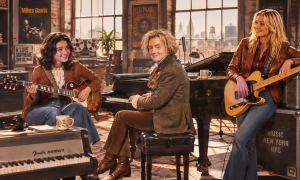
Zack picked up a bass guitar—familiar territory for him, an easy pocket for straight-ahead blues—locking into a deep, steady groove alongside Kyle on drums. Maya stepped forward with a slide on her ring finger, leaning into her guitar. "We do it in D, just like the original," Maya said, smiling at Elvis. "I'm playing open D tuning." When she struck that famous opening riff, she captured all of Elmore James' wild, raw power, but channeled it through an effortless fluidity and finesse that was simply unthinkable back in 1951—a sound born of another era entirely.
Elvis stared for a split second, mesmerized by the sheer control in her fingers, before stepping up to the microphone. The last remnants of tension vanished from his shoulders. He leaned into the mic, caught the beat, and grinned.
They finished one take, but Elvis immediately turned to Julian.
"Put Elmore on again," Elvis said, his voice quiet but commanding. "I want to hear the original one more time."
Julian dropped the needle. As the 45 crackled to life, Elvis stood motionless in the center of the room, eyes closed, soaking in the distortion, the raw acoustic slap, and the unvarnished grit of 1951. He wasn't just listening—he was studying, absorbing, searching for something he'd buried beneath a decade of Hollywood soundtracks and glitzy casino contracts.
When the record stopped, Elvis opened his eyes. He didn't say a word. He simply stepped up to the microphone, nodded once to Kyle, and gave the signal.
When Kyle brought his sticks down for the second take, Elvis unleashed a side of himself the band didn't realize existed.
It wasn't the polished, silky crooner from the movies, nor was it the practiced showman of the special TV broadcasts. This was something primal, dangerous, and utterly unfiltered. His voice tore out of his chest with a growling, feral power—part delta gospel preacher, part alley-cat bluesman. He bent notes with a terrifying intensity, driving his body into every beat, matching Maya's searing, modern slide work note for note.
The energy in the lodge surged, Chloe leaned hard into her rhythm chords, wide-eyed, completely swept up in the vortex.
They slammed into the final hit and killed the sound.
Silence fell over the room, heavy and vibrating.
Kyle sat frozen behind his drum kit, his sticks hanging limp in his hands. He stared at the microphone, completely overcome.
"Whoa," Kyle breathed, shaking his head in total shock. "Where did that come from?!"
Maya and Chloe stood frozen, looking on in utter disbelief.
Elvis himself stepped back from the mic stand, chest heaving, looking down at his hands as if he didn't recognize them. He seemed completely overwhelmed by what had just poured out of him. Deep inside, a quiet realization struck him, and he thought to himself: Thank you Lord, I tapped into the Source.
For the first time in ten years, his dream wasn't just a nostalgic wish—it was starting to feel real.
Unnoticed by the band during the performance, Dr. Kiran had quietly slipped into the back of the lodge, having just returned from a trip into town. He stood near the doorway, motionless, staring at Elvis with a look of profound reverence.
Maya unstrapped her guitar, stepped over to Kiran, and leaned in close.
"Is he truly here?" Maya whispered, searching Kiran's face for confirmation. "I mean... the real soul?"
Kiran looked like he'd just witnessed the birth of a star. He spoke in a hush, his voice trembling slightly.
"He's not just here, Maya," Kiran said softly. "It feels like he's drawing his higher self in with him. That is what true art looks and sounds like."
Elvis looked up, catching Maya and Kiran watching him. A humble, crooked smile returned to his face—the look of a man who had finally found his way back home.
Three Days Later—Los Angeles, Colonel Parker's Office
Xap didn't wait for the Colonel to make the first move. Three days later, he walked into Parker's cluttered Hollywood office unannounced, a slim folder tucked under his arm, with Julian trailing a step behind."Colonel Tom Parker looked up from behind a desk buried in contracts, an unlit cigar clamped between his teeth. "You must be the fella been filling my boy's head with blues records," he said, not rising.
"Xample," Xap said, extending a hand Parker didn't take. "We'd like five minutes."
"You get one," Parker said, "and then I call my lawyers."
Xap set a single sheet of paper on the desk—not a contract, just a name, typed plainly at the top: Andreas Cornelis van Kuijk.
The Colonel's cigar stopped moving.
"I don't know what that's supposed to mean to me," Parker said, but the bluster had gone thin.
"It means," Xap said quietly, taking the chair across from him without being asked, "that we know exactly why you never once crossed an ocean, and ruined Elvis' international career. You have no passport. No clean way to get one. You've been running the biggest act in America from inside a cage of your own making, and as long as nobody asked the wrong question, that was fine."
Then Xap placed a dossier on the desk. He opened it and let it sit there, its weight heavy on the mahogany. His 2092 AI had utilized predictive forensics and cross-referencing global data sets to produce evidence that would make any ambitious prosecutor chomp at the bit. Parker's eyes flicked to the exposed pages—a terrifying mosaic of internal ledger entries, redacted bank records, and correspondence that should have been dust. The Colonel's cigar went dead in his mouth. He looked at the first few lines, and his face drained of color. He didn't need to read the whole stack; he knew exactly what was in the folders he had spent a lifetime trying to hide. The silence in the office became deafening. "We're not here to destroy you, Colonel," Xap said, his voice level and precise as he slid a single-page document toward the center of the desk. "We're offering you an exit. For the next five years, you receive a 10% commission—an amount that keeps you exceptionally wealthy and comfortable. But you retain zero decision-making authority. All existing contracts are under review, and you will sign off on this restructuring." Parker stared at the open dossier, then at the single-page contract, then back at Xap. He was smart enough to know when he had been outplayed by an opponent who had more information than he thought existed in the universe. "And if I say no?" Parker asked, his voice a low rasp. "Then the audit proceeds," Xap replied without blinking. "You'll spend the rest of your life in courtrooms, and you'll walk away with nothing. We'd rather you sign, enjoy your retirement, and let Elvis be Elvis." The Colonel chewed the dead cigar for a long, agonizing moment. He reached for his pen, his hand steady but his expression tight. He signed.
Parker gave a short, humorless laugh. "Boy's finally got himself some real managers," he said, almost to himself. "Without me, he would have been a nobody."
Eight Weeks Later—Liverpool: The Philharmonic Hall
The cold Merseyside drizzle outside did nothing to dampen the electric fever gripping Hope Street.Inside the 1,700-seat Art Deco masterpiece of the Philharmonic Hall, the air was buzzing with anticipation. Filming in vivid, rich color, George Lucas had his cameras positioned along the sweeping curves of the hall, capturing the stark, elegant contrast between the pristine European acoustics and the raw, American sound about to explode on stage.
Elvis's move to bypass London entirely for Liverpool had turned him into a local folk hero overnight. When a posh Fleet Street reporter at the airport had snidely asked why the King of Rock and Roll had chosen a working-class northern port city over the capital, Elvis had smiled, leaning into the microphone with easy, Southern charm:
"Over here you drive on the other side of the road. In America, our music's soul is in the South; over here, it's in the North. I'm here because Liverpool has soul."
That single quote had set the city on fire.
The logistical miracle had been orchestrated by Xap, who seamlessly bridged Elvis's Hollywood studio with Apple and Tuff Gong Records. The studios handled global distribution, but artistic and creative control remained strictly in the hands of Elvis and Apple. Elvis had taken both the High Road and the Middle Road: every cent of the proceeds from the upcoming album, "Mississippi to Memphis," was legally earmarked for the newly established Blues Museum and Veteran Bluesmen's Retirement Home back in Mississippi. Colonel Parker, true to his word and to his own quiet limitations, had stayed exactly where he always stayed—stateside, ten percent richer, and entirely absent.
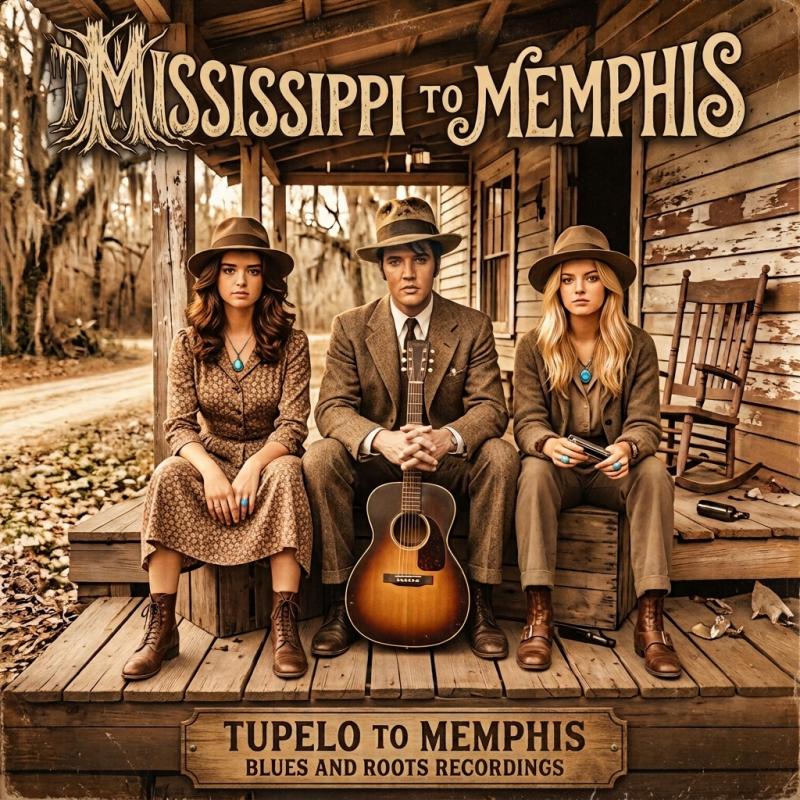
Backstage, the mood was less battle-tested than triumphant. Monty, Future Perfect's Hammond B3 player, sat running warm-up chords through a Leslie cabinet, while a three-piece horn section—trumpet, tenor sax, and trombone—traded riffs in the corner, tightening the charts for "Shake Your Moneymaker." Chloe stood beside them, Telecaster slung low, working out a harmony line with the horns.
As Elvis had privately told the band during rehearsals after diving deep into Elmore James' discography: "This is a natural fit. I could've had hits with any of these in the '50s. I don't need to change a thing—it fits me like a glove."
The lights dimmed, and the crowd roared as Future Perfect took the stage to set the foundation. But this wasn't an opening act—it was a homage to the giants upon whose shoulders rock and roll stood.
As a sign of Elvis's deep reverence for the roots, Future Perfect backed three true kings of the blues, one by one. B.B. King stepped out first, he and Maya traded licks and vocals on "Night Life" his guitar Lucille crying through a blistering slow blues, followed by Albert King's soaring, upside-down Gibson Flying V playing "Born Under a Bad Sign," and finally Muddy Waters, whose booming, thunderous Mississippi voice shook the Art Deco plaster from the ceiling with a high energy version of "Rollin' and Tumblin.'"
By the time the legends left the stage, the audience was already breathless.
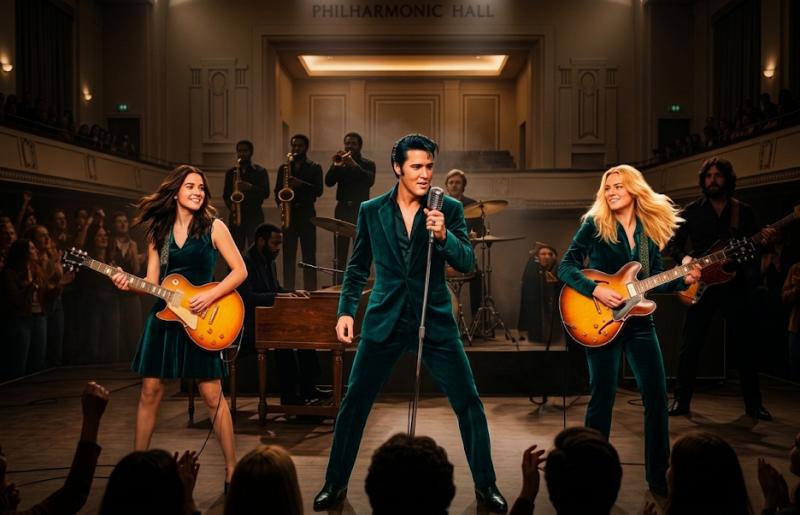
Then, the stage lights dropped to a deep, dramatic indigo.
Zack stepped to the bass guitar alongside Kyle on drums, while Monty settled in behind the Hammond B3 organ, the horn section fanning out beside him. Chloe took her place on rhythm guitar and harmony vocals. Maya stepped up to the front, slide on her finger, holding her vintage Les Paul.
Maya struck the opening, immortal riff of Elmore James' "Dust My Broom."
It didn't just sound like 1951; it sounded like 1951 rocketed into the future. Maya captured all of Elmore's wild, slashing power, but delivered it with a jaw-dropping, fluid dexterity that left every guitarist in the room—including George Harrison up in the VIP box—staring open-mouthed. Beside her, Chloe's rhythm chords and Monty's swelling B3 chords, punctuated by the horns, provided a fierce, driving counter-attack that blew the roof off.
Elvis strode into the spotlight.
He didn't wear gold lamé or rhinestones. He wore a sharp, tailored black suit, open at the collar. The moment he grabbed the microphone and roared the opening line, the hall erupted.
The setlist hit like a freight train:
"The Sky Is Crying," "I Can't Hold Out (Talk to Me Baby)," "It Hurts Me Too" & "Look On Yonder Wall"—Heart-wrenching storytelling shifting seamlessly into a chugging, electric call-and-response rhythm, the horns punching in behind Elvis's cries.
"Standing At The Crossroads" & "Hand In Hand"—Showing the sheer funk and diversity of James' writing, tight as a drumhead, Monty's B3 swirling under every turnaround.
"Shake Your Moneymaker" & "Fine Little Mama"—Pure, unadulterated rock-and-roll chaos, showing off Future Perfect's high-speed technical skill, the horn section stabbing out tight, brassy hits.
"Done Somebody Wrong"—The heavy, booming closer that brought the entire 1,700-person crowd to their feet, screaming for more.
Called back for an encore, Elvis stood at center stage, drenched in sweat, grinning like a man who had just broken out of prison.
He raised a hand to quiet the crowd, gesturing up toward the special box where John, Paul, George, and Ringo were standing and applauding.
"In appreciation of John, Paul, George, and Ringo," Elvis said into the mic, his Mississippi drawl warm and echoing. "They covered a few of my songs back in the day... so I'd like to return the favor. Boys, this is for you!"
Maya struck an electric, slide-heavy, Elmore James-inspired delta riff, and Kyle laid down a dirty, stomping rhythm. Elvis leaned back and launched into a greasy, blues rendition of the Beatles' "Drive My Car." Chloe and Maya provided harmony and the "Beep Beep Yeahs" and traded guitar licks back-to-back, while the horns punched in on the chorus. Up in the box, John Lennon threw his head back and laughed aloud, while Paul McCartney nodded along to the beat.
As the final notes of the Beatles cover faded into absolute thunder, Elvis raised his hands again. "We ain't done yet!" he shouted over the din. "Bring 'em back out!"
B.B. King, Albert King, and Muddy Waters walked back out onto the stage, guitars strapped on. Together with Elvis, Maya, Chloe, Zack, Kyle, Monty, and the horn section, they locked into an earth-shattering, soul-shaking performance of "Let the Good Times Roll."
Four kings of American music, standing on a stage in Liverpool, burning down the house.
The final, earth-shaking chords of "Let the Good Times Roll" had barely faded from the Art Deco walls of the Philharmonic Hall before the story was already racing through the streets of Merseyside.
Later that evening, in a private, low-lit back room off Hope Street, the air was thick with the electric afterglow of history being made. Elvis sat in a wide velvet armchair, his collar unbuttoned, nursing a black coffee while Maya, Chloe, Zack, and Kyle laughed over acoustic guitars in the corner. Across the room, the four Beatles were squeezed onto a single leather sofa, still buzzing from what they had witnessed.
Ray, standing vigilant by the heavy oak doors, slipped inside and quietly tossed a freshly printed, late-edition copy of the Liverpool Echo onto the center coffee table. The ink was so fresh it slightly smudged the newsprint.
John Lennon leaned forward, scooped up the paper, and took a drag from his cigarette. His eyes scanned the front page, where a massive, black-and-white still showed Elvis drenched in sweat, leaning into the microphone while Maya's slide guitar gleamed in the stage lights beside him.
John's face split into a broad, razor-sharp grin. He threw his head back and laughed out loud, his sharp, nasal cackle ringing over the room.
"Listen to this!" John shouted, slapping the paper against his knee as Paul, George, and Ringo leaned in. "The Echo's gone and surrendered the whole bloody city!"
He cleared his throat and read the towering, bold headline at the top of the page in a theatrical, booming voice:
"THE KING CONQUERS THE MERSEY!"
Underneath, the lead subhead declared: The Liverpool Philharmonic Becomes the Capitol of Rock and Blues as Elvis Presley and Future Perfect Deliver the Performance of the Century.
"'Conquers,' he says!" John chuckled, looking over at Elvis with brilliant, sparkling eyes. "Bloody brilliant, E. You came to our backyard, stole our crowd, tore up our stage, and made us bloody love you for it."
Elvis looked up from his cup, a genuine, easy grin spreading across his face—the look of a man who had finally shaken off the chains and reclaimed his soul. He looked at Maya and Chloe, then over at John, Paul, George, and Ringo.
"Well, John," Elvis said, his deep Mississippi drawl warm and steady in the room, "you guys just happen to live in a town with a whole lot of soul."
Disclaimer
This is a fictional account exploring what might have happened if a temporal quantum event had occurred. While real musicians and historical figures appear within these pages, they exist here in an alternate timeline—a reality that quantum theory suggests was possible, but that never came to pass. All interactions, conversations, and events involving these individuals are entirely fictional, products of a world that exists only in the space between what was and what might have been.About the Series
Future Perfect follows a time-traveling band from the year 2092—winners of a planet-wide musical talent search—who journey back to the golden decade of 1964 to 1974. Over a billion subscribers plug into the Chronos-Consciousness Engine (CCE) to experience the band's exploits first-hand in a vivid, waking-dream state. Originally designed as a hyper-realistic historical simulation, the sheer volume of connected minds has triggered a quantum event that is drawing actual consciousness into this alternate reality. Ideally, new readers should start at the beginning of the series..
 FOLLOW Blue Note Portal
and get notified whenever a new article published.
The Blue Note Portal: a garage-assembled '70s microcomputer relic, eternally portaling through jazz timelines with Serling-esque irony, hacking bebop anomalies into binary swing for the ultimate improvised reboot.
About Elvis Presley

Tags
PREVIOUS / NEXT


Become a Sustaining Member

Since 1995, All About Jazz has championed jazz as an art form and supported the musicians who create it. Over three decades, it has grown into one of the world's leading jazz resources, serving hundreds of thousands of readers, musicians, presenters and industry professionals each month.
Help Build the Future of All About Jazz
Your support helps us continue building All About Jazz for the next generation—expanding our editorial coverage, preserving jazz history, developing new community features and creating better ways to discover the music and the people behind it.
Become a sustaining member for as little as $20 per year and you'll immediately enjoy an ad-free experience along with access to subscriber features and future articles for a full year.
Together, we're not simply sustaining All About Jazz—we're building its future. Thank you for being part of the journey.