Home » Jazz Articles » Live Review » Flow Festival: Helsinki, Finland, August 10-12, 2012
Flow Festival: Helsinki, Finland, August 10-12, 2012

Suvilahti, Helsinki
August 10-12, 2012
Every music festival worth its salt can boast something different from the others, where it's the performers, participants, legacy or location. Helsinki's Flow Festival, always held on the last official weekend of summer before schools restart, has established itself, in its nine years of existence, as the only truly urban festival in the country—a feature reinforced by Helsinki's role in 2012 as official Design Capital of the World. It is solidly established in the calendar of young urban Finns, and seems on the way to being in all savvy Scandinavian youth's calendars.
For savvy, it's also necessary to think salaried, for this is no gathering of marginalized disaffected urban youth, creating an alternative nexus of lifestyle and culture the way Britain's Glastonbury Festival started. Nor is it a clique of frustrated fans desperate to establish a platform for their own sounds, like Newport, or the major European gatherings like Norway's Molde or Switzerland's Montreux. The founding fathers of this "urban happening" were a group of very worldly Finnish DJs known as Nuspirit Helsinki. With experience running small clubs and restaurants around the town center, they possessed more than average insight into the prevailing pop and hip-hop culture, as well as a collective nose for good business.
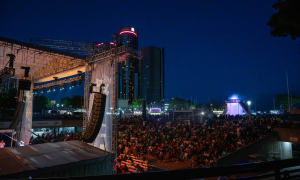
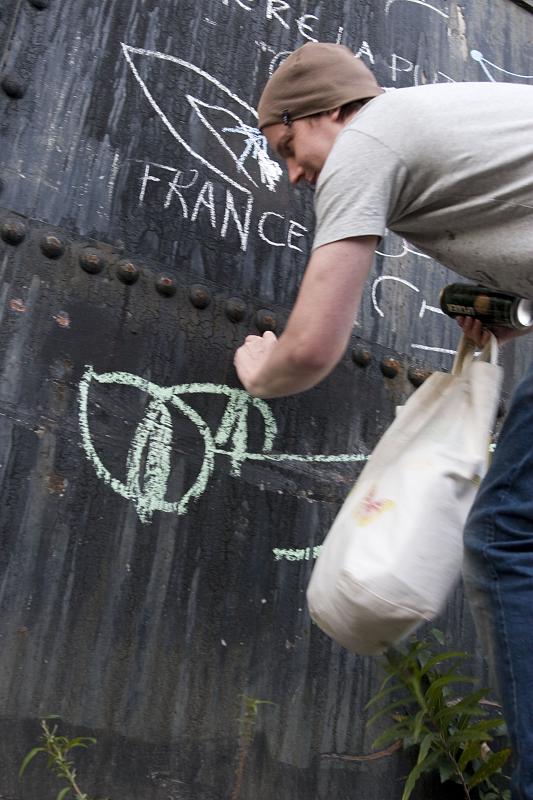 For many fans it is, indeed, the location as much as the music which makes this event so popular, giving it a club feeling as much as any concert spirit; and, with as many mainly vegetarian restaurants as stages and a truly inclusive ethic, it is a social gathering as much as a spectacle. Initially it was held in the old railway warehouse adjacent to Helsinki's central station, and despite the move to premises just a mile north of the center in 2007, it has retained its intimately urban element, with approximately 20,000 participants at peak time squeezed into an area of about two acres sandwiched between a main road artery and an old dock. A dominant feature here is the disused power plant, with a huge, circular, cast-iron gasometer and supporting bolted lattice structure and the pair of 40-meter red-brick chimneys that tower over the site. The festival area is now on the edge of a major urban redevelopment program, transforming the derelict space into a typically Nordic mix of top and lower end housing, just as the festival itself is at quite a crossroads in its development. Having reached near-capacity for participant numbers, it must now confront the issue of where to go if not just to grow.
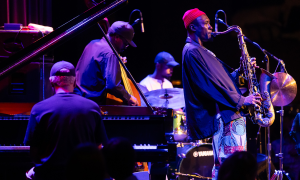
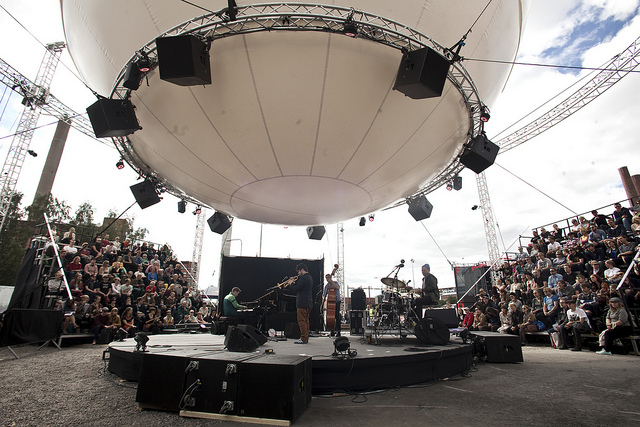
 Every year the festival has hosted mainline artists from all areas of music from club to electonica, This year, despite Bobby Womack's cancellation, it included Bon Iver and Björk, and there has always been a desire to incorporate new genres. Hence the decision to add another outdoor stage in the central area, and also to devote a whole indoor arena for the burgeoning phenomenon that is young Finnish jazz. Among many acts on the futuristic Wastelands stage were trumpeter Verneri Pohjola's Quartet, playing moving and melodic pieces across stage from his new piano partner, Aki Rissanen (although sounding very reminiscent of his old band Ilmiliekki), as well as American pianist Jason Moran playing solo and with supporting Finnish musicians.
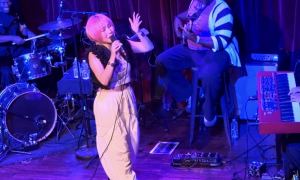
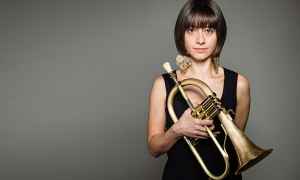
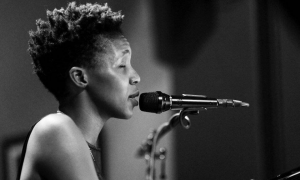
In an old power plant hall, a café-type venue was established, and for three nights Tiivistämö (Finnish for the Concentrator) was devoted to three new Finnish jazz trios. First up was the band that has recently played across Scandinavia as well as the country's major music gathering in Pori, Elifantree. Fronted by eclectic singer Anni Elif Egecioglu, the band played to a packed house offering music from its two albums, presented in its highly intimate and energetic style. In this close environment the group's music was even more strongly rhythmic than in the past, with Egecioglu's voice more heavily effected. The interplay between saxophonist Pauli Lyytinen and Egecioglu is still critical to their show, and the singer's use of more a rhythmic approach surely pleased their audience, showing how the band can adapt themselves to the opportunities of the night.
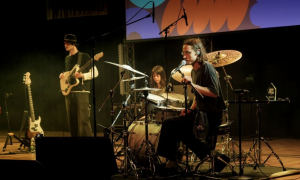
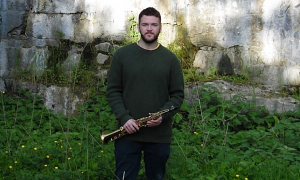
Mopo, occupying the same space the following evening, is a less-exposed young trio, but another major player on the local jazz scene, and another example of Finnish jazz with a female face. A recently graduated saxophonist, Linda Frediksson played savored, often delicate, lines on baritone and alto, partnered with bassist Eero Tikkanen and drummer Eeti Nieminen. Mopo's music was energetic and somewhat quirky, and while it was as percussive as Elifantree, the band lacked the audience contact that a dedicated singer provides. However, to aid accessibility to its pieces, the band used humor such as duck call duets and whistles to intrigue the audience as much as to compel attention.
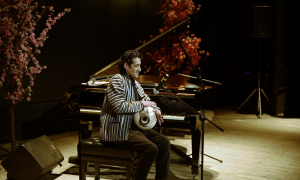
The final day of blue skies and balmy temperatures brought a rockier feel to the major stages and another band with a strong leading instrumentalist, Kriszta POCSAI and Herd Trio, to the jazz hall. His vibraphone stands front-of-stage, although he shares compositional credits with his colleagues, bassist Mikko Pellinen and drummer Tuomas Timonen. For the second of the three sets Savolainen played a solo spot, ably proving that a new approach to a classical instrument brings new listeners. Returning for its last set, the band played more of its own music, intricately structured pieces with plenty of individual improvisation, and found a ready, youthful audience throughout the rest of the evening.

So, with the Scandinavia days getting rapidly shorter, and school routines starting to dominate life, the old power station resumed its tranquil role as iconic landmark on the edge of Helsinki's center. Summer evening celebrations continue through August every summer with the 2012 Helsinki Festival featuring guitarist Bill Frisell as well as its own Viapori Jazz, on an island in the harbor area. But nights in the north soon become quite nippy. Flow will recommence next year, and based on this year's showing, jazz will be one of the many flavors it once again offers.
Photo Credit
All Photos: Courtesy of Flow Festival
 FOLLOW Anthony Shaw
and get notified whenever a new article published.
FOLLOW Anthony Shaw
and get notified whenever a new article published.
Former rock and folk freak, now with tastes fully fermented by 30 years living in Finland.
Tags
PREVIOUS / NEXT
Become a Sustaining Member

Since 1995, All About Jazz has championed jazz as an art form and supported the musicians who create it. Over three decades, it has grown into one of the world's leading jazz resources, serving hundreds of thousands of readers, musicians, presenters and industry professionals each month.
Help Build the Future of All About Jazz
Your support helps us continue building All About Jazz for the next generation—expanding our editorial coverage, preserving jazz history, developing new community features and creating better ways to discover the music and the people behind it.
Become a sustaining member for as little as $20 per year and you'll immediately enjoy an ad-free experience along with access to subscriber features and future articles for a full year.
Together, we're not simply sustaining All About Jazz—we're building its future. Thank you for being part of the journey.