Home » Jazz Articles » Live Review » Ellington's Nutcracker at The Jazz Corner
Ellington's Nutcracker at The Jazz Corner
The Jazz Corner
Hilton Head Island, SC
December 15, 2017
Every Christmas is the Nutcracker Season for ballet aficionados. The legendary composing and arranging skills of Duke Ellington and Billy Strayhorn also make it Nutcracker Season for jazz aficionados. In 1960, Ellington and Strayhorn wrote their version of the famous Tchaikovsky ballet. A big part of the Duke Ellington sound came from extending the instruments in his big band, wood blocks and bells were added to drums, a variety of mutes appeared in the horn section, the bass played arco as well as pizzicato. The same big sound is hard to replicate in a quintet but Justin Varnes achieved it by studying the music and techniques. It's a rare thing to see jazz men in a quintet reading their music, as if they were big band musicians who were forced to have arrangements because of number of musicians involved. Nonetheless, there they were on the stand, a quintet sight reading.
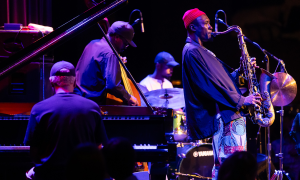
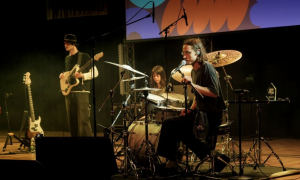
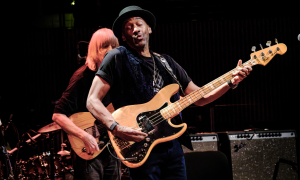
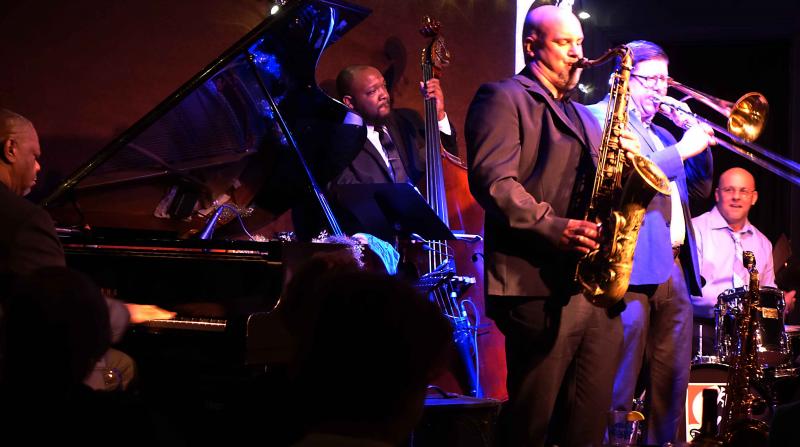
Justin Varnes inventive as ever on drums, came in from Atlanta with Gary Motley on piano, Kevin Smith on bass, John Sandfort on saxophone and John Pitchford on trombone.
The liner to the original Nutcracker Suite CD is notable for two reasons. First, because it portrays Billy Strayhorn and recognizes the impact of this private man on Duke Ellington's music. Second, it offers the catalyst for making the recording as being a meeting between Tchaikovsky and Ellington, which never happened because that would have made Tchaikovsky 120 years old! Musicians get their improvisations, marketing people get to tell their tall stories.
There is whimsy in the renaming of the nine movements from the original piece to the jazz version too. The "Sugar Plum Fairy" becomes the "Sugar Rum Cherry," "The Waltz of the Flowers" becomes "The Dance of the Floriadors." The movement named "Chinoiserie" is the original Russian composer's take on Chinese music. The Ellington version is an American take on a Russian writing Chinese music, but somehow even by passing it through several cultural filters the music swings and works beautifully. The classical format with several movements each exploring themes within a whole piece, gives room for varying tempi and intensity. The format works as well for jazz as it does for classical music. Still the audience reacted to each solo, applauding the artistry even though they were listening to an arrangement not variations or free interpretation. Ellington and Strayhorn went on to write jazz parodies of "The Peer Gynt" suite and others, for a moment in time the genre held their creative interest before they moved on to their next compositions.
 FOLLOW Martin McFie
and get notified whenever a new article published.
FOLLOW Martin McFie
and get notified whenever a new article published.
Promoting live jazz because... you had to be there.
About Justin Varnes

Tags
PREVIOUS / NEXT

Justin Varnes Concerts

Become a Sustaining Member

Since 1995, All About Jazz has championed jazz as an art form and supported the musicians who create it. Over three decades, it has grown into one of the world's leading jazz resources, serving hundreds of thousands of readers, musicians, presenters and industry professionals each month.
Help Build the Future of All About Jazz
Your support helps us continue building All About Jazz for the next generation—expanding our editorial coverage, preserving jazz history, developing new community features and creating better ways to discover the music and the people behind it.
Become a sustaining member for as little as $20 per year and you'll immediately enjoy an ad-free experience along with access to subscriber features and future articles for a full year.
Together, we're not simply sustaining All About Jazz—we're building its future. Thank you for being part of the journey.