Home » Jazz Articles » Film Review » The Session Man: Nicky Hopkins
The Session Man: Nicky Hopkins
 Nicky Hopkins
 The Session Man
Alan Fergurson
2025
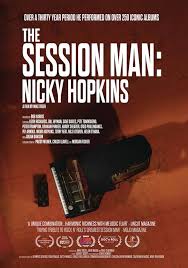
The very title of Mike Treen's film The Session Man: Nicky Hopkins understates the singular stature of the documentary's subject. Nicky Hopkins was a British keyboardist/composer who played on over two-hundred vintage era recordings by genuinely iconic musical figures of contemporary rock like The Beatles, The Rolling Stones and The Who.
In fact, Hopkins' prestige is such that the name of the documentary ends up sounding more than a little ironic. The late musician's playing on sterling recordings like Jagger, Richards and company's "Street Fighting Man" for instance, is so distinct and fully formed, he evinces the depth of engagement of one of members of the band, not simply a musician hired to accompany the group
And while narrator Bob Harris' intro overstates the timeline of Hopkins' emergence—to name just one instance, Johnnie Johnson's piano accompaniment for Chuck Berry predates the addition of his instrument to rock and roll music—the roster of two-hundred some sit-ins is undeniable.
Otherwise, the linear history of Nicky Hopkins' career incorporates salient elements of his personal life. Health issues plagued him for much of his adulthood even as he honed his inimitable diverse style of playing (and not just piano: Tom Petty Heartbreaker keyboardist Benmont Tench enthused about his harpsichord part for an early Kinks record).
The slightly less than ninety-minute duration of The Session Man passes with great rapidity, in part because it simultaneously covers contemporary rock history of the Sixties and Seventies by way of tabulating the various entries in Hopkins' resume. The various studio sit-ins during the early phase of his career lead almost inevitably to his latter-day collaborations with San Francisco icons Jefferson Airplane and Quicksilver Messenger Service (of whom he was actually a formal member).
Integral as were such contributions to those artists' music, it defies logic that Nicky Hopkins did not receive more co-writing credits, at least according to a songwriter who would know: Keith Richards. While Hopkins' self- obvious modesty, as depicted in his own interview footage, may have stood him in good stead for sessions work, that self-same virtue shortchanged him in this context (though he did compose "Girl From Mill Valley" for the original Jeff Beck Group's Beck-Ola (Epic 1969), and shared honors with Steve Miller on the majestic "Baby's House" for the latter's Your Saving Grace (Capitol Records, 1969)).
Edited by Ashley Scott, the interweaving of interview segments with seasoned professionals here is particularly insightful, as the speakers' credibility is beyond reproach. Figures as disparate as drummer extraordinaire Jim Keltner (all four Beatles solo records, among many others) and Allman Brothers Band keyboardist Chuck Leavell (Brothers And Sisters (Capricorn, 1973)) are not the only subjects who speak rapturously (and accurately) of Hopkins' impeccably sensitive musicianship.
As is too often the case with artist biographies, The Session Man threatens to close in something of a rush. But writer/director Treen ensures the later stages of Nicky Hopkins' life and work receives sufficient attention, so he covers the full range of his eclectic work, from Harry Nilsson to Art Garfunkel.
The narrative unfolds without hyperbole or melodrama, but with more than a mere modicum of self-discipline and grace, including discussion of Hopkins' move to Nashville just prior to his passing. In the end, writer/director Mike Treen does full and complete justice to a musical figure whose very artistry was distinguished by exactly the same mature, economical approach.
In the form of a theatrical trailer, there is but one additional feature on this single DVD, but that is particularly fitting because, by the time the main film concludes, nothing more needs to be said.
 FOLLOW Doug Collette
and get notified whenever a new article published.
FOLLOW Doug Collette
and get notified whenever a new article published.
DC writes regularly about jazz and blues plus rock and roll, composing reviews of CDs, DVDs, live performances, books and films.
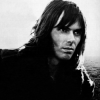
About Nicky Hopkins
Tags
PREVIOUS / NEXT
Become a Sustaining Member

Since 1995, All About Jazz has championed jazz as an art form and supported the musicians who create it. Over three decades, it has grown into one of the world's leading jazz resources, serving hundreds of thousands of readers, musicians, presenters and industry professionals each month.
Help Build the Future of All About Jazz
Your support helps us continue building All About Jazz for the next generation—expanding our editorial coverage, preserving jazz history, developing new community features and creating better ways to discover the music and the people behind it.
Become a sustaining member for as little as $20 per year and you'll immediately enjoy an ad-free experience along with access to subscriber features and future articles for a full year.
Together, we're not simply sustaining All About Jazz—we're building its future. Thank you for being part of the journey.