Home » Jazz Articles » Catching Up With » The Ritual Music of Kolida Babo
The Ritual Music of Kolida Babo
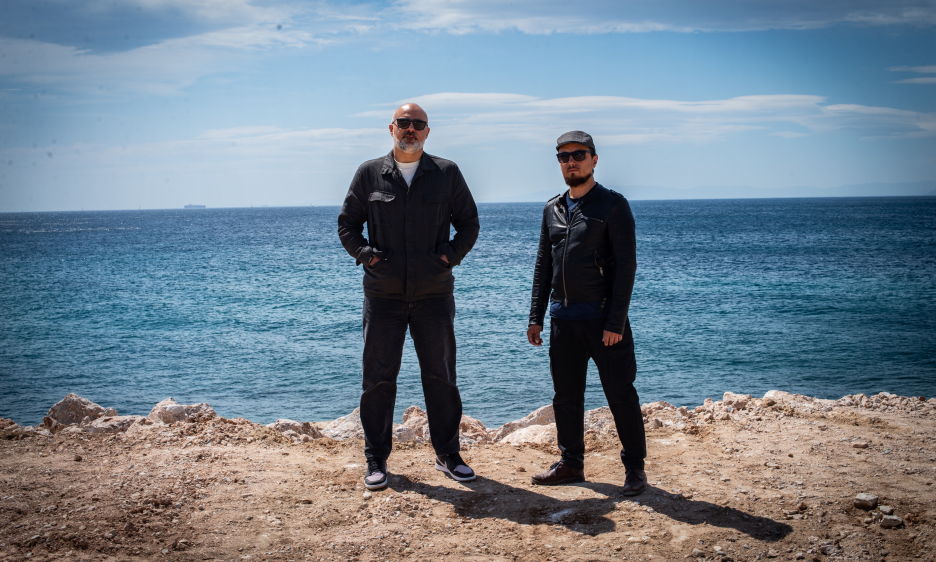
Our music carries social intention through personal expression.
—Socratis Votskos
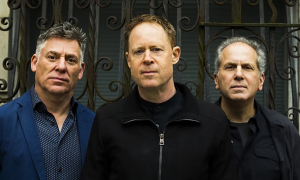
Between Athens and Aridaia, they blend Armenian duduk melodies with Greek folk traditions, free jazz, and electronic textures. The result maps territory both ancient and modern, expressing Greece's complex history through sound.
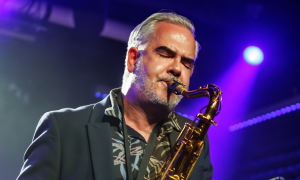
"I first encountered this tradition in Aridaia, Socratis's hometown," Harris P. recalls. "Coming from Athens, I had never seen anything like it. While Greece has many traditions combining dancing and music, this was different."
Votskos explains the medieval custom that became their namesake: "'Kolida Babo refers to a carol tradition, specifically the day before the actual carols. People gather to build large fires and dance around them with local music. The name itself has layers —'Babo' means grandmother in the traditional Slavic language that influenced northern Greek dialects. 'Kolida' comes from 'Koliada,' our word for carols."
Their collaboration began the night Harris arrived in Aridaia during these fire rituals. "He came to my home studio, and we recorded our first song, 'Kolida Babo,'" Votskos says.
The Armenian duduk became central to both their music and friendship. "I discovered it through Djivan Gasparyan's collaboration with Michael Brook on Black Rock (Real World Records, 1999)," Harris says. "The sound grabbed me immediately. Living in Greece with its significant Armenian community, this connection felt natural."
Their recording process stays fluid and spontaneous. "We limit ourselves to three takes maximum during improvisations," Harris notes. "Ideas might develop independently on various instruments—synthesizers, baritone saxophones, clarinets—then we combine recordings between our two cities."
Votskos's multi-instrumental approach evolves through improvisation. "Certain combinations emerge organically," he explains. "We might double bass clarinet with soprano clarinet, though it's rarely our starting point. The baritone particularly suits our more dynamic pieces."
The album's centerpiece, "Pangea's Journey," came together differently, recorded during COVID-19 lockdowns. "The concept references Earth's unified prehistoric continent," Harris says. "We arranged it around the gaida, a traditional Greek bagpipe, but interpreted through the duduk—an approach that might surprise traditional Greek musicians."
Mauronoros itself holds special resonance. "The old village sits dramatically on a cliff," Harris describes. "It has remarkable threshing floors —'alonia'—circular stone platforms where grain was once separated from stalks. They're so vast they look like landing sites from above. Its abandonment mirrors broader patterns in Greek history —wars, civil conflicts, rural exodus."
"Our music carries social intention through personal expression," Votskos reflects. "We don't presume to transform society, but our creative approach might resonate with listeners, inspiring changes in their own expression or creativity."
Their work speaks to diverse audiences precisely because it respects traditions while remaining unconstrained by them. As Harris puts it: "We're not trying to create unprecedented combinations or a new genre. Our music simply expresses our emotional landscape through sound, and we particularly value the dialogue."
 FOLLOW Lawrence Peryer
and get notified whenever a new article published.
FOLLOW Lawrence Peryer
and get notified whenever a new article published.
Longtime music industry executive who relocated to the PNW from New York City in 2016. Host of the award-winning podcast The Tonearm (f/k/a Spotlight On), featuring the people and ideas moving culture forward.
About Sokratis Votskos

Tags
PREVIOUS / NEXT

Become a Sustaining Member

Since 1995, All About Jazz has championed jazz as an art form and supported the musicians who create it. Over three decades, it has grown into one of the world's leading jazz resources, serving hundreds of thousands of readers, musicians, presenters and industry professionals each month.
Help Build the Future of All About Jazz
Your support helps us continue building All About Jazz for the next generation—expanding our editorial coverage, preserving jazz history, developing new community features and creating better ways to discover the music and the people behind it.
Become a sustaining member for as little as $20 per year and you'll immediately enjoy an ad-free experience along with access to subscriber features and future articles for a full year.
Together, we're not simply sustaining All About Jazz—we're building its future. Thank you for being part of the journey.