Home » Jazz Articles » Album Review » Henry Grimes & Marzette Watts: The Call
Henry Grimes & Marzette Watts: The Call
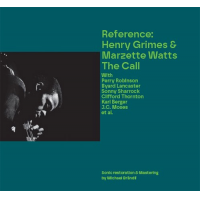
What distinguishes The Call from its ESP contemporaries is restraint. Grimes does not use the session as a showcase for pyrotechnics. On "Fish Story" and the title track, he reveals a harmonic imagination well beyond his session-man reputation of the era. Robinson's dynamic clarinet, still a rare voice in this idiom, threads through the six group originals with an elliptical, almost conversational logic, closer in spirit to Jimmy Lyons than to the swing-era clarinetists one might expect from the instrument. Price holds the frame together without ever crowding it, content to color and contrast while giving the two lead voices room to breathe and respond to one another in real time.
"For Django," at over 11 minutes, is the emotional center of the record, unfolding patiently and rewarding close listening over background play. Grimes's introspective bowed- bass solo is particularly striking, adding another dimension to the track's spacious character. The closing pair, "The Call" and "Son Of Alfalfa," push furthest into abstraction without losing the thread of melody that runs beneath even the trio's most exploratory stretches. This is a record built for attentive ears rather than casual rotation, spacious where much of the era's free jazz favored density and force.
This reissue pairs the original trio session with three tracks recorded in December 1966 under saxophonist Marzette Watts's name, drawn from the separately released Marzette Watts and Company (ESP-Disk, 1968; reissued 2012). Grimes returns on bass alongside Clifford Thornton on cornet and trombone, Sonny Sharrock on guitar, Byard Lancaster on alto saxophone and flute, Karl Berger on vibraphone, Juney Booth on bass and J.C. Moses on drums. The contrast is stark. Where the trio material moves with patience and restraint, the Watts tracks push toward denser, more collective improvisation, with the additional musicians broadening the music's palette and intensity. The session offers a useful bridge to where Grimes's career was headed before it stalled out entirely by decade's end. Subsequent reissues have benefited from sonic restoration and remastering, giving later pressings a cleaner presentation of the original sessions without altering their character.
Grimes would vanish from the music world entirely by the late 1960s, his bass damaged beyond affordable repair and his name so absent from stages that some reference books listed him as deceased. He spent three decades in Los Angeles doing custodial and construction work until a social worker named Marshall Marrotte tracked him down in 2002. Given a bass by fellow musician William Parker, Grimes staged one of the most remarkable comebacks in jazz history, touring and recording prolifically for fifteen years before Parkinson's disease ended his playing in 2018. He died on April 15, 2020, at 84, of complications from COVID-19.
 FOLLOW Glenn Astarita
and get notified whenever a new article published.
FOLLOW Glenn Astarita
and get notified whenever a new article published.
Glenn is a senior writer and editor at All About Jazz.
Track Listing
Fish Story; For Django; Walk On; Saturday Nite; What Th'; The Call; Son Of Alfalfa; Ia; Geno; Backdrop For Urban Revolution.
Personnel

Henry Grimes
bass, acoustic
Perry Robinson
clarinetTom Price
drumsMarzette Watts
saxophone, tenor
Byard Lancaster
saxophoneClifford Thornton
cornetJuni Booth
bass
Sonny Sharrock
guitar, electric
Karl Berger
vibraphoneJ.C. Moses
drumsAdditional Instrumentation
Marzette Watts: soprano saxophone; Clifford Thornton: trombone.
Album information
Title: The Call | Year Released: 2026 | Record Label: Thingamajig
About Henry Grimes
Tags
PREVIOUS / NEXT


Become a Sustaining Member

Since 1995, All About Jazz has championed jazz as an art form and supported the musicians who create it. Over three decades, it has grown into one of the world's leading jazz resources, serving hundreds of thousands of readers, musicians, presenters and industry professionals each month.
Help Build the Future of All About Jazz
Your support helps us continue building All About Jazz for the next generation—expanding our editorial coverage, preserving jazz history, developing new community features and creating better ways to discover the music and the people behind it.
Become a sustaining member for as little as $20 per year and you'll immediately enjoy an ad-free experience along with access to subscriber features and future articles for a full year.
Together, we're not simply sustaining All About Jazz—we're building its future. Thank you for being part of the journey.