Ralph Towner, 1940-2026
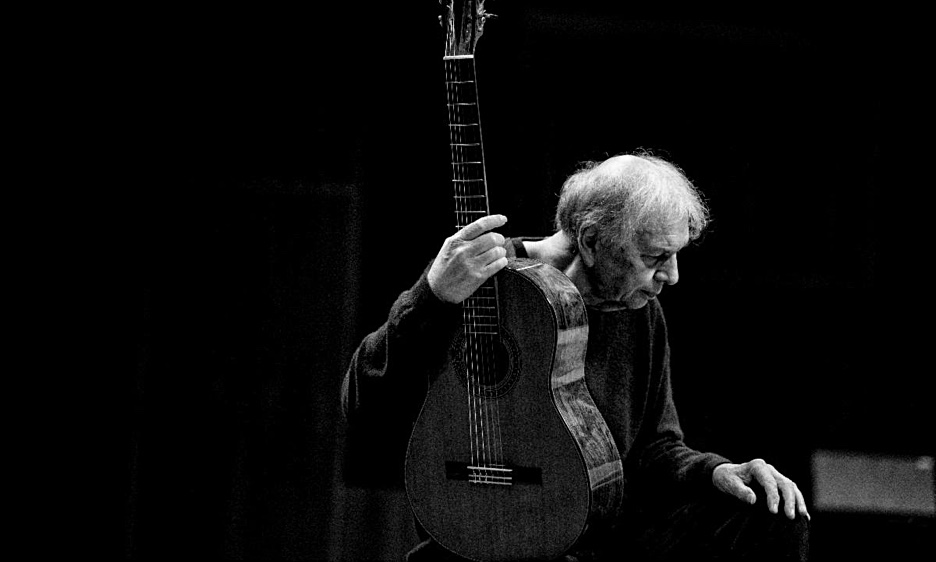
Courtesy Caterina di Perri

Ralph Towner, guitarist of unique sensibility, writer of highly original compositions, and an ECM artist for more than fifty years, has died, aged 85.
Towner, who once described himself as an improvising “raconteur of the abstract” was born into a musical family in the small town of Chehalis, Washington. He started playing music at the age of 6, developing into a young multi-instrumentalist adept at trumpet, French horn and piano. He was 22 before he took up the classical guitar, heading to Vienna to study with Karl Scheit, immersing himself in transcriptions of renaissance lute music, and practicing every waking hour.
Back in America, other influences asserted themselves. “In the early to mid-'60s, I was strongly influenced by Brazilian music, then basically drifted away from it while retaining its wonderful fundamentals,” he recalled. “But it had a big impact on me, as a classical guitarist who was then making a living playing jazz piano! The Bill Evans with Scott LaFaro and Paul Motian was another enormous influence, and I tried to develop the idea of embracing the interaction of a small group on the guitar itself. So there were these three lines – Brazilian music, Evans’s conception of jazz, and the classical guitar. Over the years I kept on adapting each of these in my own way. I abstracted them and modified them until the sources were no longer recognizable, and I’d arrived almost without noticing it in an idiom of my own.”
Many jazz listeners first encountered Towner on Weather Report’s 1972 album I Sing The Body Electric, where his harmonically-free 12-string guitar introduction to Wayne Shorter’s “The Moors” was a revelation. In the same period, Ralph met Manfred Eicher in New York – Dave Holland made the introductions – and the stage was set for half a century of creative collaboration at ECM and a lifelong friendship.
Towner’s early recordings for the label included many outstanding albums. Among them: the studio and live solo albums Diary (recorded 1973) and Solo Concert (1979). Solstice (1974) brought Towner together with Jan Garbarek, Eberhard Weber and Jon Christensen is now regarded as a classic of modern jazz. Matchbook, 1974 duets with Gary Burton, included what Charles Mingus hailed as his favorite version of “Goodbye Pork Pie Hat.”
Ralph loved to play with his friend and fellow guitarist John Abercrombie and their album Sargasso Sea (1976) led to many concerts on both sides of the Atlantic, as well as a follow-up, Five Years Later (the two of them also play beautifully together on Kenny Wheeler’s Deer Wan). Batik (1979), with Jack DeJohnette and Eddie Gomez, has a glistening, rippling flow, established right away by Towner’s tune “Waterwheel.”
Ralph also made crucial contributions to the recordings of others, meeting the challenge of Keith Jarrett’s “Short Piece for Guitar and Strings” on In The Light (1973) and, along with the mysterious drone of the windharp, helping to establish the emotional climate of Jan Garbarek’s stark masterpiece Dis (1976). A guest appearance on Egberto Gismonti’s Sol Do Meio Dia (1977) was a welcome opportunity to meet Brazilian music head-on. Départ, a 1979 recording with the Azimuth trio of John Taylor, Kenny Wheeler and Norma Winstone also pointed toward future collaboration. Wheeler had played on Ralph’s Old Friends, New Friends earlier that year, and Winstone would return often to Towner compositions, adding her own lyrics – as on the albums Somewhere Called Home, Dance Without Answer and, most recently, 2024’s Outpost of Dreams, which includes Ralph’s “Beneath an Evening Sky."
In parallel with his leader dates and his life as a touring soloist Ralph was a member of the transculturally oriented chamber group Oregon. The band’s classic line-up, with Towner, sitarist and tabla player Collin Walcott, oboist and saxophonist Paul McCandless and bassist Glenn Moore appeared on the ECM albums Trios/Solos (1972), Oregon (1983) and Crossing (1984). Towner’s 1980s albums with Oregon, like his multi-instrumental multi-tracked solo recording Blue Sun (1984) found him intermittently expanding his sonic palette with electronic keyboards, a Prophet 5 now added to the instrumentarium, with synth also bringing washes of sound to an atmospheric duo album with drummer Peter Erskine, Open Letter.
Meetings with remarkable bassists – including Marc Johnson, Gary Peacock, Arild Andersen – re-emphasized the primacy of acoustic interaction on albums such as Lost and Found (with Johnson among the cast), Oracle and A Closer View (duos with Peacock), and If You Look Far Enough (Andersen’s album, prominently featuring Towner, alongside Naná Vasconcelos).
By the 1990s, Ralph Towner, now married to Italian actress Mariella Lo Sardo, was living in Southern Europe, firstly in Palermo, Sicily, and subsequently in Rome. New artistic collaborations came into view including a duo with Sardinian trumpeter Paolo Fresu (“here’s a guy who can really play melodies!” Towner cheered) on Chiaroscuro (2008), and a guitar trio with Wolfgang Muthspiel and Slava Grigoryan on Travel Guide (2012).
Yet most of Ralph Towner’s later works are embodied on a series of absorbing solo albums: ANA and Anthem, recorded at Oslo’s Rainbow Studio in 1996 and 2000, followed by Time Line, from Sankt Gerold in 2005, and then My Foolish Heart and At First Light, both recorded in Lugano, in 2016 and 2022. Each of them is strongly autobiographical in character, reflecting on Towner’s singular artistic journey. The concluding At First Light rounds up some of his early influences with original compositions incorporating “trace elements of the musicians and composers that have attracted me over the years. Musicians such as George Gershwin, John Coltrane, John Dowland and Bill Evans, to name a few…”
Towner once said, “It’s my contention that music unfolds to the listener as does a work of literature, only without the specific meanings of written or spoken words… An advantage of being an improvising soloist is that you are free to alter or depart from the form of a piece at any point if you sense that the ‘story’ needs a turn of events.”
Listeners who experienced his solo concerts and heard his solo albums know that Ralph Towner was indeed a master storyteller.
Towner, who once described himself as an improvising “raconteur of the abstract” was born into a musical family in the small town of Chehalis, Washington. He started playing music at the age of 6, developing into a young multi-instrumentalist adept at trumpet, French horn and piano. He was 22 before he took up the classical guitar, heading to Vienna to study with Karl Scheit, immersing himself in transcriptions of renaissance lute music, and practicing every waking hour.
Back in America, other influences asserted themselves. “In the early to mid-'60s, I was strongly influenced by Brazilian music, then basically drifted away from it while retaining its wonderful fundamentals,” he recalled. “But it had a big impact on me, as a classical guitarist who was then making a living playing jazz piano! The Bill Evans with Scott LaFaro and Paul Motian was another enormous influence, and I tried to develop the idea of embracing the interaction of a small group on the guitar itself. So there were these three lines – Brazilian music, Evans’s conception of jazz, and the classical guitar. Over the years I kept on adapting each of these in my own way. I abstracted them and modified them until the sources were no longer recognizable, and I’d arrived almost without noticing it in an idiom of my own.”
Many jazz listeners first encountered Towner on Weather Report’s 1972 album I Sing The Body Electric, where his harmonically-free 12-string guitar introduction to Wayne Shorter’s “The Moors” was a revelation. In the same period, Ralph met Manfred Eicher in New York – Dave Holland made the introductions – and the stage was set for half a century of creative collaboration at ECM and a lifelong friendship.
Towner’s early recordings for the label included many outstanding albums. Among them: the studio and live solo albums Diary (recorded 1973) and Solo Concert (1979). Solstice (1974) brought Towner together with Jan Garbarek, Eberhard Weber and Jon Christensen is now regarded as a classic of modern jazz. Matchbook, 1974 duets with Gary Burton, included what Charles Mingus hailed as his favorite version of “Goodbye Pork Pie Hat.”
Ralph loved to play with his friend and fellow guitarist John Abercrombie and their album Sargasso Sea (1976) led to many concerts on both sides of the Atlantic, as well as a follow-up, Five Years Later (the two of them also play beautifully together on Kenny Wheeler’s Deer Wan). Batik (1979), with Jack DeJohnette and Eddie Gomez, has a glistening, rippling flow, established right away by Towner’s tune “Waterwheel.”
Ralph also made crucial contributions to the recordings of others, meeting the challenge of Keith Jarrett’s “Short Piece for Guitar and Strings” on In The Light (1973) and, along with the mysterious drone of the windharp, helping to establish the emotional climate of Jan Garbarek’s stark masterpiece Dis (1976). A guest appearance on Egberto Gismonti’s Sol Do Meio Dia (1977) was a welcome opportunity to meet Brazilian music head-on. Départ, a 1979 recording with the Azimuth trio of John Taylor, Kenny Wheeler and Norma Winstone also pointed toward future collaboration. Wheeler had played on Ralph’s Old Friends, New Friends earlier that year, and Winstone would return often to Towner compositions, adding her own lyrics – as on the albums Somewhere Called Home, Dance Without Answer and, most recently, 2024’s Outpost of Dreams, which includes Ralph’s “Beneath an Evening Sky."
In parallel with his leader dates and his life as a touring soloist Ralph was a member of the transculturally oriented chamber group Oregon. The band’s classic line-up, with Towner, sitarist and tabla player Collin Walcott, oboist and saxophonist Paul McCandless and bassist Glenn Moore appeared on the ECM albums Trios/Solos (1972), Oregon (1983) and Crossing (1984). Towner’s 1980s albums with Oregon, like his multi-instrumental multi-tracked solo recording Blue Sun (1984) found him intermittently expanding his sonic palette with electronic keyboards, a Prophet 5 now added to the instrumentarium, with synth also bringing washes of sound to an atmospheric duo album with drummer Peter Erskine, Open Letter.
Meetings with remarkable bassists – including Marc Johnson, Gary Peacock, Arild Andersen – re-emphasized the primacy of acoustic interaction on albums such as Lost and Found (with Johnson among the cast), Oracle and A Closer View (duos with Peacock), and If You Look Far Enough (Andersen’s album, prominently featuring Towner, alongside Naná Vasconcelos).
By the 1990s, Ralph Towner, now married to Italian actress Mariella Lo Sardo, was living in Southern Europe, firstly in Palermo, Sicily, and subsequently in Rome. New artistic collaborations came into view including a duo with Sardinian trumpeter Paolo Fresu (“here’s a guy who can really play melodies!” Towner cheered) on Chiaroscuro (2008), and a guitar trio with Wolfgang Muthspiel and Slava Grigoryan on Travel Guide (2012).
Yet most of Ralph Towner’s later works are embodied on a series of absorbing solo albums: ANA and Anthem, recorded at Oslo’s Rainbow Studio in 1996 and 2000, followed by Time Line, from Sankt Gerold in 2005, and then My Foolish Heart and At First Light, both recorded in Lugano, in 2016 and 2022. Each of them is strongly autobiographical in character, reflecting on Towner’s singular artistic journey. The concluding At First Light rounds up some of his early influences with original compositions incorporating “trace elements of the musicians and composers that have attracted me over the years. Musicians such as George Gershwin, John Coltrane, John Dowland and Bill Evans, to name a few…”
Towner once said, “It’s my contention that music unfolds to the listener as does a work of literature, only without the specific meanings of written or spoken words… An advantage of being an improvising soloist is that you are free to alter or depart from the form of a piece at any point if you sense that the ‘story’ needs a turn of events.”
Listeners who experienced his solo concerts and heard his solo albums know that Ralph Towner was indeed a master storyteller.
For more information contact DL Media.
About Ralph Towner

Tags
Obituary
DL Media
United States
Ralph Towner
Bill Evans Trio
Scott La Faro
Paul Motian
Weather Report
Wayne Shorter
Dave Holland
Jan Garbarek
Eberhard Weber
Jon Christensen
Gary Burton
Charles Mingus
John Abercrombie
Jack DeJohnette
eddie gomez
Keith Jarrett
Egberto Gismonti
norma winstone
Oregon
Collin Walcott
Paul McCandless
Glenn Moore
Peter Erskine
Paolo Fresu
Wolfgang Muthspiel
John Coltrane