Home » Jazz Articles » Album Review » Sullivan Fortner: Leave That In There
Sullivan Fortner: Leave That In There

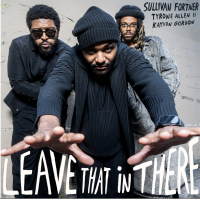
The title draws on Spike Lee's 2006 documentary "When the Levees Broke," which documents the devastation in New Orleans after the levees failed during Hurricane Katrina. It is more than a reference. It is a stance. This is the working trio's first studio recording, featuring Fortner alongside bassist Tyrone Allen II and drummer Kayvon Gordon. It has become one of the pianist's most cohesive ensembles.
The opening track, "Sugarcane," makes the previously noted point beautifully. Gordon's batá drumming gives the track an almost ceremonial feel, while Allen and Fortner build the interplay around it, layering acoustic piano, marimba, and synthesizer textures. The reference to Louisiana's sugar industry is clear, as is the broader history of Black labour, migration, and resistance.
"Que Diablos" is more rhythmically insistent. Allen and Gordon establish a propulsive pattern almost immediately, giving Fortner a firm platform to build on. His left hand settles into a repetitive harmonic figure, while the right hand decorates it with melodic fragments and embellishments. This illustrates how the trio takes a relatively simple idea and brings it to life through interaction.
"A Poignant Time" and "Another Poignant Time" are two tightly focused trio improvisations that frame the deeper emotional narrative. The reference is a Wynton Marsalis quote from the Lee documentary: "I think that is a great moment in American history, because in this moment we see a lot of what is wrong with us."
"Aerobatics Part 1 & Part 2" opens with the first two or three bars of Charlie Parker's "Yardbird Suite." Fortner puts them through his musical blender, transforming them into something uniquely his own. Part 1 is a fragment that serves as an introduction or musical proposition. Part 2 is a longer section in which Fortner's ideas develop, balancing compositional frameworks with improvisational intuition.
On "Sorcerer's Stick," Fortner delves into Herbie Hancock's "The Sorcerer" and Donald Brown's "The Early Bird Gets the Short End of the Stick," before emerging with its own identity. Returning to the piano in a robust, vigorous manner, Fortner spontaneously alters notes, chords and phrases, setting up rhythmic patterns to achieve a jazz feel.
Continuing the theme of music from or about other sources, Fortner's composition "Swirl" is his affectionate nod to Thelonious Monk and appropriately takes a crooked route. Played on the Hammond B3, it is full of dissonant intervals, jagged phrases, and an odd-meter pulse, making particularly effective use of the organ's ability to lend those angular lines both weight and bite.
After the angular pleasures of "Swirl," the album wanders through a series of shorter pieces, including "T295," the fast waltz "Number 3," drummer Lawrence Williams' sole contribution to the program, and "12 Gallons," before arriving at "Aria II." There is a sense of Fortner turning the pages here, picking up ideas and letting them lead wherever they might. "Aria II" brings the past into the present, revisiting material from his 2015 debut album "Aria" on Impulse Records without simply repeating it.
This brings us to "A Hymn for Linda," a deeply personal number for Fortner that completely shifts the atmosphere. In this tribute to the late Linda Payne, his wordless voice turns the trio into something more like a heart-rending invocation.
What may be most interesting about this album is that Fortner has no interest in tidying up his past. He carries it with him and turns it into beautiful music.
Track Listing
Sugarcane; Que Diablos; A Poignant Time; Aerobatics Part 1; Aerobatics Part 2; Sorcerer's Stick; Swirl; T295; Number 3; 12 Gallons; Aria II; Hymn for Linda; Another Poignant Time.
Personnel



Additional Instrumentation
Lawrence Williams: drums.
Album information
Title: Leave That In There | Year Released: 2026 | Record Label: Artwork Records
About Sullivan Fortner
Tags
PREVIOUS / NEXT

Sullivan Fortner Concerts

Become a Sustaining Member

Since 1995, All About Jazz has championed jazz as an art form and supported the musicians who create it. Over three decades, it has grown into one of the world's leading jazz resources, serving hundreds of thousands of readers, musicians, presenters and industry professionals each month.
Help Build the Future of All About Jazz
Your support helps us continue building All About Jazz for the next generation—expanding our editorial coverage, preserving jazz history, developing new community features and creating better ways to discover the music and the people behind it.
Become a sustaining member for as little as $20 per year and you'll immediately enjoy an ad-free experience along with access to subscriber features and future articles for a full year.
Together, we're not simply sustaining All About Jazz—we're building its future. Thank you for being part of the journey.