Home » Jazz Articles » Live Review » Kendrick Scott Quintet at Smoke
Kendrick Scott Quintet at Smoke
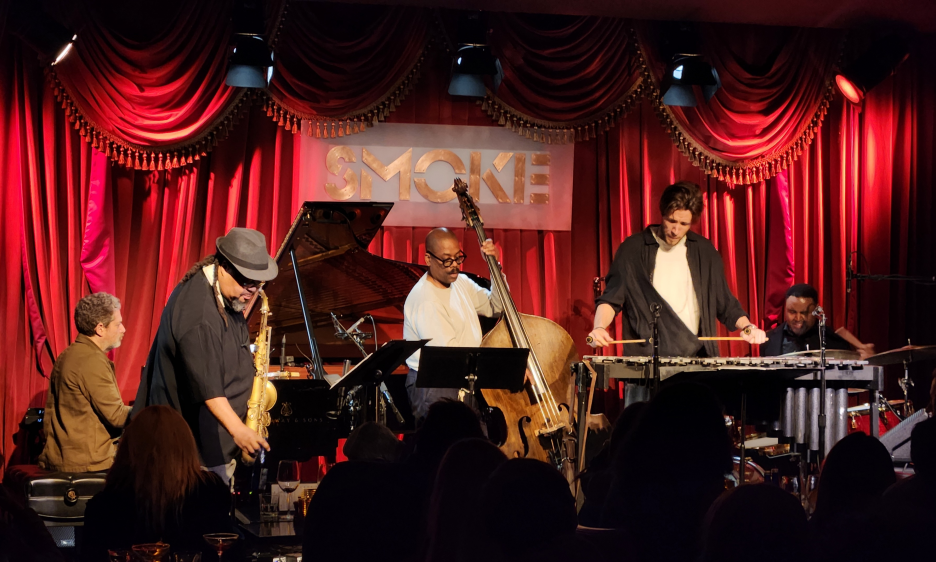
Courtesy Paul Reynolds
Scott employed a seemingly bottomless array of patterns and percussive techniques to drive the music, and imbue it with excitement over just what he might play next.
Kendrick Scott mopped his sweat-streaked face with a towel as he walked from the bandstand at Smoke Jazz Club after his third set of the night on Saturday evening. Plenty of players work hard at America's music, but few do so with the relentless energy and invention the drummer demonstrated during an engrossing hour of leading his quintet in this uptown club.
The Houston native—a mainstay of the New York scene for more than 20 years, not least through a long association with Terence Blanchard—led forcefully from the drums. In interviews, Scott talks much of creating a musical environment within his bands in which creativity can flourish. The Smoke set revealed how—and how effectively—he does that, while also demonstrating his assertiveness as a player.
Scott is no deep-groove timekeeper—in the mold of, say, Art Blakey, another indefatigable drummer-leader who was invariably sweat-soaked at the end of his sets, too. Instead, Scott employed a seemingly bottomless array of patterns and percussive techniques to drive the music and imbue it with excitement over just what he'd play next.
An example of just how varied and engrossing the drummer can be within a single piece came with an arrangement, by tenorist Dayna Stephens, of the standard "But Beautiful. " Scott started the piece using his hands to tap out a pulse on the tom-toms. By the time pianist Kevin Hays embarked on a lovely, rippling solo, the drummer had switched to a brush in his right hand and a mallet in the other, creating sonic variety and interesting cross-rhythms. During the closing solo, from Stephens, Scott finally took up the sticks, including eventually employing syncopated rim shots and double time on his ride cymbal—daring techniques for a ballad.
For all his busy work, Scott manages to avoid overplaying. His work is more textural—orchestral, even—than brash, guiding the music and challenging his sidemen without ever derailing the proceedings. The set was highly democratic, and included selections composed by Stephens and vibraphonist Simon Moullier, along with ample solos by all members, even bassist Vicente Archer.
Yet Scott, unabashedly, gave himself a lot of solo space. That included beginning two numbers—the opener, Bobby Hutcherson's "Herzog," and "Monk's Dream"—with near-two-minute unaccompanied drum solos, mostly featuring a variety of snare-drum rolls. The Thelonious Monk piece also featured two drum interludes, each different in rhythm and texture, and concluded with a fiery percussive battle between Mouillier and Scott, as the rest of the band played variations on the theme behind the duellists. Throughout, Scott's sound palette was enhanced by a second floor tom-tom, unusually located to the left of his snare drum and hi-hat cymbals.
The set was enriched by a particular rapport with Moullier, whose rig was set up close to Scott's and who often evinced a smiling delight at the drummer's musical surprises. Scott has a special affinity for playing with vibes, which may explain his decision to stock this quintet's front line with this second percussion instrument, in lieu of the more familiar addition within a five-piece of a second horn on the front line. (For more evidence of Scott's work with vibes players, witness his dazzling duet performance, with vibraphonist Warren Wolf, of Dizzy Gillespie's "Bebop;" a link to it is further down this page.)
Scott has played with all these musicians before—including having a thirty-year association with Stephens, back to their student days at the Berklee College Of Music. Yet the Smoke gig marked the debut of this quintet. That newness yielded excitement. We, as listeners, were appreciating the strong chemistry within this lineup as the musicians themselves still were. It was an hour of deeply satisfying discovery for all in the room.
 FOLLOW Paul Reynolds
and get notified whenever Paul has a new article published.
FOLLOW Paul Reynolds
and get notified whenever Paul has a new article published.
Journalist and programmer in jazz, folk, country and other musics
About Kendrick Scott

Tags
PREVIOUS / NEXT

Become a Sustaining Member

Since 1995, All About Jazz has championed jazz as an art form and supported the musicians who create it. Over three decades, it has grown into one of the world's leading jazz resources, serving hundreds of thousands of readers, musicians, presenters and industry professionals each month.
Help Build the Future of All About Jazz
Your support helps us continue building All About Jazz for the next generation—expanding our editorial coverage, preserving jazz history, developing new community features and creating better ways to discover the music and the people behind it.
Become a sustaining member for as little as $20 per year and you'll immediately enjoy an ad-free experience along with access to subscriber features and future articles for a full year.
Together, we're not simply sustaining All About Jazz—we're building its future. Thank you for being part of the journey.
Near
New York Concerts