Home » Jazz Articles » Groove Orbit » How John Coltrane Changed Rock Music: Beyond Psychedelia
How John Coltrane Changed Rock Music: Beyond Psychedelia

Something oh so groovy
Something happened to me yesterday
These lines are from The Rolling Stones' 1967 song, "Something Happened To Me Yesterday." Although not one of The Stones' most memorable hits, it does hint at some important considerations. First, and possibly foremost, this song is often interpreted as reflecting the era's fascination with LSD, and shortly after the release of this song, psychedelia quickly became part of the mainstream.
Second, these lyrics can easily be seen as dated and somewhat silly in retrospect. "Something oh so groovy" now sounds like something past its "use by" date. This is the same sort of thing that happened to a good deal of psychedelic music, such as The Strawberry Alarm Clock or The Electric Prunes. Once the wave of flower power hit the mainstream, it seemed as if everyone was jumping on the psychedelic bandwagon.
The psychedelic era, however, offered more than tie-dyed clothing and flowers. By the mid 1960s, rock music was in a period of transition. Growing out of a heavily R&B-influenced foundation, rock music always thrived on rebellion and countercultural tendencies. By the late 1950s, these attitudes remained largely on the fringes of mainstream culture, as exemplified by the beat generation. Many of the leading figures in the beat movement, such as Ken Kesey and Allen Ginsberg, paved the way for the emerging hippie movement.
But changes were also reflected in the music that was produced during this time. Even though there was plenty of interest in the counterculture, the dominant format for radio play was the 45 RPM single, which limited songs to an average of three minutes.
In many ways, song length itself became a metaphor for the limitations of rock music. However much artists wanted to experiment, they still had to conform to the expectations of hit radio. Eventually, FM radio stations started playing album tracks, allowing for longer songs to become popular.
This also signaled that a deeper shift was underway around this time, one that would change rock music during the psychedelic years. The bigger change had much less to do with drugs than we often think. While acid rock was closely tied to music reflecting altered states of consciousness, there was something more powerful that remained long after the effects of the drugs wore off, and this is where jazz enters the picture.
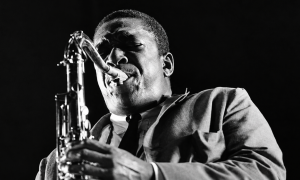
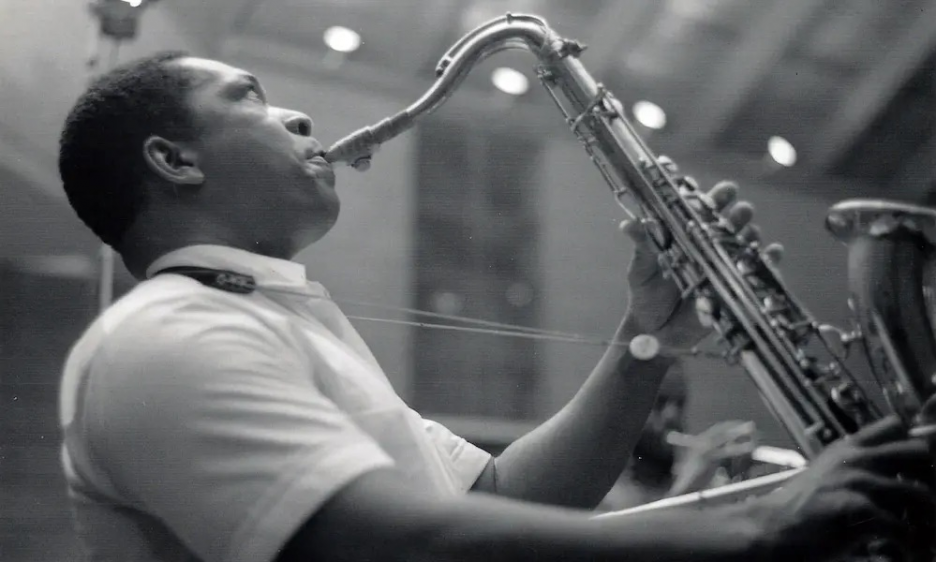
Many groups, such as The Grateful Dead and Santana, began incorporating extended improvisational sections into their music. Unlike the "groovy" flower-power sentimentality associated with the summer of love, this development in rock music is still very much alive today, and jazz musicians, especially John Coltrane, had a great deal to do with it.
To understand how jazz changed the sound of rock music in the late sixties, it is important to look back at the Beat Generation, especially Jack Kerouac, whose novel On the Road inspired a generation of creative artists, including Jerry Garcia. The novel captures a sense of free-spirited bohemian rebellion, which played directly into the counterculture sentimentality of the mid to late sixties. Kerouac wrote the novel in what he called "spontaneous prose," a form of stream-of-consciousness. As Juliana Catania explains in an essay on Kerouac, spontaneous prose stems from his love of bebop jazz. "Kerouac's method of only including jazz-like 'measured pauses' for breaks instead of the traditional periods and 'needless commas,' along with his mindset of 'time being of the essence,' connects to the fast tempo that characterizes bebop jazz."
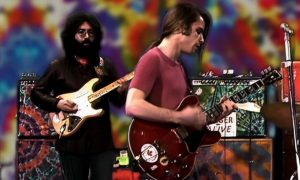
The spontaneity of Kerouac's writing inspired musicians like Jerry Garcia to explore new possibilities in music. The Grateful Dead were one of many groups that insisted that their recordings didn't effectively capture the sound of who they were. The spirit of improvisation was greatly inspired by jazz musicians like John Coltrane, and this is probably best exemplified by the Grateful Dead. As their biographer Dennis McNally mentioned, Coltrane's influence on the band was "omnipresent and permanent." His improvisational approach affected the band's sound, and "no rock band in that era or after would take the lessons of Coltrane more to their playing."
The group would always have a sound that could not be effectively captured on conventional albums. However, even artists who were not specifically hindered by the album format began exploring new musical possibilities with Coltrane at the helm. Probably one of the best examples of this is The Byrds, whose guitarist and vocalist, David Crosby, had been an avid follower of beat generation culture and, as a result, developed a lifelong interest in jazz. But he had an epiphany in the early sixties while touring the country, playing coffeehouse gigs.
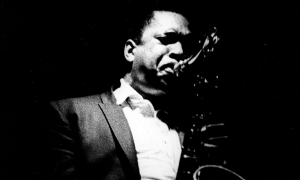
He made a stop in Chicago and got the chance to see Coltrane in concert. As Christopher Hjort recounts, this is where Crosby first heard "the power of Coltrane." He describes the scene in vivid detail, "Crosby, high as a kite," and he experienced "the otherworldly experience of seeing Coltrane's mind-blowing Quartet at a club on Chicago's South Side." Crosby's fascination with Coltrane would later become an integral part of The Byrds' music.
What was happening in rock music during the mid-1960s was not simply a matter of musicians experimenting with new sounds or reflecting the changing social atmosphere of the time.
Something deeper was taking place.
For starters, the shift from singles to albums gave rock musicians the freedom to explore ideas that extended beyond the three-minute format, while exposure to jazz suggested entirely new ways of organizing sound. In this environment, the foundations of psychedelic rock began to emerge, but not as a product of fashion or chemical inspiration, but as a result of musicians exploring new musical possibilities.
When David Crosby encountered the music of John Coltrane, he was hearing more than a remarkable saxophonist; he was encountering a new approach to musical structure. Within a short time, that discovery would find its way into one of the decade's most groundbreaking recordings. In the next installment, we will look at how Coltrane's modal explorations helped inspire the Byrds' "Eight Miles High," a song that rewrote the possibilities of rock music through Coltrane's modal approach.
About John Coltrane

Tags
PREVIOUS / NEXT

Become a Sustaining Member

Since 1995, All About Jazz has championed jazz as an art form and supported the musicians who create it. Over three decades, it has grown into one of the world's leading jazz resources, serving hundreds of thousands of readers, musicians, presenters and industry professionals each month.
Help Build the Future of All About Jazz
Your support helps us continue building All About Jazz for the next generation—expanding our editorial coverage, preserving jazz history, developing new community features and creating better ways to discover the music and the people behind it.
Become a sustaining member for as little as $20 per year and you'll immediately enjoy an ad-free experience along with access to subscriber features and future articles for a full year.
Together, we're not simply sustaining All About Jazz—we're building its future. Thank you for being part of the journey.