Home » Jazz Articles » In the Artist's Own Words » Henry Mancini: The Genius Composer - 25th Anniversary Edition
Henry Mancini: The Genius Composer - 25th Anniversary Edition
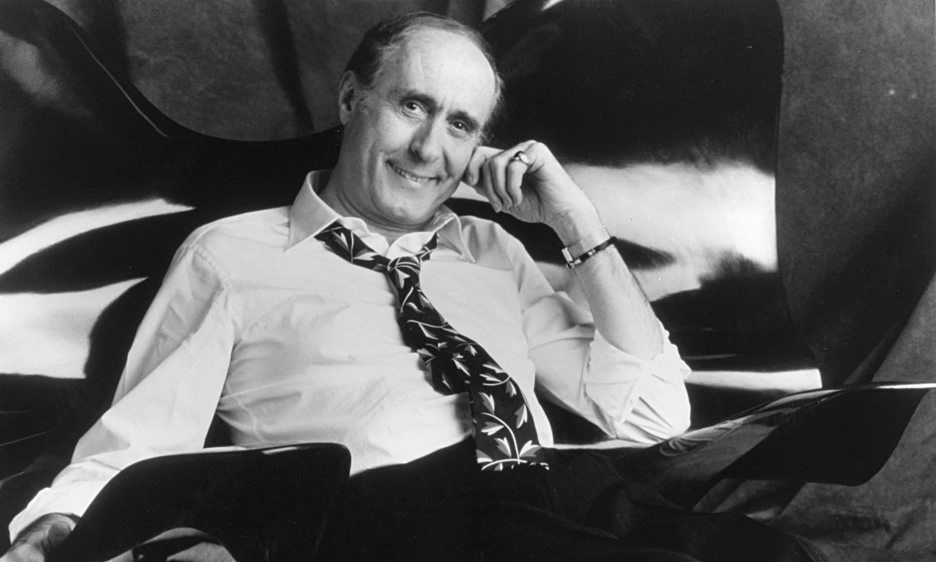
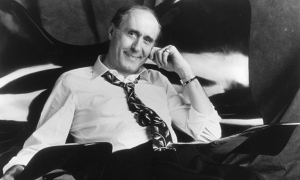
Courtesy GRAMMY.com
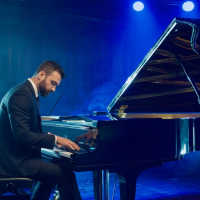
The Personal Bond with Henry Mancini: The genius composer who redesigned my world through his magical notes
My first encounter with Henry Mancini didn't happen by a deliberate choice, but through a cassette recorder and a local radio station in Rome. It was 1998, and at sixteen, I was a young musician obsessed with searching for the timbres of the most diverse musical instruments. I spent my afternoons recording Radio Vaticana Musica specials on cassettes, using their broadcasts to study the DNA of real instruments.I still remember the ignorance of that boy who, while recording a Mancini special, paused the tape on Royal Blue after the second verse just to capture the final trumpet blast. At the time, I didn't care much for jazz, but I was already under the spell of his sonic textures. I even felt a visceral anger when the radio host faded out Latin Snowfall right as the trombone solo was taking flight. Without knowing it, I was already searching for that "perfection" only Mancini could offer.
The definitive encounter occurred three years later at the University of Music in Rome. I was a frustrated piano student, constantly venting to my teacher about how modern music had become "flat" and spiritually empty compared to the harmonic complexity of the past. One afternoon, after another complaint about the lack of melodic communication in contemporary hits, my teacher handed me a "Best of Mancini" collection and said: "Stop talking and go listen to his arrangement of The Windmills of Your Mind."
It was my epiphany. Hearing what Mancini did with Michel Legrand's masterpiece—taking a pre-existing song and reconstructing it so deeply that it seemed like his own original creation—changed my perception of music forever. In that arrangement, Mancini didn't just play; he inhabited the piano (a rare moment where he didn't call his usual collaborator, John Williams). It was a masterclass in musical architecture. That day, the fan joined the "reconstructor." I realized Mancini was the vital bridge I had been looking for: proof that high-class arrangement is not just technique, but a profound form of communication. And I began to dream of one day becoming capable of playing all those masterpieces of his. Who knew when, who knew how...
The Concept and the Challenge: From Iconic Soundtracks to the "Reconstruction" of Henry Mancini, the genius composer
The idea for this work was born a little over a year ago, around January, from a desire to take a break from my previous projects (my tribute band dedicated to the legendary Queen, my two Anthologies of classic Neapolitan Songs, and the two Anthologies of Italian singer-songwriters) to pivot toward film music—my lifelong dream.Initially, my project was titled "Iconic Movies Soundtrack." While working on this collection, I realized that among the various tracks chosen, those by Henry Mancini, the genius composer, were the ones I was most deeply attached to. From what was meant to be just a section of a larger work, an independent "spin-off" dedicated exclusively to him was born. And so, on April 11, 2025, I began with Moon River. It was my "test": if I could recreate that, the project would make sense.
The difficulty immediately appeared cyclopean: without scores, I had to identify by ear every single harmonization of the choir and every orchestral line. But the real challenge was expressiveness. Mancini's music is "visual"; it speaks to the heart; it is alive. It cannot be performed with a traditional keyboard or sampler; it would sound dead, flat. To give an example, consider the clarinet in Baby Elephant Walk: it is a constant shift of intonation, breath, and dynamics. It is an instrument that "sings." To succeed in this "reconstruction," I had to overcome the limitations of traditional sampling libraries (also precious and extensively used through the faithful Kontakt by Native Instruments), which are essentially based on static "photographs" of the instrument, developed in multiple layers to emulate behavior, dynamics, and expressiveness, yet with limitations that remain tangible and distant from the full dynamic and expressive range of a real instrument.
I chose to rely on SWAM (Synchronous Waves Acoustic Modeling) technology. This is a new-generation proprietary technology, conceived by Stefano Lucato and developed in collaboration with Emanuele Parravicini. Unlike classic samplers, the SWAM engine combines Physical Modeling and Behavioral Modeling with the Multi-Vector/Phase-Synchronous Sample-Morphing technique. This allowed me to have instruments (woodwinds, brass, and strings) capable of multi-vector expressiveness, turning virtual instruments into more than simple sample players—making them living organisms capable of emulating the behavior and nuances of real instruments, those same orchestral characteristics that Mancini so diligently sought.
After a month of work on Moon River, the results were so encouraging that they pushed me to tackle Lujon, then Baby Elephant Walk, and from there, the remaining 22 tracks of the project.
The Ear-Only Process: Visualizing the Unseen Score
If I were asked how I managed to reconstruct these scores without a single sheet of music, my answer would be: I don't know for sure. It is a process of obsessive listening that continues until I begin to "see" the notes. Not just hearing; it's visualizing the sound spectrum of each individual instrument, focusing on it until I isolate it within my brain. It is an exhausting mental exercise—a sort of archaeological "dig" into the sound.Every track was a battle. Was there a moment when I thought "I won't make it?" Yes, every single time. From day one, every new obstacle felt insurmountable. I would close a session convinced of failure, only to return the next day armed with infinite patience. It went on like this for an entire year.
Some tracks terrified me more than others. Royal Blue was a nightmare due to its tremendous jazz harmonic complexity, as were the brass sections in The Pink Panther Theme and A Shot in the Dark.
The choirs in It Had Better Be Tonight and How Soon seemed indecipherable, while the melancholy elegance of The Windmills of Your Mind and Loss of Love threw me into a crisis because I feared I wouldn't be able to decipher the counterpoint between the string lines, and between the strings, woodwinds, and brass. I even doubted myself with the themes from Charlie's Angels and Crazy World, but the greatest discouragement came with Meggie's Theme and The Thorn Birds Theme. With the latter, I was almost certain I wouldn't make it: deciphering that arrangement was like trying to transcribe Johann Sebastian Bach's Brandenburg Concerto No. 2 in F major, BWV 1047 by ear. And yet, note by note, the unseen became real. Perhaps a couple of notes might not be identical to the original score, but I couldn't have done more, and I still hope I managed to do a good job.
Reconstruction Engineering: Between Professional Hardware and Digital Alchemy
The production of this work was not planned; it was a spontaneous, almost miraculous evolution. I didn't initially know how many tracks I would tackle, but one led to another until I found myself with 25 tracks celebrating 25 years of "Hank's" career. Although I am not a man of mysticism, I felt guided by an almost celestial hand, as if the perfect alignment of 25 tracks and 25 years were a spiritual mandate—an unexplainable connection with Mancini himself that transcended mere coincidence.I dedicated myself to the care of the sound with obsessive rigor. For the mixing, my philosophy was absolute fidelity to the era of each track, in order to replicate as much as possible that analog feel and specific color. I approached every session as if I were in a major Hollywood studio between the 1950s and the 1980s. The orchestra is an incredible mosaic that utilizes, in addition to the aforementioned SWAM instruments, the majesty of Spitfire Audio's libraries (strings, brass, and woodwinds) in the Symphonic and Studio editions, along with the Chamber and Solo editions for strings and Hans Zimmer percussion, alternating them with the incredible realism of the Cinematic Studio Series (strings, solo strings, woodwinds, and brass) and the expressive depth of Orchestral Tools' Berlin Strings, essential for recreating the symphonic and passionate sound in the most cantabile and virtuosic passages. For the soloists, I used Native Instruments' Cremona Quartet, Chris Hein's mandolins, Edoardo Talironte's accordions, Ilya Efimov's nylon guitar and Indiginus's Renaxxance, Native Instruments' Indian Harmonium and Irish Whistle, the Tack Piano and Electric Harpsichord from Keyscape (Spectrasonics) and the historical harpsichord by Post Musical Instruments, the Pedal Steel and Bouzouki from Impact Soundworks, Galaxy Instruments' grand pianos for Native Instruments, MusicLab's acoustic and electric guitars, VSL and Native Instruments percussion, IK-Multimedia's Hammond B-3X organ, Waves Bass Fingers and Trilian Bass (Spectrasonics), and yet more NI Abbey Road Drummer, Steve Slate Drums, NI's Session Horns, Fable Sounds' Broadway Big Band brass, and Kirk Hunter's Virtuoso reinforcement strings. Last but not least, I must express my sincere gratitude to Sonokinetic for their fantastic Carousel organ and to Authentic Soundware for their precious Jazz Anthology libraries (drums, bass, and guitar), which provided an unparalleled contribution.
The starting point for every audio track was Brainworx consoles (Amek 9099, Focusrite, Neve N-72) with TMT technology to ensure non-linear analog warmth, and Waves' NLS (Non-Linear-Summer) modules. The signal chain featured the great classics of the era: Pultec EQs, Softube's AbbeyRoad RS-127 modules, Universal Audio and Waves' LA-2A and Fairchild 660-670 compressors, and the NEOLD V76U73 module. For saturation, I chose Sonnox's Dynamics (the "warmth" section with its unique and warm tube sound), Sonnox Inflator, FabFilter Saturn2 (gentle saturation or clean tape mode), and Teal from Acustica Audio. To achieve the "tape texture," I used the best of the software world: from Softube Tape to Acustica Audio Taupe, including J37 emulations (Waves and Arturia) and the historic UAD ATR-102 and Studer 800.
Every vocal line was captured with a NEUMANN U-87ai microphone, Rupert Neve Portico II Channel Strip (hardware) preamplification, and an Antelope Pure 2 converter, or Apollo Solo with UA610 using Unison technology. The reverbs were the final touch to recreate the space: from Spitfire Audio's AIR Studios Reverb to Universal Audio's Capitol Chambers and EMT140, or the Waves Abbey Road Plates, up to the Lexicon 224 (also from UA) for the more modern tracks.
Vision and Legacy: Music Turning into Imagery
The journey concluded exactly one year after it began. If on April 11, 2025, I opened the first session of Moon River on Cubase, on April 6, 2026, I put the final touch on the video production. A full year of life entirely dedicated to "Hank." There was no pre- established plan for the visual component; the imagery was born from the sound, piece by piece, in a creative flow that lasted a month and a half after finishing the music.It all started with Lujon. Upon hearing my reconstruction for the first time, the arrangement of the strings suggested the movement of waves crashing on the shore to my mother, who witnessed the birth of this work and occasionally offered small creative suggestions. This sparked the idea for the first video: night shots, the moon reflecting on the water, and a small museum on the beach housing the prototypes of the solo instruments heard in the track.
The visual component of this project is a hybrid of traditional cinematography and cutting-edge digital technology. Much of the footage was filmed in 4K using a DJI Mini 4 Pro drone. For the animated sequences and more complex scenarios, I utilized Sora (OpenAI). The specific cartoon aesthetics for 'Raindrops Keep Fallin' on My Head' were created using Google's Veo, while 'It Had Better Be Tonight' relied on 'Kling Pro Motion Control' technology for character swapping. Ultimately, the entire production, montage, and video editing were meticulously handled by myself using Adobe Premiere.
To those who ask what the message of such a monumental work is, I reply that I am no "superman." I succeeded because I have dedicated my entire life to music, sonic research, and passion. It is a labor that demands immense sacrifice and renunciation, but it rewards you with the powerful emotion of seeing something born—even if it is a faithful reconstruction and not my own original composition, I feel it like a child growing up.
My message to the jazz world and Mancini lovers is simple: this music is immortal. It deserves to be passed down, reconstructed, and re-listened to with the definition that today's technology allows, yet in full respect of the sounds of the era. We must not forget a single note of this immense world heritage: Henry Mancini's repertoire is a treasure chest of jewels made of melodies, harmonies, rhythms and, above all, brain, heart, and soul.
About Henry Mancini

Tags
PREVIOUS / NEXT

Become a Sustaining Member

Since 1995, All About Jazz has championed jazz as an art form and supported the musicians who create it. Over three decades, it has grown into one of the world's leading jazz resources, serving hundreds of thousands of readers, musicians, presenters and industry professionals each month.
Help Build the Future of All About Jazz
Your support helps us continue building All About Jazz for the next generation—expanding our editorial coverage, preserving jazz history, developing new community features and creating better ways to discover the music and the people behind it.
Become a sustaining member for as little as $20 per year and you'll immediately enjoy an ad-free experience along with access to subscriber features and future articles for a full year.
Together, we're not simply sustaining All About Jazz—we're building its future. Thank you for being part of the journey.