Home » Jazz Articles » Live Review » Harold López-Nussa at Whale Theatre
Harold López-Nussa at Whale Theatre
Whilst many of the ancient Irish traditions associated with May Day have waned, the time-honored custom of gathering with friends to make merry on first day of summer never loses its appeal. And so, the pubs, bars, restaurants and cafes of Greystones were bustling on this sunny Friday afternoon. Most, however, will have been blissfully unaware that a Cuban jazz pianist was in town.
For some years now, Greystones has been one of the satellite towns in Wicklow to benefit from the spreading of the Bray Jazz Festival's tentacles, with world—class musicians gracing the seaside town's Whale Theatre every May Bank Holiday weekend. On the first evening of BJF's 25th edition, Cuban pianist Harold López-Nussa was making his long overdue debut in Ireland, joined by brother Ruy Adrian López-Nussa on drums and French bassist Thibaud Soulas.
The 120-seater Whale Theatre is a beautifully appointed, intimate space where every seat feels close to the stage. Like a slightly smaller Ronnie Scott's, the floor seating is flanked on three sides by raised tiers that afford splendid all-round visibility. The sound system is top-notch, too. It is the sort of venue that demands a special performance and Harold López-Nussa's trio certainly delivered. The trio opened its account with handclaps, a cowbell clave beat, shaker groove and a sunny piano motif to launch "Guajira." Penned by Ruy, his intense, flashing drum solo—unleashed over a steady piano vamp—finished on a slam-dunk exclamation that ignited the audience's approval. It was a thrilling opener that set the tone for the evening.
The 90-minute set featured originals and Afro-Cuban classics from López-Nussa's Blue Note albums—Timba a la American (2023) and Timba Nueva (2025). Due to America's embargo, López-Nussa had to leave Cuba to accept the contract, beginning the life of an émigré in France. The emotional wrench of leaving Cuba, and of processing grief, was palpable in "Mal du Pays"—the pianist's melancholy intro speaking to the loneliness and longing common to many emigrants on arrival in foreign lands.
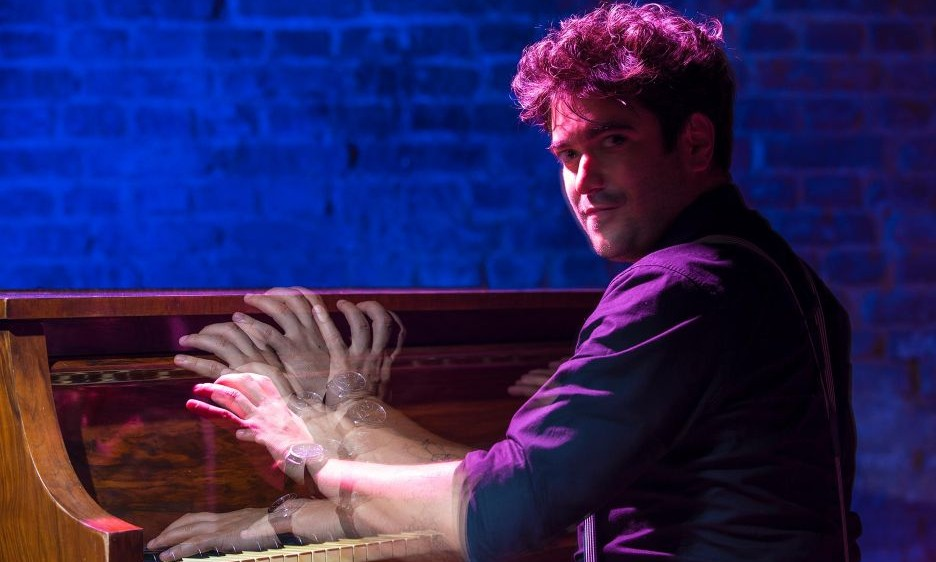
But, aside from the mid-tempo romance of "Bajista Guerrero" and a couple of handsome, slow-burning boleros aside—one of which artfully incorporated the Gershwins' "Summertime"—the trio's playing was charged and celebratory in tone. Infectious clave rhythms, throbbing bass grooves and spicy piano motifs provided the framework for exhilarating soloing from all three musicians. The leader's rolling improvisations—effortlessly melodious, rhythmically incisive—were a delight. At times, one hand would chase the other up and down the keys in thrilling exhibitions of dexterity.
Harold López-Nussa came to wider international attention in 2010-2011, with Ninety Miles (Concord Music Group, 2011), a marvelous collaborative project that, after a year of red tape, brought Donald Harrison, Stefon Harris and Christian Scott aTunde Adjuah to Cuba. But even then López-Nussa already had several impressive albums under his belt. The intervening years have only cemented his reputation as a generational talent, placing him in a lineage that runs from Bebo Valdes to Chucho Valdes and on to Gonzalo Rubalcaba. He is also steeped in older Cuban musical traditions, as a funky interpretation of Benny Moré's "Bonito y Sabroso" demonstrated. A three-way chant—"mueven la cintura y los hombros" (move your hips and shoulders)—and a clapped clave rhythm sustained by the audience was the ballast for a rippling piano solo full of percussive accents and melodic sparkle. From Cuban son and the swaying danzon of "Lobo's Cha" to silky bolero and fiery Afro-Cuban jazz discarga, the trio's juggling of tempi, flavors and intensity made for an engaging listening experience. The joy transmitted from the stage was infectious, with the musicians 'dancing' in their respective ways while tethered to their instruments.
"Tierra Mia," the trio's signature adiós, rounded the set off with a mixture of grace and passion—Harold's vamp setting up his brother for a blistering drum solo, followed by an equally energetic ensemble finale. An instant standing ovation, accompanied by whoops and cheers, demanded an encore, and the trio duly delivered the Cuban classic "Veinte Años." Penned by singer-guitarist María Teresa Vera in 1935, this beloved habanera—a lament to lost love—brought one last scintillating flourish from the pianist, supported by deftly swinging accompaniment. The musicians took their bows to a boisterous reception. That the applause was still ringing as they exited the stage spoke volumes for a performance that will linger in the memory.
 FOLLOW Ian Patterson
and get notified whenever a new article published.
FOLLOW Ian Patterson
and get notified whenever a new article published.
Ian is dedicated to the promotion of jazz and all creative music all over the world, and to catching just a little piece of it for himself.
About Harold Lopez-Nussa

Tags
PREVIOUS / NEXT

Become a Sustaining Member

Since 1995, All About Jazz has championed jazz as an art form and supported the musicians who create it. Over three decades, it has grown into one of the world's leading jazz resources, serving hundreds of thousands of readers, musicians, presenters and industry professionals each month.
Help Build the Future of All About Jazz
Your support helps us continue building All About Jazz for the next generation—expanding our editorial coverage, preserving jazz history, developing new community features and creating better ways to discover the music and the people behind it.
Become a sustaining member for as little as $20 per year and you'll immediately enjoy an ad-free experience along with access to subscriber features and future articles for a full year.
Together, we're not simply sustaining All About Jazz—we're building its future. Thank you for being part of the journey.