Home » Jazz Articles » Live Review » Andy Fusco Sextet
Andy Fusco Sextet

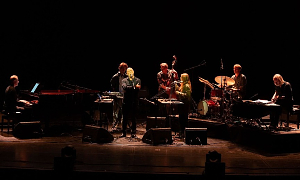
Although the concert was dedicated to Charlie Parker and John Coltrane, the program was a mixture of the compositions of Walt Weiskopf, standards, as well as tunes associated with the two giants of modern jazz. The band opened up in fine fashion with Weiskopf’s “Gone Tomorrow.” The composer set a very high standard for the rest of the soloists, as his convoluted, Coltrane-influenced lines were always resolved in an accessible manner. Weiss played the introduction and melody to “Autumn Leaves,” then yielded to Joel Weiskopf’s turn, which seemed to drift in and out of focus. Fusco proceeded to shake things up with his biting tone and hard direct swing, playing with utmost assurance and seemingly singing directly through the horn.
“Brazilia,” another one of Walt Weiskopf’s compositions, included Keller’s most impressive work of the set. Despite Drummond’s percussive storm behind him, the tenor saxophonist nonetheless chose an amiable approach, playing each note with care and allowing the music to breathe easily. “Grand Central” was in large measure a mock battle between Walt Weiskopf and Fusco, climaxing in frantic eight bar exchanges. A beautiful arrangement of Mal Waldron’s “Soul Eyes” featured the two tenors moving around Fusco’s playing of the melody. Joel Weiskopf’s solo was lovely in its use of silence and space, with the speeding up and slowing down of his right hand telling a romantic tale.
Walt Weiskopf’s “Waltz For Judy” featured another animated turn by the tenor saxophonist. His phrases constantly ricocheted off each other, yet still managed to stay grounded and meaningful. Charlie Parker’s “Donna Lee” was the concert’s final number. Walt Weiskopf seemed out of his element, his lines rushed and running out of steam before they ended. Fusco, however, displayed a firm command of the bop idiom, staying busy without sounding jumbled, becoming stronger and more forceful in a duet with Drummond. Before all three saxophones traded brief phrases and took the tune out, Joel Weiskopf played an equally potent bop-oriented solo, effectively alternating between single note lines and chordal passages.
Tags
PREVIOUS / NEXT
Become a Sustaining Member

Since 1995, All About Jazz has championed jazz as an art form and supported the musicians who create it. Over three decades, it has grown into one of the world's leading jazz resources, serving hundreds of thousands of readers, musicians, presenters and industry professionals each month.
Help Build the Future of All About Jazz
Your support helps us continue building All About Jazz for the next generation—expanding our editorial coverage, preserving jazz history, developing new community features and creating better ways to discover the music and the people behind it.
Become a sustaining member for as little as $20 per year and you'll immediately enjoy an ad-free experience along with access to subscriber features and future articles for a full year.
Together, we're not simply sustaining All About Jazz—we're building its future. Thank you for being part of the journey.