Home » Jazz Articles » Album Review » Sarah Pillow: Wanderer
Sarah Pillow: Wanderer
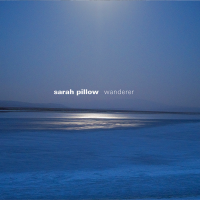
On this outing, Pillow is fortunate to have her husband, Marc Wagnon, a fine vibraphonist, alongside her. He has also provided the arrangements, and his understanding of her musical personality is evident throughout. The supporting cast is equally impressive, featuring Donny McCaslin on tenor saxophone, Nicola Caminiti on alto saxophone, Joey Curreri on trumpet, David Kikoski on piano, Joe Martin on bass, and Mike Clark on drums. These musicians do not merely accompany a vocalist; they are part of the conversation.
Irving Berlin's "Blue Skies" kicks things off with a spirited rendition that sets the tone for what follows. Pillow does not put a bubble around the number. Her phrasing feels authentic, and the band supports her throughout with supple solos from Caminiti and Curreri. With Dizzy Gillespie's "A Night in Tunisia," the pace picks up. Pillow's scat singing is spirited and inventive, and she responds as the music unfolds. Both Wagnon and McCaslin deliver compelling solos that add to the intensity of the interpretation.
Deciding to dedicate a number to Ella Fitzgerald, despite the best intentions, can be a fraught undertaking. On "How High the Moon," Pillow recognizes these pitfalls and avoids them by refraining from imitation and making the performance her own. In support, Kikoski gives the keyboard a workout that matches the piece's chord changes.
Pat Metheny's "The First Circle" reveals another side of Pillow. Her wordless vocal passages mirror the music's shifting contours, and the exemplary solos by Curreri and Kikoski add depth to the reading.
The three Charles Mingus pieces are especially welcome. "Duke Ellington's Sound of Love" has an affectionate, reflective quality. In "Tonight at Noon," Pillow's wordless vocal is best described as unruly, with Kikoski, Curreri, and McCaslin up for the chase. "Eclipse," by contrast, presents a more intricate and shadowy challenge. These compositions do not translate easily into a vocal setting. Pillow finds a way into each one without losing the composition's distinctive character.
The closing track is the traditional "Wayfaring Stranger." Pillow's vocal is delivered in a straightforward, contemplative manner, and following so much stylistic variety, its directness is somewhat refreshing.
 FOLLOW Pierre Giroux
and get notified whenever a new article published.
A former international financial executive with a long term fascination with jazz and its artists
Track Listing
Blue Skies (Irving Berlin); So Many Stars (Sergio Mendez); A Night in Tunisia (Dizzy Gillespie); Duke Ellington’s Sound of Love (Charles Mingus); How High the Moon (Morgan Lewis and Nancy Hamilton); Tonight at Noon (Charles Mingus); The First Circle (Pat Metheny & Lyle Mays); Café (Egberto Gismonti); Stella by Starlight (Victor Young & Ned Washington); Eclipse (Charles Mingus); 500 Miles High (Chick Corea); Nature Boy (Eden Ahbez); Wayfarin’ Stranger (anonymous).
Personnel

Sarah Pillow
vocals
Marc Wagnon
vibraphone
Donny McCaslin
saxophone, tenor
Mike Clark
drums
David Kikoski
piano
Joey Curreri
trumpet
Nicola Caminiti
saxophone
Joe Martin
bassAlbum information
Title: Wanderer | Year Released: 2026 | Record Label: Buckyball Records
About Sarah Pillow
Tags
PREVIOUS / NEXT


Become a Sustaining Member

Since 1995, All About Jazz has championed jazz as an art form and supported the musicians who create it. Over three decades, it has grown into one of the world's leading jazz resources, serving hundreds of thousands of readers, musicians, presenters and industry professionals each month.
Help Build the Future of All About Jazz
Your support helps us continue building All About Jazz for the next generation—expanding our editorial coverage, preserving jazz history, developing new community features and creating better ways to discover the music and the people behind it.
Become a sustaining member for as little as $20 per year and you'll immediately enjoy an ad-free experience along with access to subscriber features and future articles for a full year.
Together, we're not simply sustaining All About Jazz—we're building its future. Thank you for being part of the journey.