Home » Search Center » Results: guitar
Results for "guitar"
About Dominic Miller

Results for pages tagged "guitar"...
About Carl Michel
Results for pages tagged "guitar"...
Carl Michel

Born:
Composer and guitarist Carl Michel started playing music at a early age, initially inspired by rock and blues guitarists. After high school his interests shifted towards jazz, and after studying for a brief period at the West Bank School Of Music in Minneapolis, he eventually went to Berklee College of Music (1977-1979). In 1980, he moved to Austin, TX, with his brother, percussionist Robert "Booka" Michel, and—with Tina Marsh—became Co- founder of "The Creative Opportunity Orchestra," a large ensemble dedicated to performing new compositions. In 1985, he moved to Madison, WI, where he was actively involved with the Madison Music Collective
About Pat Metheny
Results for pages tagged "guitar"...
Pat Metheny

Born:
Pat Metheny was born in Kansas City on August 12, 1954 into a musical family. Starting on trumpet at the age of 8, Metheny switched to guitar at age 12. By the age of 15, he was working regularly with the best jazz musicians in Kansas City, receiving valuable on-the-bandstand experience at an unusually young age. Metheny first burst onto the international jazz scene in 1974. Over the course of his three-year stint with vibraphone great Gary Burton, the young Missouri native already displayed his soon-to-become trademarked playing style, which blended the loose and flexible articulation customarily reserved for horn players with an advanced rhythmic and harmonic sensibility - a way of playing and improvising that was modern in conception but grounded deeply in the jazz tradition of melody, swing, and the blues. With the release of his first album, Bright Size Life (1975), he reinvented the traditional "jazz guitar" sound for a new generation of players. Throughout his career, Pat Metheny has continued to re-define the genre by utilizing new technology and constantly working to evolve the improvisational and sonic potential of his instrument. METHENY'S versatility is almost nearly without peer on any instrument. Over the years, he has performed with artists as diverse as Steve Reich to Ornette Coleman to Herbie Hancock to Jim Hall to Milton Nascimento to David Bowie. Metheny's body of work includes compositions for solo guitar, small ensembles, electric and acoustic instruments, large orchestras, and ballet pieces, with settings ranging from modern jazz to rock to classical.
About Memphis Minnie
Results for pages tagged "guitar"...
Memphis Minnie

Born:
Why has this musician who recorded over two hundred sides and was well-loved by the Black blues audiences of the '30s and '40s been comparatively ignored by later audiences? Perhaps it's because Memphis Minnie doesn't fit the myth of the young, tragic, haunted blues singer and she is too complex of a character to be easily marketed. She shaped a life very different from the limited possibilities offered to the women of her time. She lived a long life, was at her best in middle age, and would spit tobacco wearing a chiffon ball gown. Memphis Minnie's music remained popular over two decades because it was lyrically and instrumentally in tune with the lives of Black Americans
About John McLaughlin
Results for pages tagged "guitar"...
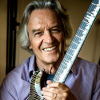
John McLaughlin
Born:
John McLaughlin, also Mahavishnu John McLaughlin, is ajazz fusion guitar player from Doncaster, Yorkshire inEngland. He came to prominence with the electric groupof Miles Davis in the late 1960s, and with other well-known players such as Chick Corea and Tony Williams.
Before moving to the United States, McLaughlinrecorded Extrapolation (with Tony Oxley andJohn Surman) in 1969. The album showcasedMcLaughlin as a guitarist of great technical virtuosity,power, speed, and inventiveness (such as the ability toplay in odd meters).
He moved to the United States in 1969 to join TonyWilliams's group Lifetime. He subsequently played withMiles Davis on his landmark albums In A SilentWay, Bitches Brew (which has a tracknamed after him), Big Fun (where he isfeatured soloist on "Go Ahead John") and A Tributeto Jack Johnson. Davis paid tribute to him in theliner notes to Jack Johnson, callingMcLaughlin's playing "far in." He returned to the Davisband for one recorded night of a week-long club date,which was released as part of the albumLive/Evil.
About John Mayer
Results for pages tagged "guitar"...
John Mayer

Born:
John Clayton Mayer singer-songwriter won the Grammy Award for Best Male Pop Vocal Performance for the 2002 release of the single 'Your Body Is a Wonderland.' In February of 2005, he also won a Best Male Pop Vocal Performance Grammy for his song 'Daughters' of the album 'Heavier Things'. He beat out, Elvis Costello, Josh Groban, Prince and Seal. He also took home the Grammy Award for Song Of The Year which is awarded to song writers, for the song 'Daughters'. He dedicated that award to his Grandma, Annie Hoffman, who passed away in May of 2004.
Born in Bridgeport, Connecticut, Mayer grew up in Fairfield, Connecticut and attended Fairfield High School
About Yoshiaki Masuo
Results for pages tagged "guitar"...
Yoshiaki Masuo
Born:
Born in Tokyo, Japan on October 12 1946 as a son of a jazz band leader and pianist, Yoshiaki Masuo grew up surrounded by jazz music, although he never had any formal musical training. At the age of 15, he started playing the guitar on his own. Prominent among his early influences were Wes Montgomery and Grant Green. While in Waseda University Jazz Club, Masuo was discovered by alto saxophonist Sadao Watanabe, and joined his group at the end of 1967. Masuo thus started his professional career on top as a regular of Japan's leading jazz group. He was in the group for three years, and experienced tours outside of Japan with Sadao, playing at Montreux and Newport jazz festivals
About Taj Mahal
Results for pages tagged "guitar"...
Taj Mahal

Born:
Taj Mahal has spent more than 40 years exploring the roots and branches of the blues. Grounded in the acoustic pre-war blues sound but drawn to the eclectic sounds of world music, he revitalized a dying tradition and prepared the way for a new generation of blues men and women. While many African Americans shunned older musical styles during the 1960s, Mahal immersed himself in the roots of his past. "I was interested in the music because I felt something [got] lost in that transition of blacks trying to assimilate into society." He had no intention of repeating what had come before, however, and drew deeply from the wells of the ethnic music of Africa, South America, and the Caribbean.
About Lawrence Lucie
Results for pages tagged "guitar"...
Lawrence Lucie
Born:
Lawrence Lucie was an American jazz guitarist. Born in Emporia, Virginia, Lucie learned banjo, mandolin, and violin as a child and played with his family at dances. Lucie's father, a barber, also played jazz music. He studied banjo in New York City at the Brooklyn Conservatory, but switched to guitar when he started a professional career. He was the guitarist for orchestras led by Duke Ellington (1931-32), Benny Carter (1932-34), Fletcher Henderson (1934, 1936-39), the Mills Blue Rhythm Band (1934-36), Coleman Hawkins (1940), and Louis Armstrong (1940-44); he was also the best man at Armstrong's wedding
About Sylvain Luc
Results for pages tagged "guitar"...
Sylvain Luc

Sylvain Luc comes from Bayonne. Surrounded by the inspiring atmosphere of his eagerly music practising brothers, he chooses the guitar as his instrument at the age of 5. He is 9 when he enters the conservatoire and starts recording his first album of Basque folklore "Elgarrekin" together with his brothers. In the Luc family they remember with tenderness the year when he made his stage debut as Joe Dassin with a local group. His preference for the strings is not limited to the guitar alone; by exploring the classical richness (with Jorge Cardoso), he learns to appreciate the mandolin, the violin and studies the cello for 10 years
Album Showcase
Trending
 In Tribute To...
Points of View: Celebrating Dave Holland
 In Tribute To...
John Coltrane At 100: A Global Perspective
 Jazz Raconteurs
Julius Hemphill: Marty Ehrlich and Tim Berne Remember a...
 Profile
Sequoia Snyder: Growing in the Light of the Masters
 Interview
Jasur Khalilov: From Falak to Fusion
 Interview
Boney James: A Simple Man And A Lifetime Study
 Musician 2 Musician
Steve Coleman on Dave Holland
VOTE!