Home » Jazz Articles » Album Review » Muriel Grossmann: Plays The Music of McCoy Tyner and Grateful Dead
Muriel Grossmann: Plays The Music of McCoy Tyner and Grateful Dead
That said, the boundary between the Dead and jazz has never been impermeable. Jazz musicians, including Branford Marsalis, Ornette Coleman and David Murray, have shared stages or repertoires with the band's music. Murray's Dark Star (The Music of the Grateful Dead) (Astor Place, 1996) was an early and serious engagement, followed later by saxophonist David McMurray's Blue Note Records releases Grateful Deadication (2021) and Grateful Deadication 2 (2023).
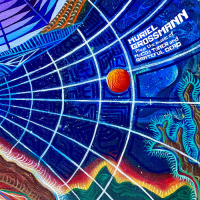
Enter saxophonist Muriel Grossmann and her working quartet with guitarist Radomir Milojkovic, Hammond B3 organist Abel Boquera and drummer Uros Stamenkovic. A prolific ensemble with roughly a half dozen releases to their name, the group follows up Breakthrough (Dreamlandrecords/RR Gems, 2025) with an album that draws an explicit line between the Grateful Dead and McCoy Tyner. Grossmann's premise rests on Weir's well-documented admiration for the classic John Coltrane Quartet, particularly Tyner's harmonic and rhythmic imprint. It is not an association commonly made by either Dead Heads or jazz purists, but Grossmann commits to the idea with conviction.
The project is split across two LPs, one devoted to Tyner, the other to the Grateful Dead, while the two-CD edition doubles the material, offering alternate takes of each selection. Tyner's "Walk Spirit, Talk Spirit," drawn from his Montreux performance originally released on Enlightenment (Milestone, 1973), opens the set and aligns naturally with Grossmann's long-standing immersion in spiritual jazz. The quartet treats the piece as a launching pad for extended improvisation, an approach that also suits "Contemplation" from The Real McCoy (Blue Note, 1967), where a blues-inflected ballad gradually intensifies into a deeply-meditative groove.
The shift to the Grateful Dead's repertoire brings a subtle, but noticeable change in feel. "The Music Never Stopped" leans into a funkier, more rock-oriented pulse, propelled by Stamenkovic's drumming. On "The Other One," Grossmann switches from tenor to soprano saxophone, while Milojkovic's guitar introduces a bluesy edge that bridges the two worlds without forcing a fusion.
Rather than resolving the long-running debate over the Dead's place in jazz, Grossmann's album reframes the question entirely. This is not an argument, but an exploration, one that treats both repertoires as open systems, ripe for improvisation and reinterpretation. Whether or not listeners accept the premise, the quartet's commitment and musical coherence make a persuasive case that these worlds have more in common than their most ardent defenders might care to admit.
 FOLLOW Mark Corroto
and get notified whenever a new article published.
FOLLOW Mark Corroto
and get notified whenever a new article published.
Mark misses his dogs Louie & Freddy, but endeavors daily to find and listen to new and interesting sounds.
Track Listing
Walk Spirit Talk Spirit; Contemplation; The Music Never Stopped; The Other One; Walk Spirit Talk Spirit Alternative Take; Contemplation Alternative Take; The Music Never Stopped Alternative Take; The Other One Alternative Take.
Personnel

Muriel Grossmann
saxophoneRadomir Milojkovic
guitar, electricAbel Boquera
organ, Hammond B3Uros Stamenkovic
drumsAdditional Instrumentation
Muriel Grossmann: tenor saxophone, soprano saxophone, harmonium, tambura, percussion.
Album information
Title: Plays The Music of McCoy Tyner and Grateful Dead | Year Released: 2025 | Record Label: Dreamlandrecords/RR GEMS
About Muriel Grossmann
Tags
PREVIOUS / NEXT

Become a Sustaining Member

Since 1995, All About Jazz has championed jazz as an art form and supported the musicians who create it. Over three decades, it has grown into one of the world's leading jazz resources, serving hundreds of thousands of readers, musicians, presenters and industry professionals each month.
Help Build the Future of All About Jazz
Your support helps us continue building All About Jazz for the next generation—expanding our editorial coverage, preserving jazz history, developing new community features and creating better ways to discover the music and the people behind it.
Become a sustaining member for as little as $20 per year and you'll immediately enjoy an ad-free experience along with access to subscriber features and future articles for a full year.
Together, we're not simply sustaining All About Jazz—we're building its future. Thank you for being part of the journey.