Home » Jazz Articles » Album Review » Valery Ponomarev Jazz Big Band: Our Father Who Art Blakey
Valery Ponomarev Jazz Big Band: Our Father Who Art Blakey

Ponomarev continues to repay that debt, this time transposing tunes associated with the Messengers to a big-band format while adding a pair of his own emphatic charts (the brief curtain-raising "Overture" and spicy "Gina's Cooking") to the mix. The band is reinforced on two numbers ("Moanin,'" "Blues March") by another former Messenger, the illustrious tenor saxophonist Benny Golson (still swinging at age eighty-five), who composed "Blues March" for Blakey himself (drummer Victor Jones sits in admirably for the maestro on this new version). Completing the in-concert program are Freddie Hubbard's "Crisis" and a couple of winners by Duke Jordan, "Jordu" (publicized by the renowned Max Roach / Clifford Brown Quintet) and "No Hay Problemas."
Listening to Ponomarev's arrangements, it's clear that his roots are in bop. Not that anything sounds the least dated, but the harmonic designs and rhythmic patterns would have been right at home on a Blue Note album from the '50s or '60s. Ponomarev has taken those components and redesigned them for a twenty-first century audience. It's a strategy that works well throughout. Ponomarev's lively "Overture," which runs for less than a minute, leads seamlessly to "Moanin'" and the first of Golson's masterful solos. "Crisis," from the 1961 album Mosiac, is a mid-tempo groover that showcases trumpeter Josh Evans, tenor Steven Carrington and trombonist Stafford Hunter. "Jordu" is next (hermetic ensemble work underscoring bright solos by trumpeter Chris Rogers and tenor Peter Brainin), followed by the prancing "No Hay Problemas," featuring Evans, Carrington and drummer Jones.
Baritone saxophonist Anthony Nelson is eloquent on "Gina's Cooking," as are Rogers, alto Todd Bashore and pianist Mamiko Watanabe. Golson takes his second solo, and Ponomarev his first, on the iconic "Blues March," which ends the concert on a buoyant note punctuated by robust statements from Bashore, Watanabe, Jones and trombonist Corey Wallace. In sum, a splendid performance, one that embraces Ponomarev's tradition-bound stance while pointing inflexibly toward the future. Somewhere, Art Blakey must have been smiling broadly.
 FOLLOW Jack Bowers
and get notified whenever a new article published.
FOLLOW Jack Bowers
and get notified whenever a new article published.
A former newspaper writer / editor who has been writing about jazz for more than forty years.
Track Listing
Overture; Moanin’; Crisis; Jordu; No Hay Problemas; Gina’s Cooking; Blues March.
Personnel
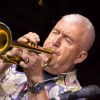
Valery Ponomarev
trumpetValery Ponomarev: composer, arranger, conductor, trumpet. Tracks 1, 3-6 —Rick Henly: trumpet; Eddie Allen: trumpet; Josh Evans: trumpet; Chris Rogers: trumpet; Todd Bashore: alto sax; Chris Hemingway: alto sax; Peter Brainin: tenor sax; Steven Carrington: tenor sax; Anthony Nelson: baritone sax; Stafford Hunter: trombone; Alvin Walker: trombone; David White: trombone; Jack Jeffers: trombone; Mamiko Watanabe: piano; Ruslan Khain: bass; Victor Jones: drums. Tracks 2, 7 – Waldron Ricks: trumpet (for Eddie Allen); Andrew Gould: tenor sax (for Peter Brainin); Corey Wallace: trombone (for David White); Danny Hall: trombone (for Alvin Walker). Special guest – Benny Golson: tenor saxophone (2, 7).
Album information
Title: Our Father Who Art Blakey | Year Released: 2015 | Record Label: Zoho Music
About Valery Ponomarev
Tags
PREVIOUS / NEXT


Valery Ponomarev Concerts
Become a Sustaining Member

Since 1995, All About Jazz has championed jazz as an art form and supported the musicians who create it. Over three decades, it has grown into one of the world's leading jazz resources, serving hundreds of thousands of readers, musicians, presenters and industry professionals each month.
Help Build the Future of All About Jazz
Your support helps us continue building All About Jazz for the next generation—expanding our editorial coverage, preserving jazz history, developing new community features and creating better ways to discover the music and the people behind it.
Become a sustaining member for as little as $20 per year and you'll immediately enjoy an ad-free experience along with access to subscriber features and future articles for a full year.
Together, we're not simply sustaining All About Jazz—we're building its future. Thank you for being part of the journey.