Home » Jazz Articles » Building a Jazz Library » Modern Jazz Guitar
Modern Jazz Guitar

The new generation has absorbed swing, bop, and blues—but also free jazz, world music, funk, and rock. In today's age, it's simply not enough to be able to improvise over chord changes. Modern jazz guitarists follow different rules.
This list begins with a player who worked completely outside the jazz tradition. Jimi Hendrix broke down a huge number of barriers to free expression, lending a striking voice-like quality to his instrument. Whether or not they admit it, just about every guitarist since Hendrix owes him a huge debt for his creativity and vision.
Down the road things get more complicated. At one extreme lies Derek Bailey, who eschews the category "jazz" and refers to his music simply as improvisation. At another, John McLaughlin has incorporated the traditions of Indian ragas and Spanish flamenco. These players and the others on the list simply defy categorization, and that's what makes them worthy of your ears.
Note: for some solid suggestions along more traditional lines, you may wish to visit our Classic Jazz Guitar collection.
 Jimi Hendrix
Band of Gypsys
(Capitol, 1970)
This live set documents Hendrix at the peak of his powers. While not a jazz musician per se, Hendrix introduced a revolutionary approach to sound and melody. For Hendrix, the guitar was an extension of the human voice.
 John McLaughlin
Extrapolation
(Polygram, 1969)
The first of many revolutionary records by McLaughlin, who came of age working with Miles Davis. These tunes are brilliantly melodic and exploratory, with a refreshing angular edge. Look also for his recent performances with Remember Shakti.
 James "Blood" Ulmer
Tales of Captain Black
(DIW, 1978)
Ulmer's first record features a rare sideman appearance by Ornette Coleman. At once jarring and propulsive, the free jazz explosion on Captain Black marks a high point in his extensive discography, which also includes a smattering of dirty funk and blues.
 Pat Metheny & Ornette Coleman
Song X
(Geffen, 1986)
Who could have predicted that Metheny, one of the softest guitarists around, could join forces with Ornette Coleman and make a brilliantly expressionistic free jazz record like Song X? This masterpiece is totally unlike any of his other work, so be warned. (Note: the 2005 reissue of this recording features new tracks.)
 John Scofield
Time On My Hands
(Blue Note, 1989)
Having explored edgy funk, Scofield (another Miles alumnus) settles down for solid quartet improvisation. Sco's tone is rich and warm, and his quirky phrasing has a delicate glow. (His later work mostly lacks this level of sophistication.)
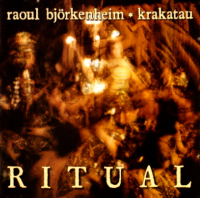 Raoul Bjorkenheim & Krakatau
Ritual
(Cuneiform, 1990)
Krakatau strains at the seams here, a sextet bursting with tribal energy. Bjorkenheim is a relatively noisy guitarist who employs dissonance as a tool for tension and release.
 Sonny Sharrock
Ask the Ages
(Axiom, 1991)
Sharrock did not record much, but his last record has the kind of piercing intensity that defines energy music. This sharp and edgy quartet performance evinces a sort of primal essence, a yearning for higher peaks of ecstasy.
 John Abercrombie
November
(ECM, 1992)
Abercrombie has a beautiful way with softness and silence. His wispy lines on this quartet collaboration support a gently purring pulse, blending seamlessly with John Surman's ethereal saxophone playing.
 Derek Bailey
Harras
(Avant, 1995)
This collaboration features John Zorn and William Parker, who act as perfect foils for Bailey's extremely abstract and unpredictable playing. Without resorting to gadgets or tricks, this iconoclast coaxes inscrutable lines from his guitar.
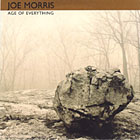 Joe Morris
Age of Everything
(Riti, 2002)
In terms of pure density of ideas, Morris has no equal. His virtuosity allows him to explore complex patterns and harmonies within the context of logically ordered compositions. Yet at the same time, there's an unforced natural feel to this trio date.
 Bill Frisell
The Intercontinentals
(Nonesuch, 2003)
Frisell has covered a lot of ground from postmodern jump-cut music to country-tinged Americana and straight-ahead jazz, but this effort with an international group stands out as a particularly warm and inviting outing marked by flexibility and lyricism.
About John McLaughlin
Tags
PREVIOUS / NEXT


Become a Sustaining Member

Since 1995, All About Jazz has championed jazz as an art form and supported the musicians who create it. Over three decades, it has grown into one of the world's leading jazz resources, serving hundreds of thousands of readers, musicians, presenters and industry professionals each month.
Help Build the Future of All About Jazz
Your support helps us continue building All About Jazz for the next generation—expanding our editorial coverage, preserving jazz history, developing new community features and creating better ways to discover the music and the people behind it.
Become a sustaining member for as little as $20 per year and you'll immediately enjoy an ad-free experience along with access to subscriber features and future articles for a full year.
Together, we're not simply sustaining All About Jazz—we're building its future. Thank you for being part of the journey.