Home » Jazz Articles » Live Review » Jazz at Lincoln Center Orchestra Play Ellington's Black,...
Jazz at Lincoln Center Orchestra Play Ellington's Black, Brown, and Beige
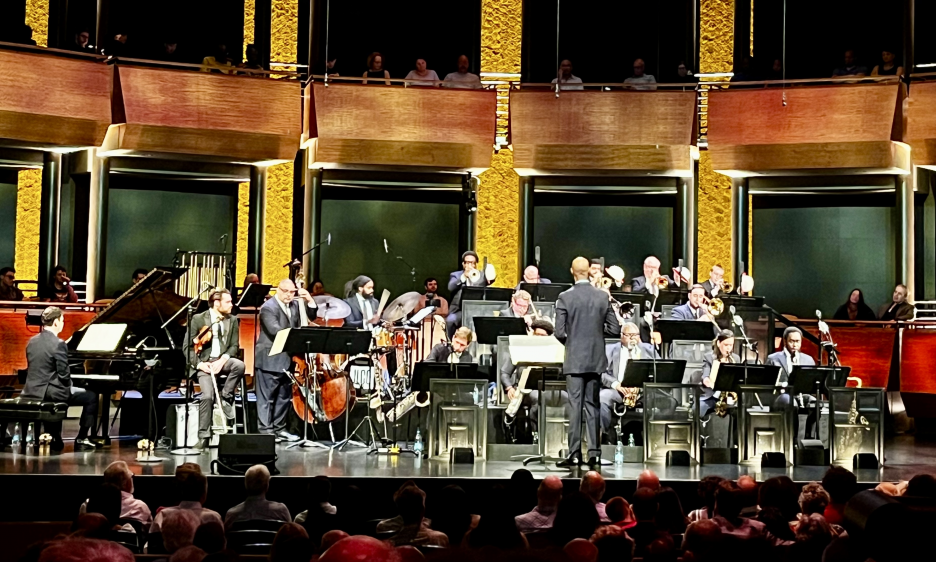
Courtesy Paul Reynolds
Rose Hall, Jazz at Lincoln Center
Ellington's Greatest Masterpiece: Black, Brown, and Beige
New York, NY
July 23, 2026
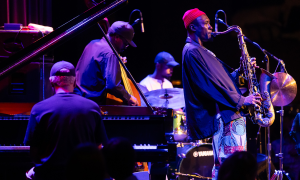
Usually dark for the summer, Jazz at Lincoln Center, unusually, presented a concert event this month. Billed as the first performances of the 2026-2027 season for the Jazz at Lincoln Center Orchestra, the twin shows at Rose Hall featured the JLCO at its best. That is, playing compositions by Duke Ellington, who has been an artistic touchstone for the orchestra since its inception.
Adding to the triumph of the event, the program featured not just any Ellingtonia, but what is arguably the man's greatest work. Composed for his premiere performance at Carnegie Hall in 1943, Ellington called the Black, Brown and Beige suite "a parallel to the history of the Negro in America." Perhaps unsurprisingly, the suite got short shrift from classical music critics on its debut. In response, Ellington never again performed the piece live in its entirety, although he excerpted songs from it, including "Come Sunday," which became a standard.
JLCO revived the work for the suite's 75th anniversary in 2018, under the direction of trombonist Chris Crenshaw, in a performance that was released as a live album in 2020. Crenshaw was again at the podium for Thursday's revival of the revival—which was also repeated on Friday night—fronting a 16-piece version of the orchestra accompanied by several guests.
JLCO's mastery of Ellington was immediately apparent. The band is never better than when swinging hard, with a precision and crackling dynamics that create palpable excitement. The richness of the performance was further enhanced with such authentic musical and visual flourishes as the trumpet section waving hats—actually, aluminum cups shaped and decorated like derby hats—in front of the bells of their horns to warm the sound and make it more intimate. (Naturally, plungers—another Ellington innovation—were also used, notably in the solos of some of the trombonists.)
Black, Brown and Beige has a special association for JLCO, and not only because of the 2018/2020 revival. The piece served as a musical template of sorts for (outgoing) JLCO musical director Wynton Marsalis when he wrote Blood On The Fields (Columbia Records, 1997), the two-plus-hour oratorio focused on slavery and emancipation.
The seminal Ellington piece, by contrast, is both shorter and more historically broad in its scope than the Marsalis masterwork. Ellington's 45-minute suite has three movements, beginning with "Black"—a musical evocation of the experience of African Americans when they first reached North America. The opening "Work Song"partly eschews jazz rhythms, with a drum part (played here by Obed Calvaire, who was superb throughout the suite), that evoked tribal drums. Its majestic theme bursts with melodic verve, and is reprised throughout the suite.
Next up within the Black is "Come Sunday," the emotional centerpiece of the movement, if not the suite. Representing the resilience and quiet faith of enslaved people finding solace in church, the emotive violin part—written for, and originally played by, Ray Nance in the Ellington band—was played with tenderness by guest Eli Bishop.
The next section, "Brown," moves history to the American continent. Cranshaw's intriguing stage remarks—mindful of the World War Two era in which the suite was composed—presented the section as "highlighting the influence of African Americans in the military." It begins with exuberance in the Caribbean ("West Indian Dance") and with the end of slavery ("Emancipation Celebration"), before moving to the mournful "Blues Theme Mauve," which to Crenshaw channels the emotion of Black soldiers' post-war homecomings failing to fulfill "the hope of freedom" they'd wished for.
That closing piece within "Brown," the only vocal piece in the suite, was sung by rising star Ekep Nkwelle, who wrenched maximum expression from the song, which pitted near-accapella lines from Nkwelle against rich Ellingtonian eruptions from the orchestra, interspersed with gorgeous horn solos.
"Beige," the suite's concluding section, serves as almost a recap, with reprises of themes including that of "Come Sunday" before a forceful "Finale."
Preceding the suite, JLCO performed two other gems of the Ellington canon, neither of them among his signature tunes. The first was "Sunset and The Mockingbird," an exquisite, catchy, and exquisitely obscure ballad from "The Queen's Suite," composed in 1958 for Queen Elizabeth II. Then came "Harlem Airshaft," one of Ellington's richest evocations of life in the neighborhood. The slice-of-life composition soared on exchanges between soloists, in tribute to the lively conversations up and down the open courtyards of Harlem tenement buildings.
If the suite looked back, the show also gave a glimpse of jazz's future, through an accomplished—and appropriately Ellington-heavy—short opening set from one of two big bands of extraordinarily talented high school students from The Jazz at Lincoln Center Summer Academy. Apart from the high caliber of their music, the ensemble was encouragingly diverse—mostly male, sure, but with a healthy contingent of young female instrumentalists, too, and of players whose skins, among other hues, spanned white, black, brown and beige.
 FOLLOW Paul Reynolds
and get notified whenever a new article published.
FOLLOW Paul Reynolds
and get notified whenever a new article published.
Journalist and programmer in jazz, folk, country and other musics
About Jazz at Lincoln Center Orchestra

Tags
PREVIOUS / NEXT

Jazz at Lincoln Center Orchestra Concerts

Become a Sustaining Member

Since 1995, All About Jazz has championed jazz as an art form and supported the musicians who create it. Over three decades, it has grown into one of the world's leading jazz resources, serving hundreds of thousands of readers, musicians, presenters and industry professionals each month.
Help Build the Future of All About Jazz
Your support helps us continue building All About Jazz for the next generation—expanding our editorial coverage, preserving jazz history, developing new community features and creating better ways to discover the music and the people behind it.
Become a sustaining member for as little as $20 per year and you'll immediately enjoy an ad-free experience along with access to subscriber features and future articles for a full year.
Together, we're not simply sustaining All About Jazz—we're building its future. Thank you for being part of the journey.