Home » Jazz Articles » Big Band in the Sky » In Memoriam Richie Beirach: Chronicalling A Magical Enco...
In Memoriam Richie Beirach: Chronicalling A Magical Encounter With A Jazz Hero I Never Met
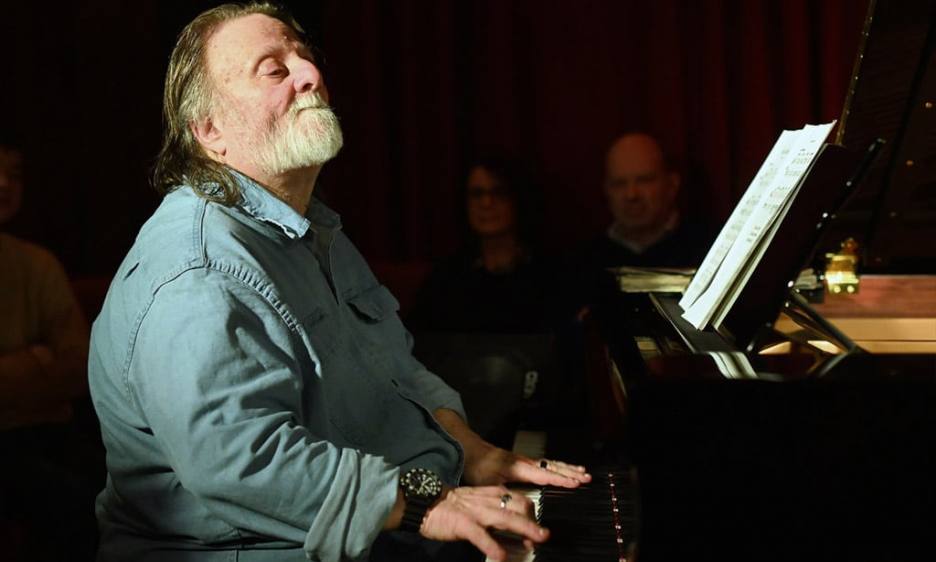
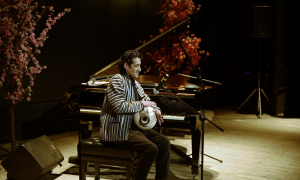
Courtesy Gerhard Richter
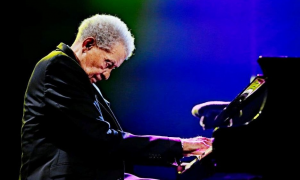
Sadly, the revered jazz pianist Richie Beirach died on January 26, 2026, after a long undisclosed illness at the age 78. He was living in Germany, where he had moved from New York City to teach at the historically renowned University of Music and Theater Leipzig. later, in semi-retirement, Beirach moved to the more remote town of Hessheim, on the river Rhine, where he continued to teach privately, and give occasional performances at international jazz festivals. His latter years were also notable for his fascinating writings, recordings, and videos.
I miss Ricbie. Of course, his music, which I love and listen to repeatedly, remains. My favorite Beirach recordings are Lookout Farm (ECM Records, 1974), Elm (ECM Records, 1975), Romantic Rhapsody (Apple Music, 2001), and the duo with Dave Liebman that recorded the five-CD box set, Empathy (Jazzline Records, 2021). I feel his absence all the more so now because of a four-year email and telephone exchange that arose spontaneously after we completed the two interviews together. I miss him because I came to know him as a person, a free spirit, someone for whom honesty, caring, love, and the arts were more important than outward success in the music world. One of the email exchanges between us—after I had introduced myself and told him of my life experiences in New York—was about the great food at delicatessens and Chinese restaurants in Manhattan, like the Hong Fat Chinese Restaurant and the Carnegie Deli. As a result of that, the ice broke, and we interacted like old friends, with little need for him to maintain his persona as a jazz great and me to sustain mine as a jazz journalist. (Although the veil lifted, we never lost touch with our need to be responsible professionals.)
There were many reminiscences like that. Especially memorable were growing up in Brooklyn, where both of us were vulnerable and sensitive kids having to cope with the bullies (his father, a WWII vet, was very supportive of him). We shared experiences in Greenwich Village, where Beirach lived as his career developed. My father, a writer, lived there too, with my stepmother for many years. I hung out in Washington Square, on Hudson Street, and at the jazz and folk music clubs—the Village Gate, Folk City, the Café Figaro, and the Knickerbocker Restaurant. We shared tales about our common awareness and appreciation of his long-time musical cohort Dave Liebman, and some musicians we knew when Beirach was coming up. I recalled meeting Gerry Mulligan at a rehearsal of his Concert Jazz Band, where my teacher, Alan Raph, was the bass trombonist. He remembered a near-fight with Miles Davis when Beirach introduced himself at a club, and Davis dismissed him because he was, in Davis' total misperception, a redneck racist. His experiences of coming up in the jazz scene were sometimes funny and other times dead earnest. I remembered frequenting some the clubs he performed at, except the historically important Bradley's where he, Bill Evans, and so many other musicians got to know each other and listen to one another play. I had walked past that place so many times, and now wished that I had gone in there and listened to some of the great ones as they emerged from anonymity.
In our email exchanges, Beirach would pepper me with references and links to his various recordings, and I would listen to them and share my excitement and appreciation with him. It was analogous to the background music in a movie, and it showed me that even though he was so transparent about other things, he was inseparable from his music. The one glitch was that when I shared my excursions into philosophy, arts, and literature with him by way of comparison with his playing, improvising, and composing, he seemed to take that as a failure on my part to recognize his brilliant work! I took it with grace, but there were times when I felt hurt and angry that he didn't appreciate the scholarly part of me enough. He would also share various teaching videos with me, and they were always very informative and at times mind-blowing. I especially appreciated how he said that the great music comes from the unconscious and the instinctive level, but that you had learn the basics thoroughly until they became automatic, and then you could just develop your own style and give yourself to whatever was perking up in you. I remember Liebman saying something similar to me, which was enlightening in view of the fact that Lieb was a pioneering master teacher of applying music theory to improvisational playing.
On a very personal note, somewhere amidst our emailing, I ended up in the hospital for a heart condition that could have killed me but for the excellent medical care I received over nearly a week that I was there. I had my cellphone with me, and one night I was surprised by a phone call from Beirach expressing concern, asking me what happened, and wishing me a good recovery. It was about three in the morning where he was, and it seemed he was chronically late to bed from his years in the jazz biz. (He also had his own maladies that might have caused insomnia and that he rarely mentioned to me.) It was like getting a call from the King of Siam asking me how I was doing. My only similar experience was the time years ago I got a Christmas Card from the late great jazz trombonist, J.J. Johnson, after I had interviewed him for All About Jazz. One of the joys I've had from writing for All About Jazz had been the appreciation and affection that some great musicians have expressed towards me. It humbles me at the same time that it is flattering.
One aspect of being a Brooklyn boy is that you learn the shared pleasure of intense arguments about everything from sports teams to the future of the human race. Beirach and I had wonderful arguments about politics and the human condition that were intimate and spiteful at the same time. I don't think he knew that I liked to debate, and so he would share ideas, particularly his cynicism about some politicians, which made it sound like he thought the human race was headed for a fall. I've leaned a little more to that position lately, but at that time, I thought that we humans are basically good and we just needed to take a little time to get our acts together and preserve our ideals. So, we had arguments that reminded me of the time that we then Brooklyn Dodger fans would rail against the New York Yankees and vice-versa. Baseball loyalties felt like life and death matters. But I always realized the enormous compassion that Beirach possessed, and I just saw our quarrels as another side of our deep friendship.
Some of Beirach's cynicism came from personal experience with musicians. He told me stories about prominent members of the jazz community, stories that made my hair stand on end. But since Beirach is gone, I prefer to not disclose with whom or what and leave the gory tales for his own public disclosures and to posterity. The history of jazz, partly because of its origins amidst prostitution and organized crime and partly because of so many musicians' addictions and mental illnesses, has too many examples that make aficionados cringe or cry. One of my favorite players was the trombonist Frank Rosolino, and it both disgusted me and broke my heart when I learned that he shot his wife and children to death after what was likely a drug episode on his part (he committed suicide afterwards). The history of jazz is littered with such tragedies, which I trust and hope are less frequent today. Beirach was exposed to some of them, which I suspect proved traumatic to him.
There's so much more, and not enough time to go over all of it. But you may be asking why I would feel such grief and love for Beirach with all the negative stuff we went over together. The reason is "brotherly trust." With a real friend, you share both the good and bad with one another: no holding back. I had that with Beirach. And since he was such an outstanding musician, I hold him in my heart for his candor. The odd thing is that I feel so close to him even though I never met him in person. He was contemplating a trip to New York at one point. Whether he came back to the Big Apple as planned, I don't know. What I do know is that I will always wish that I had met him in person, listened to him play live, and hung out together. That's what I mean when I say that "I miss him."
 FOLLOW Victor L. Schermer
and get notified whenever a new article published.
FOLLOW Victor L. Schermer
and get notified whenever a new article published.
Former trombonist who now works as a psychologist.
About Richie Beirach

Tags
PREVIOUS / NEXT


Become a Sustaining Member

Since 1995, All About Jazz has championed jazz as an art form and supported the musicians who create it. Over three decades, it has grown into one of the world's leading jazz resources, serving hundreds of thousands of readers, musicians, presenters and industry professionals each month.
Help Build the Future of All About Jazz
Your support helps us continue building All About Jazz for the next generation—expanding our editorial coverage, preserving jazz history, developing new community features and creating better ways to discover the music and the people behind it.
Become a sustaining member for as little as $20 per year and you'll immediately enjoy an ad-free experience along with access to subscriber features and future articles for a full year.
Together, we're not simply sustaining All About Jazz—we're building its future. Thank you for being part of the journey.