Home » Jazz Articles » Album Review » Cincinnati Pops Orchestra: Harlem Renaissance
Cincinnati Pops Orchestra: Harlem Renaissance
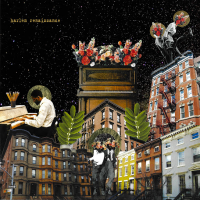
On Harlem Renaissance, the celebrated Cincinnati Pops Orchestra honors the movement by delving into its music and depicting the wide range of jazz styles it inspired. And what better way to start than with the music of Duke Ellington, arguably the foremost composer and bandleader of that era. Ellington's "The Mooche," which opens the performance, is followed by his aptly named "Harlem." The Pops is supported on the earlier tracks by pianist Marcus Roberts' trio (Marty Jaffe, bass; Jason Marsalis, drums) and the Roberts-led tentet Modern Jazz Generation.
Besides Ellington, the Pops reproduces compositions by Kurt Weill, James P. Johnson, Moises Simons, W.C. Handy, Carlos Simon and Cab Calloway, most of which are seldom if ever heard today, perchance for good reason. The exceptions are Handy's timeless "St. Louis Blues," Ellington's "Sophisticated Lady" and Simons' "El Manisero" (better known as "The Peanut Vendor," nicely sung and scatted here by Tatiana LadyMay Mayfield). There are two more vocals, by Mykal Kilgore, on Weill and Langston Hughes' "Lonely House" (from the play Street Scene) and Calloway's once-chic but now-campy "Are You Hep to the Jive?"
With so many heavyweight composers and accomplished musicians in the lineup, a reasonable assumption would be that this is a vibrant and persuasive session, one whose highlights are many and shortcomings few. Alas, that is hardly the case. For some curious reason—perhaps owing to the choice of material and/or how it was arranged—the anthology is by and large mundane and seldom catches fire. The introductory numbers are especially lackluster; "The Mooche" is not among Ellingston's first-class works, "Harlem" is less than spellbinding, Weill's "Lonely House" is downright depressing, and Johnson's "Yamekraw," even though it has its fiery moments (as does "Harlem"), overstays its welcome, meandering on for more than 18 mostly forgettable minutes.
"The Peanut Vendor" marks a pleasant change of pace, and the Pops' string section is superb on a handsome reading of Ellington's "Sophisticated Lady," which leads to the album's clear-cut highlight, a fresh and powerful arrangement of Handy's "St. Louis Blues." While Simon's "Hellfighters' Blues" may seem on odd choice for inclusion, it is hardly out of place alongside, say, "Harlem" or "Yamekraw," and swings harder and more often than either of them. Still and all, it is more pop showpiece than jazz, which is true more often than not through the whole of Harlem Renaissance.
As the premise for such a tribute was sound, and its prospects broad and inclusive, what went wrong? The (uninformed) opinion here is that the Pops tried to do too many things at once, tossing as many disparate ingredients as possible into a blender and hoping the result would be tasteful and pleasing. Although there are moments when the recipe works well, there are too many others where it falls well short of tolerable. An earnest but largely misguided endeavor whose promise eclipsed its enactment.
 FOLLOW Jack Bowers
and get notified whenever a new article published.
FOLLOW Jack Bowers
and get notified whenever a new article published.
A former newspaper writer / editor who has been writing about jazz for more than forty years.
Track Listing
The Mooche; Harlem; Lonely House; Yumekraw; El Manisera (The Peanut Vendor); Sophisticated Lady; St. Louis Blues; Hellfisghters’ Blues; Are You Hep to the Jive?
Personnel

Marcus Roberts
piano
Marty Jaffe
bass
Jason Marsalis
vibraphoneJoe Goldberg
saxophoneTissa Khosla
saxophone
Boyce Justice Griffith
saxophoneTim Blackmon
trumpetJianni Lazaga
trumpet
Etienne Charles
trumpet
Rashaan Salaam
tromboneAdditional Instrumentation
The Cincinnati Pops Orchestra: John Morris Russell, conductor.
Album information
Title: Harlem Renaissance | Year Released: 2026 | Record Label: Self Produced
About Marcus Roberts
Tags
PREVIOUS / NEXT


Become a Sustaining Member

Since 1995, All About Jazz has championed jazz as an art form and supported the musicians who create it. Over three decades, it has grown into one of the world's leading jazz resources, serving hundreds of thousands of readers, musicians, presenters and industry professionals each month.
Help Build the Future of All About Jazz
Your support helps us continue building All About Jazz for the next generation—expanding our editorial coverage, preserving jazz history, developing new community features and creating better ways to discover the music and the people behind it.
Become a sustaining member for as little as $20 per year and you'll immediately enjoy an ad-free experience along with access to subscriber features and future articles for a full year.
Together, we're not simply sustaining All About Jazz—we're building its future. Thank you for being part of the journey.