Home » Jazz Articles » Live Review » DakhaBrakha at The Presidio Theater
DakhaBrakha at The Presidio Theater
Presidio Theater
Screening of Aleksandr Dovzhenko's Earth
San Francisco, CA
February 22, 2026
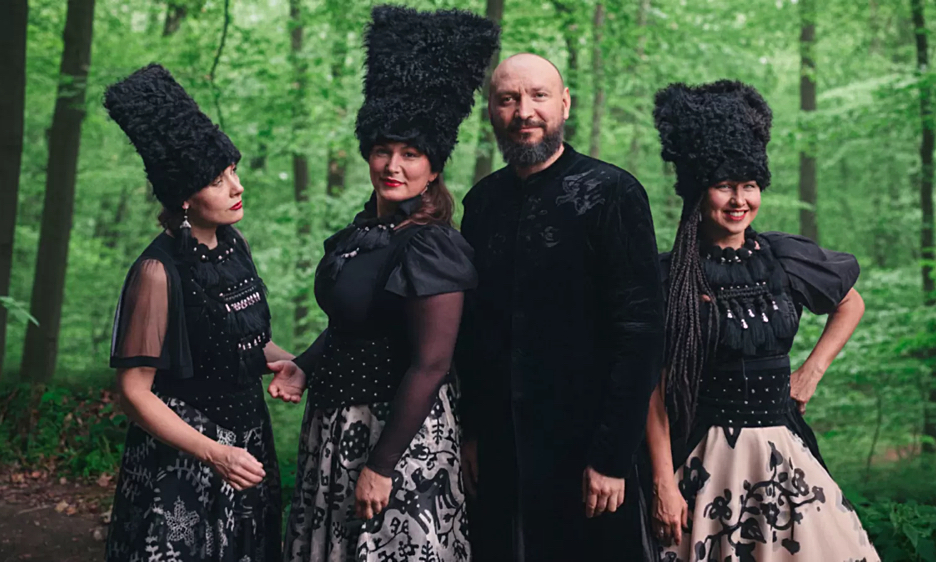
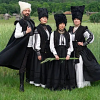
The theatrical, groundbreaking DakhaBrakha—a self-described Ukrainian "ethno-chaos" quartet, whose name means "give and take" in old Ukrainian—combine Ukrainian and other folk musics along with percussion instruments such as tabla and djembe to form a sonic mix of international rhythms which is unique. Avant-garde theatre director Vladyslav Troitskyi created the concept of DakhaBrakha in 2004 at the Kyiv Center of Contemporary Art. DakhaBrakha currently features the considerable talents of accordionist Marko Halanevych, cellist Nina Garenetska, and keyboardist Iryna Kovalenko.
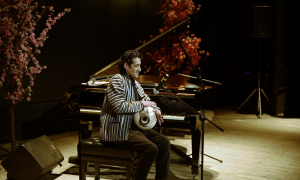
On this particular Sunday afternoon at the Presidio Theater in the Presidio National Park, DakhaBrakha was offering up their magnificent musical artistry to accompany a screening of what numerous critics have called one of the greatest films of all time: Aleksandr Dovzhenko's Earth (Земля), a suppressed Ukrainian classic from 1930. The performance featured Halanevych on mood-setting instruments such as accordion and drymba (Jew's harp). The drums interplayed wonderfully with Kovalenko's piano tones. Lovely vocals, sometimes with tonal effects, added to the mix.
Dovzhenko, a director's director, was renowned for his mastery of composition. And the cinematography in Earth was outstanding: Images flashed on the screen. Portraits of wizened farmers, sunflowers, fields of waving grain, steam rising from a pond. Each would pause for a sustained interval, just long enough for the viewer to take it in. Interplay between light and shadow played on the screen. This cinematic viewing was akin to visiting a photo exhibit of silver gelatin prints. The film ended with rain pouring down on piles of fruit, a metaphor for the forced collectivization raining down on peasants.
Earth was made during the beginning of the first Five-Year Plan under Joseph, an era when tractors were distributed to farmers to rent. The plan has been blamed for the 1932-1933 famine known as the Holodomor, which resulted in the deaths of an estimated 3.55 million Ukrainians. The Ukrainian-born Dovzhenko drew from his life experience to tell the tale in "Earth" of the peasants' resistance to their forced collectivization and the woe that sprang as a result of the increased persecution of the kulaks (куркуль, kurkul in Ukrainian), small-to-medium-sized farmers.
Banned just nine days after its release—having been judged by those in control (including Stalin) to be a film unsuitable to indoctrinate the proletarian masses—Earth resurfaced only in 1956. DakhaBrakha was commissioned by the National Oleksandr Dovzhenko Film Center to write a new score for the film, which they performed at the Odesa International Film Festival in 2006.
After the 99 minutes of cinema with musical accompaniment ended, Halanevych took the stage to offer up three of his paintings. Telling us that "our defenders make miracles every day," he cheer led the sales. Competitive bidding resulted in the first painting (shown in the picture above) being sold for $4,000; the second (a landscape featuring the band) fetched $2000, while a portrait of a drumstick with the band's name inscribed was sold for $560.
The donations are used for sorely needed humanitarian relief. As many as 200,000 Ukrainians may have perished in the conflict, and millions more have been displaced. The needs are staggering. DakhaBrakha describe themselves as "ambassadors of free Ukraine." These four courageous individuals are some of the best cultural ambassadors that any nation has ever had.
 FOLLOW Harry S. Pariser
and get notified whenever a new article published.
FOLLOW Harry S. Pariser
and get notified whenever a new article published.
Harry S. Pariser is a writer, author, artist and photographer in San Francisco, California.
About DakhaBrakha
Tags
PREVIOUS / NEXT
Become a Sustaining Member

Since 1995, All About Jazz has championed jazz as an art form and supported the musicians who create it. Over three decades, it has grown into one of the world's leading jazz resources, serving hundreds of thousands of readers, musicians, presenters and industry professionals each month.
Help Build the Future of All About Jazz
Your support helps us continue building All About Jazz for the next generation—expanding our editorial coverage, preserving jazz history, developing new community features and creating better ways to discover the music and the people behind it.
Become a sustaining member for as little as $20 per year and you'll immediately enjoy an ad-free experience along with access to subscriber features and future articles for a full year.
Together, we're not simply sustaining All About Jazz—we're building its future. Thank you for being part of the journey.
Near

San Francisco Concerts