Home » Jazz Articles » Opinion » C'mon In, The Water's Great!
C'mon In, The Water's Great!
[Ellington's] music requires a deeper level of consciousness that forces a musician to shed all bad habits that have interfered with the ability to delve into a real honest pocket--there
Playing Ellington's music, especially at a young age, is a lot like learning how to swim by jumping into the deep end of a pool. One is thrust into a situation that requires a vast wealth of musical skill and understanding and has proven to be a challenge for musicians at all levels of experience. By learning about the nuances and characteristics of Ellington's writing, a young person has the opportunity to develop his or her sense of musicality on an intense and intimate level. In other words, it's a crash course in swing.
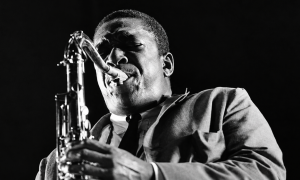
In Ellington's day, Charlie Parker and Dizzy Gillespie's searing lines and rhythmically abstract ideas were evolving into music that we call bebop; Coltrane's sound and faultless technical ability were setting him apart as one of the masters; and music known as "rock and roll was starting to have a huge impact on pop culture. Amidst all of these history-changing musical developments, Ellington remained essentially Ellington. Understated and profound, his music comes across as simple, yet when performed, one begins to realize that everything is exposed. Inner voices have just as much importance as a lead voice, horn players have to keep just as good time as the drums and bass, all dynamics have to be honored and most importantly, it has to feel good. Everyone in the band has to swing. There are no moments in Ellington's writing when he wrote for the sake of showing off someone's chops or to feature some 'hip' voicing. One can't play his music loud and fast in order to cover up for a lack of understanding of groove and feel. His music requires a deeper level of consciousness that forces a musician to shed all bad habits that have interfered with the ability to delve into a real honest pocket—there's nowhere to hide.
The Essentially Ellington Program gives young people this wakeup call at a very important time in their musical development. Students who attend the festival are among the top musicians in their age group—many of whom have enough technical mastery on their instrument to outplay some seasoned professionals. However, these talented students assemble every year, not to show off chops, but to convey their own unique interpretations of this music through sensitivity and understanding of the deep musical concepts and nuances involved. Competing bands learn that fast fingers or great range chops aren't going to get them into the finals. It's about whether or not the half notes swing just as hard as the eighth notes and whether the inner voices speak just as clearly as the lead.
Ten years ago I made my debut at Jazz at Lincoln Center at the Essentially Ellington Festival with the Hall High School Concert Jazz Band. I knew little about Ellington and even less about how profound his music is and how huge of an impact it has had on the history of jazz. I had the privilege of returning each of my four years in high school, and every year we became inspired to strive for a level of musical accomplishment that would take us deeper into the groove and farther into Ellington's compositions.
Now, years later, I am a member of several ensembles of varying genres. I'm exposed to myriad different grooves and textures, and one can approach them in an infinite number of ways. In any group I'm performing with, whether it's with an Afro-Cuban big band, a chamber-jazz ensemble or a funk quintet, I'm constantly seeking to find that one special moment when the music starts to come alive—the point at which the pocket becomes so prevalent that everyone begins to smile as the music moves to the next level. It is something that is felt from within, and once it is found, swing takes on a whole new meaning. Achieving this deep sense of awareness and connectedness to time and rhythm can sometimes take years of experience and practice, but if exposed to it early enough, a young musician can begin to realize what it means to swing.
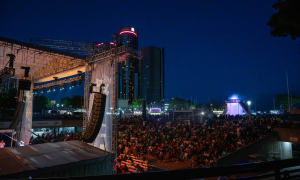
A decade has passed from the time when I first stepped foot onto the stage at Avery Fisher Hall to perform at Essentially Ellington. Since then, the competition has changed: there are more bands; band directors can attend workshops that help further their student's jazz education; students can now compete in different regions of the United States; and the annual festival is now held at Jazz at Lincoln Center's new home at Columbus Circle. All of these changes are helping students achieve higher levels of musical excellence and are inspiring more and more young musicians to explore the music of Duke Ellington. However, one thing remains the same: each of these bands will learn a valuable lesson—THE lesson if you will. It doesn't matter where you're from, how far you've traveled, how much technical mastery you've achieved or how many awards and accolades you've won in the past. As each band dives head first into the challenges of performing Ellington's music, they begin to realize that they're not there to perfect their vibrato or to display a show of fast fingers. Quite simply, they've come to swing.
 FOLLOW AAJ Staff
and get notified whenever a new article published.
FOLLOW AAJ Staff
and get notified whenever a new article published.
Various staff members.
About Erica von Kleist

Tags
PREVIOUS / NEXT

Become a Sustaining Member

Since 1995, All About Jazz has championed jazz as an art form and supported the musicians who create it. Over three decades, it has grown into one of the world's leading jazz resources, serving hundreds of thousands of readers, musicians, presenters and industry professionals each month.
Help Build the Future of All About Jazz
Your support helps us continue building All About Jazz for the next generation—expanding our editorial coverage, preserving jazz history, developing new community features and creating better ways to discover the music and the people behind it.
Become a sustaining member for as little as $20 per year and you'll immediately enjoy an ad-free experience along with access to subscriber features and future articles for a full year.
Together, we're not simply sustaining All About Jazz—we're building its future. Thank you for being part of the journey.