Home » Jazz Articles » Jazz Fiction » Breath Without End: The Trumpeter Who Found Faith and Never Died
Breath Without End: The Trumpeter Who Found Faith and Never Died
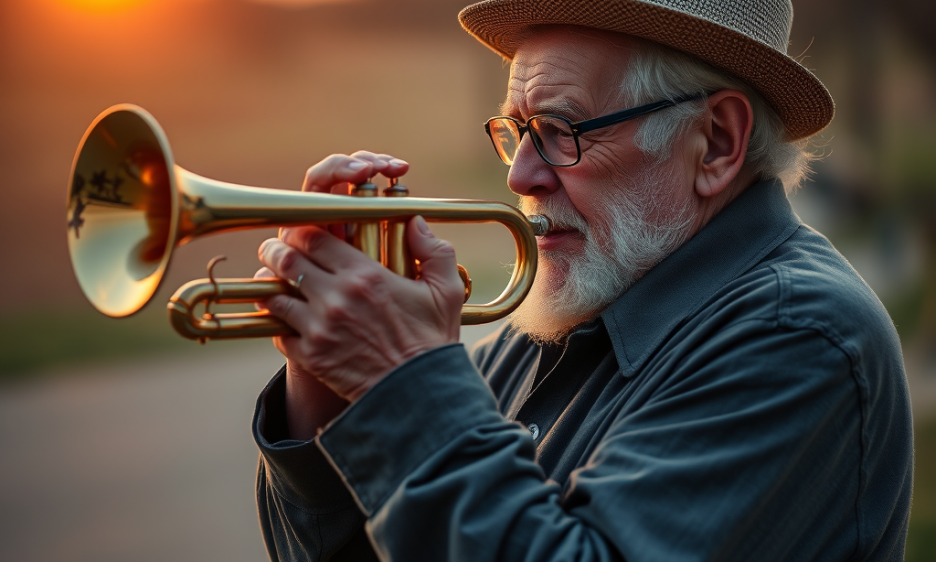
Courtesy Creative Fabrica
Samuel Calder was a trumpet player.
He had been a good one, too—never famous, never forgotten. For four decades he played in orchestras, jazz clubs, pit bands, and churches he did not believe in. His trumpet had echoed in smoky basements and grand halls, at weddings and funerals, under bright lights and failing ones. Music, to him, was proof that beauty could exist without explanation.
When he retired at sixty-eight, it wasn't because he wanted to stop playing. His hands still worked. His embouchure still held. But the breath—that sacred fuel—had begun to betray him. The doctors called it emphysema, gently, like a word meant not to frighten. Samuel heard something else: the end of air.
He sold his instruments one by one, keeping only his first trumpet, a battered brass relic with dents earned honestly. He moved into a small apartment near the coast, where the air was salty and thin and unforgiving. Music faded from his days. Silence, once an enemy, became his constant companion.
That was when faith found him—not in thunder or vision, but in quiet necessity.
It began with walking.
Each morning Samuel walked the same stretch of shoreline, counting steps, counting breaths. He could no longer fill his lungs the way he once had, and the discipline of breathing became a kind of ritual. Inhale. Pause. Exhale. Repeat. It reminded him of warmups before performances, the deliberate control that turned air into sound.
One morning he collapsed.
A passerby helped him to a small chapel perched above the beach, a place Samuel had never noticed despite years of walking past it. Inside, the air was cool and still. A handful of people sat in silence, not praying aloud, not singing—just breathing together.
Samuel stayed.
No one asked him to believe anything. No one explained doctrine or demanded repentance. They spoke instead of breath as gift, of life as something borrowed moment by moment. They spoke of faith not as certainty, but as trust—trust that the next breath would come.
That idea unsettled him.
Music had taught Samuel control. Faith suggested surrender.
Still, he returned.
Weeks passed. Then months. Samuel listened more than he spoke. He learned to sit with uncertainty the way he once sat with silence before a downbeat. Slowly, something unfamiliar happened: fear loosened its grip. The dread of running out of air gave way to a strange calm, as if breath itself were no longer solely his responsibility.
One evening, long after a meeting had ended, Samuel lifted his old trumpet for the first time in years. His hands trembled. His lungs protested. The note that emerged was thin, almost fragile.
But it was alive.
He began playing again, not for audiences, not for money, but as prayer. Each note became an offering, imperfect and honest. He played in the chapel when no one was there, letting the sound fill the small room and rise into the rafters. The music changed. It grew slower, more spacious, less concerned with virtuosity and more with meaning.
Something else changed, too.
Samuel stopped getting worse.
The doctors were puzzled. His condition stabilized, then improved. His lungs strengthened beyond expectation. Tests were repeated. Charts were rechecked. No explanation satisfied them.
Years passed. Samuel aged—or appeared to. His hair whitened. Lines deepened around his eyes. But his body did not fail him. He kept breathing. He kept playing. People noticed that he didn't seem to weaken the way others did.
Decades passed.
Samuel outlived his friends. He attended funerals where he was the only one left who remembered certain names, certain songs. He watched generations come and go, watched the chapel rebuilt, expanded, modernized. Through it all, he remained.
Eventually, questions turned into rumors. Rumors into legends.
Samuel never claimed immortality. He never explained himself. When asked, he would smile and say only that he had learned how to breathe differently now.
The truth—if it can be called that—was simpler and stranger.
Faith had not made him immortal by granting endless years. It had untethered him from time. Samuel lived entirely in the present breath, the present note. The body, no longer burdened by fear of ending, ceased to rush toward it. His cells aged without urgency. Decay, deprived of anxiety, slowed.
Whether this was miracle or mystery mattered less than the result.
Samuel Calder is still alive.
He plays his trumpet at dawn on the coast where it all began. The sound carries farther than it should, clear and warm, filling the air with something that feels like remembrance and promise at once. People who hear it often stop walking. Some cry without knowing why. Some feel lighter, as if their own breathing has been quietly corrected.
Samuel does not preach. He does not explain faith. He plays.
After all, he learned long ago that breath, when trusted, can become music—and that some music never truly ends.
 FOLLOW Richard J Salvucci
and get notified whenever a new article published.
FOLLOW Richard J Salvucci
and get notified whenever a new article published.
Richard is an emeritus professor of economics at Trinity University.
Tags
PREVIOUS / NEXT
Become a Sustaining Member

Since 1995, All About Jazz has championed jazz as an art form and supported the musicians who create it. Over three decades, it has grown into one of the world's leading jazz resources, serving hundreds of thousands of readers, musicians, presenters and industry professionals each month.
Help Build the Future of All About Jazz
Your support helps us continue building All About Jazz for the next generation—expanding our editorial coverage, preserving jazz history, developing new community features and creating better ways to discover the music and the people behind it.
Become a sustaining member for as little as $20 per year and you'll immediately enjoy an ad-free experience along with access to subscriber features and future articles for a full year.
Together, we're not simply sustaining All About Jazz—we're building its future. Thank you for being part of the journey.