Home » Jazz Articles » Edward Neumeister
Jazz Articles about Edward Neumeister
About Edward Neumeister

Trombocalist Big Band: The Vigil and the Sleeping Giant

by Jack Bowers
Even those whose batting averages are high are not immune from life's unforeseen and often disastrous curve balls. Low-brass multi-instrumentalist Ron Wilkins, riding the wave as a successful musician and bandleader, learned that the hard way when he was struck by Covid in 2020 and spent more than a month in a medically induced coma with the outcome clearly in doubt. As it turns out, fortune smiled on Wilkins, and after relearning such basics as breathing normally, walking, ...
Continue Reading...Ed Neumeister: Suite Ellington

by Dan McClenaghan
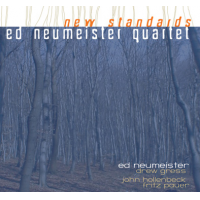
Trombonist Ed Neumeister opened his excellent quartet outing, New Standards (Meistero Music, 2005) with an energized take Duke Ellington's signature tune, “Take The 'A' Train." It was apparent that he had a way with Duke's music. A quick dip into Neumeister's resume finds that he played in Duke Ellington's Orchestra for sixteen years, post-Duke, when the maestro's son, Mercer, held the baton. So he has the great experience of a marination in one of America's Greatest Composer's music. With Suite ...
Continue Reading...Ed Neumeister: Suite Ellington
by Karl Ackermann
A complete summary of trombonist Ed Neumeister's musical career would date back to his pre-school years. Initially a regular fixture on the San Francisco circuit, he later immersed himself in the New York jazz scene dividing almost thirty-five years between the Duke Ellington Orchestra and the Mel Lewis Big Band. His additional experiences with classical orchestras and ensembles helped solidify his skills as a conductor and composer. On Suite Ellington, Neumeister and his sextet take on some familiar and less ...
Continue Reading...Edward Neumeister: Reflection
by Celeste Sunderland
Combining Ed Neumeister's loose, flowing trombone lines with the organized counterpart of a tightly sewn rhythm section, a vibrant, balanced calm permeates Reflection. Mimicking the natural patterns of a day or a life, the album's rhythmic energy shifts smoothly within a single tune, or from track to track. The result never seems unwarranted; in fact, unexpected moments regularly pique interest, like when the chimes glint off Fritz Pauer's piano lines during “It Was After Rain That the Angel Came, composed ...
Continue Reading...Album Showcase


Trending
 In Tribute To...
Points of View: Celebrating Dave Holland
 In Tribute To...
John Coltrane At 100: A Global Perspective
 Jazz Raconteurs
Julius Hemphill: Marty Ehrlich and Tim Berne Remember a...
 Live Review
Detroit Jazz Festival 2026: A Gathering in a Great Jazz City
 Paul's Picks
New York City Jazz Performance Preview: Fall 2026
 Profile
Sequoia Snyder: Growing in the Light of the Masters
 Interview
Jasur Khalilov: From Falak to Fusion
Premium
VOTE!