Home » Jazz Articles » Mr. P.C.'s Guide to Jazz Etiquette and Bandstand Decorum » April 2014
April 2014

How do you decide how many choruses to take?
— Long Solo Dave
How do you decide how many miles to drive? How much meat to eat, how many lights to turn on, how often to flush the toilet? When it comes to drawing on non-replenishable resources, all you can do is balance your needs against the greater global good.
You see, the operative word in your question is "take," because every chorus of yours is one less for someone else; songs are finite. On top of that, longer solos place exponentially greater demands on the rhythm section. That's why, by your sixth chorus, their postures start to crumble, their eyes glaze over, and they glare jealously at the drinking patrons.
Worst of all, a used chorus leaves nothing behind; nothing to compost, recycle or otherwise positively repurpose. So the question comes back to you—for each chorus you "take," what are you prepared to give back? My suggestion: a per-chorus surcharge, with proceeds donated to Overplayers Anonymous or the soloist rehab program of your choosing.
It's not rocket science, LSD: The point with choruses, as with so many other finite resources we take for granted, is simply to be consumption-neutral.
Dear Mr. P.C.:
I'm in the studio, and for once soloing my ass off. The take ends and the producer says: "Let's give that one another try." He didn't like the way the leader played. Of course I don't want to do another take because I might not play as well. Should I argue with him?
— Solo Was All Good
Okay, I must be missing something. You just got a free run-through to practice your solo, right? So won't it be even better the second time? Maybe you'll even be able to add a few improvised licks!
Really, SWAG, you should encourage the producer to run as many takes as possible. By the end you'll play your solo perfectly, and no one will ever know how many tries it took you to get it right.
Dear Mr. P.C.:
What would you say about a person who says that people should keep writing and playing originals but deep in their heart you know they are really happiest playing "Summertime," particularly when it's called by vocalists at jam sessions?
— Chestnut Singer in Seattle
On the surface he may seem hypocritical, but in reality it's quite the opposite. Clearly this composer is so enamored with "Summertime" that he's hoping to write the next "Summertime"—a totally new piece that captures all the harmonic and rhythmic daring of the original!
It will also have to sound just as fresh when people are singing it 80 years down the road as the original "Summertime" does now. And, like "Summertime," it will need to stand on its own without lyrics, so that instrumentalists fight for the chance to play it even when there are no singers around.
Of course he'll never come up with anything close, so the challenge is to keep "Summertime" fresh for him. How? By creating clever, on the spot arrangements! A few novel ideas: "Summertime" as a bossa. "Summertime" as a funk tune. Or how about "Summertime" slow, bluesy and sultry—it will be like playing it for the first time!
When you get right down to it, CSS, "Summertime" can be almost anything; it's a blank canvas on which musicians paint their lives. It's a musical Rorschach test, and those who don't like it—yes, there are a few—simply can't handle what it tells them about themselves.
 FOLLOW Mr. P.C.
and get notified whenever Mr. P.C. has a new article published.
FOLLOW Mr. P.C.
and get notified whenever Mr. P.C. has a new article published.
Inspired by the cutting edge advice of Abigail Van Buren, the storied bass playing of Paul Chambers, and the need for a Politically Correct doctrine for navigating the minefields of jazz etiquette, I humbly offer my services.
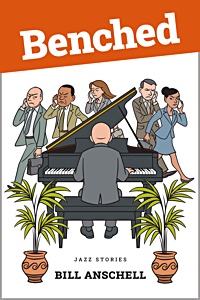
Get 'Benched!'
Benched, Bill Anschell's debut book of short stories / jazz humor. The stories are interspersed with the very best of Mr. P.C., hand-picked from the 400+ questions answered over the column's 16-year history. Benched is available on Amazon (paperback and Kindle) and most online booksellers.
Tags
PREVIOUS / NEXT
Become a Sustaining Member

Since 1995, All About Jazz has championed jazz as an art form and supported the musicians who create it. Over three decades, it has grown into one of the world's leading jazz resources, serving hundreds of thousands of readers, musicians, presenters and industry professionals each month.
Help Build the Future of All About Jazz
Your support helps us continue building All About Jazz for the next generation—expanding our editorial coverage, preserving jazz history, developing new community features and creating better ways to discover the music and the people behind it.
Become a sustaining member for as little as $20 per year and you'll immediately enjoy an ad-free experience along with access to subscriber features and future articles for a full year.
Together, we're not simply sustaining All About Jazz—we're building its future. Thank you for being part of the journey.