Home » Jazz Articles » Book Excerpts » Why it's so easy for jazz musicians to be "bipolar"
Why it's so easy for jazz musicians to be "bipolar"
Moody, Mad, or Just Really Creative?
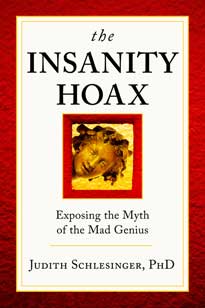 We don't need to dive into the whole pool of confusion to understand why there's such a stubborn linkage between bipolar disorder and genius. We only need to see how it works in a real-life context.
 Let's say you're a jazz musician. According to the DSM-IV, you are experiencing a manic episode if you exhibit any three of the following seven symptoms:
- Inflated self-esteem
- Decreased need for sleep
- More talkative than usual
- "Flight of ideas" or the experience of racing thoughts
- Distractibility or difficulty differentiating between the relevant and irrelevant
- Increased goal-directed activity (either socially, at work, at school, or sexually)
- Excessive involvement in pleasurable activities having a high potential for painful consequences
- You use every spare moment to work on it (symptom 6), including staying up all night (symptom 2).
- You allow yourself to free-associate and generate random creative ideas (symptoms 5 and 4).
- You talk excitedly about it (symptom 3).
- You feel really confident about the whole thing (back to symptoms 1 and 7).
All that's left is for your "mania" to meet one of the following three conditions:
- It causes marked impairment in occupational functioning or in usual social activities or relationships with others
- It necessitates hospitalization
- It has psychotic features
The other two options (involuntary hospitalization and psychosis) are the most serious. Once the definitive hallmarks of madness, they're no longer required to make the diagnosis. Neither is promiscuity or excessive spending, traditionally the two riskiest behaviors with the worst long-term consequences.
But if you loosen the net, you catch more fish. This also encourages the invention of marginal categories where people acquire the ominous blush of a serious disorder, if not its full coloration, like the "subsyndromal" person who is only a "little bit" manic-depressive and "must struggle on alone, wondering what is the matter with him."
This has absolutely nothing to do with science.
 FOLLOW Dr. Judith Schlesinger
and get notified whenever a new article published.
FOLLOW Dr. Judith Schlesinger
and get notified whenever a new article published.
Author of "The Insanity Hoax: Exposing the myth of the mad genius," now in its updated second edition,Dr. J combines her love of jazz and her fascination with psychology, focusing on where they overlap: in celebrating the individual spirit.
Tags
PREVIOUS / NEXT

Become a Sustaining Member

Since 1995, All About Jazz has championed jazz as an art form and supported the musicians who create it. Over three decades, it has grown into one of the world's leading jazz resources, serving hundreds of thousands of readers, musicians, presenters and industry professionals each month.
Help Build the Future of All About Jazz
Your support helps us continue building All About Jazz for the next generation—expanding our editorial coverage, preserving jazz history, developing new community features and creating better ways to discover the music and the people behind it.
Become a sustaining member for as little as $20 per year and you'll immediately enjoy an ad-free experience along with access to subscriber features and future articles for a full year.
Together, we're not simply sustaining All About Jazz—we're building its future. Thank you for being part of the journey.