Home » Search Center » Results: JazzWax by Marc Myers
Results for "JazzWax by Marc Myers"
Frank Wess + Kenny Burrell

Some of the hippest small-group albums recorded in the mid-1950s were those by Frank Wess for Savoy. These include Flutes and Reeds (1955), Opus de Jazz (1955) led by Milt Jackson, North South East Wess (1956), Trombones & Flutes (1956), No Count led by Frank Foster, Jazz for Playboys (1957), Flute Suite and Jazz Is Busting ...
Art Tatum and Ben Webster

For me, jazz is divided between those who recorded with Art Tatum and those who didn't. Tatum remains king of the jazz piano—a briskly shaken cocktail of unrivaled technique, impeccable taste and a staggering ability to make you fall in love whatever song he's playing. Every one of his recordings is a gem, exhibiting daring, speed ...
8 Clips: Boss Tenors

Boss tenors take charge. I don't know how else to put it. When a boss tenor plays a ballad, a mid-tempo tune or a barn-burner, the saxophone's sound is assertive and commanding, with a deep, forceful push in the lower register and a bluesy wail up top. Let me illustrate with eight clips: Here's Ben Webster ...
Bull Moose Jackson: Jazz Jump

A careful look at a jazz discography always yields an interesting historical story. Back in the late 1940s, many jazz artists had their start in R&B and jump blues bands. The groups were often smartly organized jazz-blues hybrids that played tightly arranged charts and regularly toured, ensuring they'd be well-oiled recording artists. Bull Moose Jackson led ...
Lockjaw Meets the Hawk
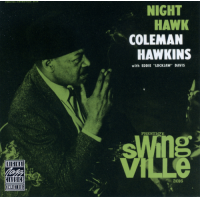
To the best of my knowledge, tenor saxophonists Eddie “Lockjaw" Davis and Coleman Hawkins recorded together as a duo only once (Very Saxy was a group session with saxophonists Buddy Tate and Arnett Cobb). Davis—like Sonny Rollins, Don Byas, Lucky Thompson and others— was deeply influenced by Hawkins's gruff, boastful attack. So teaming up with his ...
Bennie Green: The Swingin'est

Bennie Green had a distinctive trombone. He played in a powdery, insistent staccato style seasoned with the Chicago blues. A member of the challenging Earl “Fatha" Hines and Charlie Ventura bands in the 1940s, he also recorded in bop ensembles. In the 1950s, Green was a sideman on numerous sessions, including the Miles Davis Sextet with ...
McCoy Tyner: Inception
McCoy Tyner should receive as much attention as Thelonious Monk, Oscar Peterson and even Bill Evans. For some reason, he doesn't, and I have no idea why not. Tyner's recordings are as inventive, as rich and as stunning as the other three piano leaders. Of course, Peterson and Monk came up in the late 1940s, and ...
René Thomas in 7 Clips

For some strange reason yesterday, I had a craving for guitarist René Thomas. I love the way he swings unevenly and the hip quality of his picking and sound of his guitar. Born in Belgium in 1927, Thomas moved to Paris and was deeply influenced by guitarist Jimmy Raney. In the 1960s, he often was featured ...
Miff Mole: Miffology

The jazz trumpet dates back to Louis Armstrong and Bix Beiderbecke. The saxophone can be traced to Sidney Bechet and Frankie Trumbauer. And the piano dates back to Scott Joplin and Jelly Roll Morton. As for the jazz trombone, it starts with Miff Mole. Mole is arguably the pioneer of the solo jazz trombone style. Born ...
Ivie Anderson: Early Jazz Voice

Like Mildred Bailey, Ivie Anderson was an early female vocalist who pioneered the jazz idiom in dance bands. She joined Duke Ellington's orchestra in 1931and for the next 12 years she toured and recorded with the band. Anderson's voice was more pointed and huskier than Bailey's and featured a mild tremolo. She also had a slinkier ...
Album Showcase




Trending
 Interview
Lou Marini: A Solo Career Starting At The Age Of 80
 Jazz Raconteurs
Julius Hemphill: Marty Ehrlich and Tim Berne Remember a...
 In Tribute To...
John Coltrane At 100: A Global Perspective
 History of Jazz
John Coltrane in Detroit: A Brief History
 Live Review
Detroit Jazz Festival 2026: A Gathering in a Great Jazz City
 Interview
Jasur Khalilov: From Falak to Fusion
 Profile
Sequoia Snyder: Growing in the Light of the Masters
VOTE!