Home » Search Center » Results: Gunther Schuller
Results for "Gunther Schuller"
Don Ellis: How Time Passes to Essence Revisited

by Angelo Leonardi
Nelle storie del jazz Don Ellis è ricordato principalmente per l'innovativa big band che guidò per un decennio, dalla metà degli anni sessanta. Questa preziosa riedizione ci rammenta i suoi inizi di carriera, quando esplorava nuove soluzioni a partire dalla tromba: accoppia il suo debutto in quartetto (...How Time Passes...) dell'ottobre 1960 con alcuni brani di ...
The Father of Early Jazz: James Reese Europe

by Karl Ackermann
In 2020, I published A Map of Jazz: Crossroads of Music and Human Rights (WS Publishing), a book that looks at the culture of jazz on a timeline with cultures of the world. At more than 500 pages, the book is incomplete by necessity; there is no well-marked path, and the history is sometimes nebulous. However, ...
The Duke Ellington Carnegie Hall Concerts: January 1943

by Chuck Lenatti
Duke Ellington was one of the most popular and successful jazz musicians of the first half of the 20th century and according to composer Gunther Schuller and musicologist and historian Barry Kernfeld, “the most significant composer of the genre." Radio broadcasts from his residency at New York's Cotton Club beginning in 1927 extended Ellington's ...
Bevan Manson featuring Tierney Sutton with The Hollywood Studio Orchestra: Talking to Trees

by Nicholas F. Mondello
Bevan Manson is an artist who has a creative duality. As a pianist, composer/arranger and educator, he's been successful in classical and jazz environments. With Talking to Trees, Manson provides an array of both originals and jazz standards, most with an arboreal tint, as the title indicates. The work is a validation that his pen, guiding ...
Charles Mingus: Charles Mingus Presents Charles Mingus To Pre Bird Revisited

by Chris May
In his liner notes for Charles Mingus Presents Charles Mingus To Pre Bird Revisited, Bill Shoemaker sets out the context in which the two featured albums should be considered. He observes that so enormous was Charles Mingus' artistic vision that no two (or perhaps three) albums can encompass its totality. How true that is, even of ...
Interview with Joe Lovano

by Mark Felton
This interview was first published at All About Jazz in 1996. All About Jazz: The author of the liner notes of your latest release Quartets suggests that the current trend in jazz is towards a dialogue between the avant-garde and the tradition. How do you interpret that? Joe Lovano: Well, I don't ...
From Ragtime To Early Jazz – Celebrating New England Conservatory’s Ragtime Legacy On Tuesday, November 21 At Jordan Hall

The Gunther Schuller Society and New England Conservatory’s Contemporary Musical Arts and Jazz Studies departments will honor the birthday of the most transformative figure in NEC’s history with From Ragtime to Early Jazz, the Gunther Schuller Legacy Concert on Tuesday, November 21. Directed by CMA co-chair Hankus Netsky, From Ragtime to Early Jazz celebrates the 50th ...
Luca Lo Bianco Quartet: Human Plots: Six Extraordinary Acts and a City

by Neil Duggan
Many acts of heroism are rewarded, but there are frequent acts of bravery and defiance that go unnoticed and unheralded. With the intention of shining a light on these everyday acts of humanity, Italian bassist Luca Lo Bianco brings us his third album as leader, Six Extraordinary Acts and a City. The acts concerned take place ...
Bill Evans: Ten Essential Sideman Albums

by Chris May
Bill Evans attracts a special sort of fan. Clinically obsessive is a reasonable description. While far from undiscerning, we find something, usually plenty, to enjoy in every record Evans played on. And we want them all in our collection. Evans' hardcore fans include practically every musician who played with him. Eddie Gomez, his ...
Darcy James Argue's Secret Society: Dynamic Maximum Tension

by Katchie Cartwright
Darcy James Argue's superb double-album Nonesuch debut offers compositions written throughout his career. He turns to twentieth-century thinkers for “ideas that can help us in the present, that we can reexamine and reconfigure for our own purposes." These include futurist designer Buckminster Fuller, cryptanalyst-computer scientist Alan Turing, composer-arranger Bob Brookmeyer, actress-screenwriter Mae West, trumpeter-mentor Laurie Frink, ...
Album Showcase




Trending
 Interview
Lou Marini: A Solo Career Starting At The Age Of 80
 History of Jazz
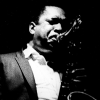
John Coltrane in Detroit: A Brief History
 Live Review
The Tension Is Where the Music Lives: Miles Davis at 100,...
 Chats with Cats
Michael Ricci: Still Building a Home for Jazz
 Radio & Podcasts
Sullivan Fortner, Jim Rotondi & Dena DeRose, Ardeshir,...
 Reanimating Conversations Past
Charlie Haden: Anatomy of a Jazz Classic
 Radio & Podcasts
Miki Yamanaka, Stefon Harris, Paul Yonemura, Amber Weeks...
VOTE!