Home » Jazz Articles » Album Review » Didier Lockwood: Storyboard (Vinyl Reissue)
Didier Lockwood: Storyboard (Vinyl Reissue)
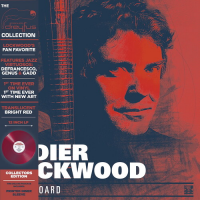
This is why initiatives like those of Culture Factory Usa and BMG, recovering the catalog of the now-defunct French label Dreyfus Jazz, are more than welcome. BMG undertook this commendable task in 2018, releasing 14 reissues in the Jazz Reference series, followed by a further 14 in 2019. Seven years later, now in partnership with Culture Factory, a new batch appears featuring four forgotten treasures from the splendid catalog created by Francis Dreyfus. As has become customary, this second life comes with striking novelties: the albums are presented for the first time on vinyl, in a special edition limited to 1,000 copies, with new artwork in keeping with the evocative aesthetic of the entire packaging—designed to appeal both to the more senior enthusiasts and to the younger generation of potential new jazz listeners.
The first album in this new series, Storyboard, was a turning point—one more in a career full of them—for Didier Lockwood, who passed away prematurely in 2018 at the age of 62, just after a performance at the Parisian venue Le Bal Blomet. The Calais-born artist—a member, alongside Stephane Grappelli and Jean-Luc Ponty, of the supreme triumvirate of French jazz violin—represents a not exactly equidistant midpoint between the foundational classicism of the former and the pioneering electric fusion of the latter, albeit without the prestige of the venerable co-founder of the Quintet of the Hot Club of France, and without the media resonance of the storied Mahavishnu Orchestra's frequent member. In all likelihood, Lockwood is not as widely known as he deserves beyond the European scene—especially the French one, where his early work with Magma, a cult band in his country, would alone have guaranteed him a place in the public consciousness.
An inexhaustible melodic creativity across all tempos; an irresistible sound, with raw-edged tonal qualities and a marked tendency toward the middle and lower registers; an astonishing command of harmonics (an inheritance from Grappelli, his primary stylistic reference); and a deeply idiomatic playing style, grounded in a passionate, sensual attack laced with subtle nuances and dynamics—these are the most characteristic features of his musical language. All of this is present in his first record with Dreyfus Jazz, recorded in New York City alongside Joey DeFrancesco, James Genus, and Steve Gadd—a quartet with whom he sought to reinvent his sound and his particular concept of fusion, one that tends to avoid gymnastic showmanship and overly cerebral conceits. It belongs to his most consistently inspired creative period—the '90s—which gave birth to gems as stylistically diverse as Solal Lockwood (Dreyfus Jazz, 1993), New York Rendez-Vous (JMS, 1995) and the delightful Tribute To Stéphane Grappelli (Dreyfus Jazz, 2000), the first of his two tributes to his greatest inspiration. His trajectory would shift in the 2000s, during which he ventured into widely disparate territories (near-free experimentation, classical, orientalism, operatic explorations, traditional European dance music, film scores, smooth jazz, cosmic fusion...). As a coda to all of them, Open Doors (Okeh, 2017), his final studio album, represents an excellent jazz farewell to a career sadly cut short.
Storyboard is an extraordinary record: at once coherent and multifaceted, orthodox and inquisitive, benefiting from a thematic selection built on strong compositions—both original and borrowed—that avoids the customary inclusion of standards. Without being an overtly conceptual work, it is subtly dominated by an evocative, nocturnal film noir atmosphere: its original sleeve featured several black-and-white photographs with a discreet cinephile flavor to which we shall return, which does not prevent it from having colorfully illuminated moments, or ones charged with assertive, fresh energy. Its carefully crafted production does not diminish a spontaneity that Lockwood made expressly clear to the session's musical director, his regular collaborator Benoit Sourisse: no more than two takes per track. In spite of this—or rather, because of it—the ensemble and solo performances of the quartet (and of their special guests, omitted from the credits on some earlier editions) are truly magnificent. The end result is a work as rigorous as it is accessible, one that must undoubtedly be counted among the finest from the missed French multi-instrumentalist.
"Thought Of A First Spring Day," a formidable showcase of the leader's compositional talent, opens the album in the best possible way. It also firmly establishes the happy timbral pairing of violin and Hammond B3—something that may strike us today as having been novel at the time. Though it was not quite so: more than 30 years earlier, in 1964, Ponty had already experimented with it alongside French keyboardist Eddy Louiss, and Grappelli himself would do likewise on multiple occasions throughout the '70s. Steve Wilson's soprano initiates the solo round in this enigmatic waltz—endowed with subliminal echoes of "My Favorite Things"—followed by a Lockwood brimming with ideas, drawing on the fabulous rhythmic and harmonic web woven by his spectacular rhythm section.
"Back to Big Apple" distills the metropolitan frenzy its title already suggests. Top-flight, updated soul jazz, with Lockwood—a string player with a frequently sax-like phrasing—in full John Coltrane mode, and Wilson's alto digging deep into a "Mister P.C."-like territory. "En Quittant Kidonk" continues in a similar vein, adding a funky groove—courtesy of Genus—to the vibe emanating from the previous number. DeFrancesco builds a soulful solo, followed by a playful Lockwood who joyfully uses glissandi as an expressive device.
"Mathilde" restores, through a moving ballad penned by the violinist, that late-night urban atmosphere so closely associated with the Hammond B3 when played with near-somnolent restraint. But given that this is the name of his daughter, born the year before the recording from his marriage to the operatic singer Caroline Casadesus, we may well be dealing with a very different kind of nocturnality. A sense of emotional surrender emerges through its beautiful melody and the textures DeFrancesco weaves to masterfully envelop Lockwood's affecting discourse; he lays bare, with impassioned vehemence, the innermost layers of his intimacy.
"Tableau D'une Exposition" (a track composed by French pianist Jean Bernard Eisinger—not to be confused with Modest Mussorgsky's near-namesake work, likewise titled in French) establishes a country-music atmosphere, both in its theme and in the leader's solo, during which Gadd displays his measured, never-intrusive power, capped by a concise spotlight. In sharp contrast, "Serie B" leads us—through cavernous sonorities—into a cinematic setting, likely evoking a low-budget noir production. Lockwood doubles on alto sax and electrifies his violin, while DeFrancesco delivers yet another outstanding contribution. Staying with cinematically resonant titles, "Storyboard" ushers in Romani airs—an important source of inspiration for the Frenchman. What begins as a questioning monologue unexpectedly transforms into an animated dialogue with Balkan accents, in which an overdubbed Lockwood deploys every resource his instrument has to offer—rhythmic and soloistic alike, acoustic and electrified. A note that, if not outright discordant, is at least somewhat divergent amid the album's stylistic cohesion, with the rest of the quartet seemingly dispensed with.
"Irremediablement," a beautiful piece by French composer and percussionist Dominique-Henri Probst, restores that sense of night-owl wandering solitude noted earlier, while allowing us to examine Lockwood's mastery of harmonics and his play with dynamics. Its haunting brevity gives way to "Spirits of the Forest," another splendid tune from the violinist, in which DeFrancesco alternates his beloved B3 with trumpet. The resonances of its main motif with Bill Evans and Miles Davis' "Blue in Green" are undeniable—as is the late multi-instrumentalist's re-creation of the Prince of Darkness' iconic language. Lockwood then reshapes the landscape with occasionally raga-like developments that gradually heighten the drama, seconded with mounting ardor by the entire ensemble. Gadd, in particular, propels a climax worthy of the finest moments of the aforementioned Mahavishnu Orchestra, while DeFrancesco's Harmon mute gently closes both the theme and the album—leaving us wanting more, so much more.
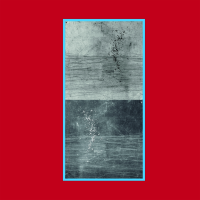
The great unknown here is how fruitful any hypothetical new collaborations of this fantastic quartet might have been. Unfortunately, we find ourselves once again in the realm of pure conjecture—which is precisely why this recovery, this vindication of what many may not know, or may view as belonging to an already superseded era and style, matters so much. It is true that, unlike acoustic music, electrification often does not age well, especially with certain instruments and sound designs associated with the fusion styles of the '70s and '80s. This is by no means the case with Storyboard—and even if, very episodically, it were, the musical essence that nourishes it justifies any sonic wrapping and production. The art of Lockwood and his superb accompanists dazzles us through the translucent bright red of this necessary reissue.
 FOLLOW Artur Moral
and get notified whenever a new article published.
FOLLOW Artur Moral
and get notified whenever a new article published.
An Absolute Listener
Track Listing
Side A: Thought of a First Spring Day; Back to Big Apple; En Quittant Kidonk; Mathilde. Side B: Tableau D'une Exposition; "Serie B"; Storyboard; Irremediablement; Spirits of the Forest.
Personnel

Didier Lockwood
violin
Joey DeFrancesco
organ, Hammond B3
Steve Gadd
drums
James Genus
bass
Steve Wilson
saxophoneAdditional Instrumentation
Steve Wilson: soprano sax on A1, alto sax on A2, A3; Denis Benarrosch: percussion on B2.
Album information
Title: Storyboard (Vinyl Reissue) | Year Released: 2026 | Record Label: Culture Factory USA
About Didier Lockwood
Tags
PREVIOUS / NEXT


Become a Sustaining Member

Since 1995, All About Jazz has championed jazz as an art form and supported the musicians who create it. Over three decades, it has grown into one of the world's leading jazz resources, serving hundreds of thousands of readers, musicians, presenters and industry professionals each month.
Help Build the Future of All About Jazz
Your support helps us continue building All About Jazz for the next generation—expanding our editorial coverage, preserving jazz history, developing new community features and creating better ways to discover the music and the people behind it.
Become a sustaining member for as little as $20 per year and you'll immediately enjoy an ad-free experience along with access to subscriber features and future articles for a full year.
Together, we're not simply sustaining All About Jazz—we're building its future. Thank you for being part of the journey.