Home » Jazz Articles » Album Review » Francesca Han: Sisyphus
Francesca Han: Sisyphus
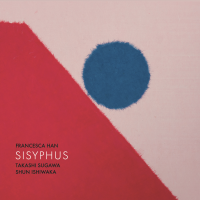
Han studied classical music and composition in South Korea and then spent eight years in New York, where her teachers included Jason Moran and Ralph Alessi. She recorded this music in March 2017 at Studio Dedé in Tokyo with bassist Takashi Sugawa and drummer Shun Ishiwaka, after the trio had developed the repertoire in clubs. The nine-year interval between recording and release gives the session an additional retrospective dimension: music built around returns now returns to a later moment in its composer's career.
The dedications are specific. One piece remembers Masabumi Kikuchi. Another joins Stanley Cowell and Alessi in a single title, and a third responds to John Coltrane. A tribute usually invites the question of how much of the honored musician can be heard in the playing. Han's pieces invite another: what a debt does to the form of a composition. Acknowledging an influence is the beginning of that question. Deciding how to develop it is the more consequential business.
"Chrysanthemum (for Kikuchi)" gives the clearest answer. Its principal dynamic crest arrives relatively early. A sustained withdrawal follows, and opening material subsequently returns without the music regaining its earlier peak. This gives the dedication a persuasive shape for remembrance. Something familiar comes back into a space altered by what has intervened. The lower dynamic level lends itself to an interpretation of distance: the material remains available, while its place in the piece has changed.
Sugawa makes the dedication less solitary. He met Kikuchi after his own move to New York and came under the influence of his musical philosophy. Han's composition therefore involves a bassist with a personal connection to its subject. Two of the three musicians bring their own histories to this remembrance. The dedication acquires a shared context before any claim needs to be made about what a particular bass phrase might express.
"Cowelessi" addresses inheritance more openly. Michael Pronko's liner notes identify its sources as Cowell's driving post-bop pianism and Alessi's adventurous playing and composition. An extended opening passage finds a close counterpart late in the piece, after the central expansion has subsided. The relationship between those passages gives the composition a recognizable identity across a substantial change of scale.
Jazz has always traded in returns. The head comes back after the solos as a matter of custom, and recurrence alone establishes little about originality. The interest here lies in proportion. The return follows a marked contraction from the central crest, and the later recovery remains below that earlier height. Familiar material helps restore continuity without renewing the greatest dynamic pressure. The piece gives recognition a role in its resolution.
The title track and "Circle" sit side by side in the program and share a broad dynamic outline. Each reaches its strongest sustained recorded level before the end, contracts, and gathers again. In "Sisyphus," material from early in the piece also reappears late, after the main expansion. Their shapes invite a Camusian reading because both give substantial space to what happens after the ascent. The descent becomes part of the work.
Pronko credits Sugawa and Ishiwaka with pressing Han toward further keyboard exploration on the title track. That description supplies an ensemble context for the larger changes of scale. Yet the proximity of these two pieces also exposes a critical risk: a recurring design can become predictable. The parallel contours make coherence easy to establish; the stronger test is whether each return acquires a particular function. "Chrysanthemum" and "Cowelessi" offer useful distinctions in this respect, placing recovered material within different spans of withdrawal and renewed activity.
"Count Yourself" provides the counterweight. Coltrane's "Countdown," from Giant Steps (Atlantic Records, 1960), compresses its harmonic reworking of "Tune Up" into a brief, exceptionally fast performance. Han's response adopts the more measured pace Pronko describes, allowing another relationship between harmonic movement and the time available to consider it. Its strongest sustained recorded levels arrive toward the close. Within this program, that placement matters: after several compositions whose major expansions occur earlier, one that reserves its dynamic peak for the closing stretch makes the surrounding proportions more apparent.
The frame is intimate. "Petit Soleil," written for Han's first son while she was pregnant, opens the album with a lullaby given considerable room to develop. Pronko notes its accumulating strength and the interplay of brushed cymbal, bass and melody; its major dynamic expansions arrive in the later stages. The dedication supplies an immediate human purpose for that growth. A composition for a child receives the same scope for development as the pieces addressing musical predecessors.
"Detour" closes the program. The reflective character Pronko identifies accommodates a substantial internal rise before the music subsides toward the ending. Reflection, on this reading, includes an event and its aftermath. Placing the homages between a song for a child and a closing meditation gives inheritance a lived context. The people who shape an artist's musical thinking occupy the same world as family, memory and everyday attachment.
A philosophical title can be a liability, since albums named for large ideas often leave the idea on the cover. Sisyphus gives its title a credible musical setting through its proportions: opening material returning more quietly in "Chrysanthemum," an extended passage recovered after the central expansion in "Cowelessi," and the dynamic weight held toward the finish in "Count Yourself." Han's individuality emerges in these allocations of time and emphasis, in the different responsibilities a return can assume. Camus asked his readers to imagine Sisyphus happy. On this evidence it is easier to imagine him attentive.
 FOLLOW Sue Yang
and get notified whenever a new article published.
Mental health therapist, jazz critic, educator, and founder of DeepListeningJazz
Track Listing
Petit Soleil; Chrysanthemum (For Kikuchi); Sisyphus; Circle; Cowelessi; Count Yourself; Detour
Personnel

Album information
Title: Sisyphus | Year Released: 2026 | Record Label: HANJI
About Francesca Han
Tags
PREVIOUS / NEXT

Become a Sustaining Member

Since 1995, All About Jazz has championed jazz as an art form and supported the musicians who create it. Over three decades, it has grown into one of the world's leading jazz resources, serving hundreds of thousands of readers, musicians, presenters and industry professionals each month.
Help Build the Future of All About Jazz
Your support helps us continue building All About Jazz for the next generation—expanding our editorial coverage, preserving jazz history, developing new community features and creating better ways to discover the music and the people behind it.
Become a sustaining member for as little as $20 per year and you'll immediately enjoy an ad-free experience along with access to subscriber features and future articles for a full year.
Together, we're not simply sustaining All About Jazz—we're building its future. Thank you for being part of the journey.