Home » Jazz Articles » Mr. P.C.'s Guide to Jazz Etiquette and Bandstand Decorum » March 2015
March 2015
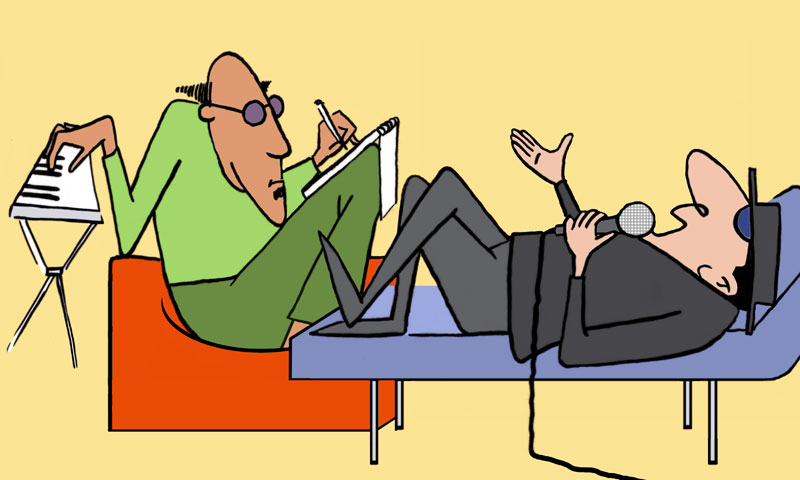
What is meant by the term "Post-Bop"? Since "bop" ended in the 1950s, isn't everything since then technically "post-bop"?
—T.M. in Seattle
It sure is, and that's great news to anyone worried that jazz is becoming irrelevant. What better solution than to be massively inclusive, the biggest of all big tents!
Taylor Swift? Post-bop! Rice a Roni? Post-bop! Richard Nixon? Post-bop! Post-modernism? Post-bop!
Sure, pop, rock and country outsell jazz fifty to one, but we know the post-bop truth—we own them.
The post-bop world belongs to jazz!
Dear Mr. P.C.:
Is there really a "Jazz Industry"? That makes it sound like there are thousands of people slaving away at their craft for little or no compensation. How is that possible in America? Is that why they call it "The land of the free"? I know that's more than one question, but this is so disturbing.
—Olympia Oliphant
I'm sure you know that there are great jazz musicians all around the world, but apparently you don't recognize the threat they pose to American jazz wages and job security. There is indeed a jazz industry in America, and it has to set wages low so they won't be undercut by artists abroad.
Do you really want to see our gigs outsourced—songs sung in undecipherable Indian accents; cheap Chinese licks flooding the market; charts written from right to left, performed by underfed children working long hours in unsafe clubs? It's not fair to them, it's not fair to you, and it's not fair to America, where jazz was born and must remain.
That's why the industry—of the jazz musician, by the jazz musician, and for the jazz musician—protects you by keeping your pay at bare subsistence level.
Dear Mr. P.C.:
I was in the audience at a jam session. My back was to the stage, and I couldn't believe how long a solo the tenor player took. He played like watered down Coltrane, a sound I'm used to nowadays. Then I turned around and realized I'd heard three different tenor players who all sounded the same. Why do they all do that?
—Roger Overandout
If tenor players didn't all sound the same, how would they be able to find subs? This way, when a pianist who sounds like watered down McCoy needs a tenor player who sounds like watered down Trane, the bench is deep.
And "watered down" isn't a negative—if Trane were still alive, at 88, he would sound like watered down Trane too. The sax players you heard value historical accuracy, while a player who sounds like Trane at the peak of his career is nothing but a thoughtless knock-off.
Have a question for Mr. P.C.? Ask him.
 FOLLOW Mr. P.C.
and get notified whenever a new article published.
FOLLOW Mr. P.C.
and get notified whenever a new article published.
Inspired by the cutting edge advice of Abigail Van Buren, the storied bass playing of Paul Chambers, and the need for a Politically Correct doctrine for navigating the minefields of jazz etiquette, I humbly offer my services.
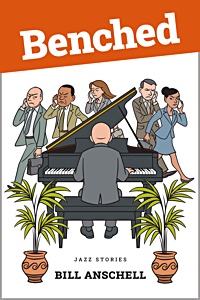
Get 'Benched!'
Benched, Bill Anschell's debut book of short stories / jazz humor. The stories are interspersed with the very best of Mr. P.C., hand-picked from the 400+ questions answered over the column's 16-year history. Benched is available on Amazon (paperback and Kindle) and most online booksellers.
Tags
PREVIOUS / NEXT


Become a Sustaining Member

Since 1995, All About Jazz has championed jazz as an art form and supported the musicians who create it. Over three decades, it has grown into one of the world's leading jazz resources, serving hundreds of thousands of readers, musicians, presenters and industry professionals each month.
Help Build the Future of All About Jazz
Your support helps us continue building All About Jazz for the next generation—expanding our editorial coverage, preserving jazz history, developing new community features and creating better ways to discover the music and the people behind it.
Become a sustaining member for as little as $20 per year and you'll immediately enjoy an ad-free experience along with access to subscriber features and future articles for a full year.
Together, we're not simply sustaining All About Jazz—we're building its future. Thank you for being part of the journey.