Home » Jazz Articles » Radio & Podcasts » Jacques Schwarz-Bart: Multicultural Identity, Authentici...
Jacques Schwarz-Bart: Multicultural Identity, Authenticity and Sound.
Click the play button to listen
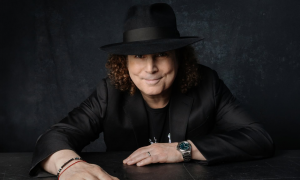
From the very start, Jacques' life was unusual. Born in the Caribbean island of Guadeloupe to a pair of writers (his mother the Guadeloupean novelist Simone Schwarz-Bart and his father, the French-Jewish writer and intellectual André Schwarz-Bart.)
The family traveled widely, living in Senegal, Switzerland, and Goyave, Guadeloupe. Young Jacques was an excellent student, and he was thought to be destined for greatness. In his universe, that meant a life in politics and, after studying at the prestigious Parisian school of Government, Sciences Po, he began a career as a Senator's assistant in Paris. He was an inspiration: young, successful and smart -a beacon of hope and a shining representative of his multi-cultural background in France.
So when he walked away from all that at age 27, moved to Boston and pursued a career in jazz saxophone at the Berklee College of Music, it was not a surprise to him that his family and friends thought he had literally lost his mind. People started to talk, and to invent all kinds of reasons to explain the choice. He says, "I admired them for finding a rational reason for my decision. Nobody could come to terms with the fact that I loved something and I just decided to pursue it despite that fact that I was new and not very good at it." It's true, he was new. He had only picked up a saxophone for the first time a few years earlier. But as he tells it, there was an instant connection between the young Schwarz-Bart and the and horn. He was off and running.
Much like everything else in his life, Jacques musical path has not followed a straight line. His work with Roy Hargrove led him to the world of neo soul, where he worked as a session player with the likes of D'Angelo, Erykah Badu, Eric Benet , and Meshell Ndegeocello.
But it was stints with Danilo Pérez, Ari Hoenig, Ra Kalam Bob Moses, and Giovanni Hidalgo that informed his search for authentic, coherent music that built bridges between his cultural and musical worlds. A series of exploratory projects ensued, including the Gwoka Jazz Project (exploring the music of Guadeloupe); Jazz Racine Haiti (bringing together Haitian Voodoo music and jazz); and most recently Hazzan , featuring his original arrangements of Jewish liturgical music.
 FOLLOW Leo Sidran
and get notified whenever a new article published.
FOLLOW Leo Sidran
and get notified whenever a new article published.
Multi-instrumentalist, composer, producer and podcast host.
About Jacques Schwarz-Bart

Tags
PREVIOUS / NEXT

Jacques Schwarz-Bart Concerts
Become a Sustaining Member

Since 1995, All About Jazz has championed jazz as an art form and supported the musicians who create it. Over three decades, it has grown into one of the world's leading jazz resources, serving hundreds of thousands of readers, musicians, presenters and industry professionals each month.
Help Build the Future of All About Jazz
Your support helps us continue building All About Jazz for the next generation—expanding our editorial coverage, preserving jazz history, developing new community features and creating better ways to discover the music and the people behind it.
Become a sustaining member for as little as $20 per year and you'll immediately enjoy an ad-free experience along with access to subscriber features and future articles for a full year.
Together, we're not simply sustaining All About Jazz—we're building its future. Thank you for being part of the journey.