Home » Jazz Articles » Live Review » Hamiett Blueitt Improvises Song for
Hamiett Blueitt Improvises Song for

For all his years traversing the bold bass clef, Hamiett sang beautifully in treble, creating a tribal sound with Rouse.
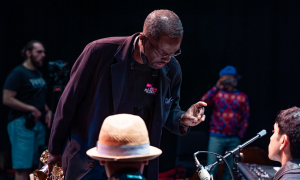
Without introduction, Blueitt walked across the stage, smiling and saying hi to people. He set up his sax and improvised a medium tempo tour of what a baritone can do in the right hands, free yet forcefully conveying rhythm. He played a brief interlude, then stopped to bring up Eddie Rouse who listened by the back door. Rouse gamely joined Blueitt, setting up a rhythm that Blueitt played over on a small wooden transverse flute. For all his years traversing the bold bass clef, Hamiett sang beautifully in treble, creating a tribal sound with Rouse.
After another display of power and authority on solo baritone by Blueitt, two men walked down the opposite aisles and ascended the stage. The younger actor, Freeman, initiated the storyline with the revelation that he’d become a father again at 51. Hoping to do better by this child than he did with three he had by the time he was 24, he reflects on his own father and James went into character. As a link in the familial chain, he remembers his father and re-intones advice that still echoed in his son’s head.
Along the way Freeman becomes a scared six-year-old having his tonsils out, and James as his dad remembered a brief freewheeling career as a bootlegger before the Depression. Freeman joins the army desperate to support his young family, but Nam looms, and his wife leaves with kids anyway. As he related details of his four failed marriages, Freeman debated the disparaging remarks made by his dad’s ghost.
However many times he’s sat through it, Blueitt made a great audience, still cracking up at the funny stuff, crying on his horn or blurting outraged tones when appropriate. While Rouse worked off cues, Blueitt rewrote his part each performance.
With no amplification, Blueitt’s impassioned cries occasionally blew Freeman’s declarations out of audibility. James’ script while personal managed to engage universal themes and situations. Turning an improviser of Blueitt’s caliber loose in this emotionally charged context added a deeper dimension to the performance that could not have been reached otherwise.
website: www.hiphopconcepts.com
Tags
PREVIOUS / NEXT
Become a Sustaining Member

Since 1995, All About Jazz has championed jazz as an art form and supported the musicians who create it. Over three decades, it has grown into one of the world's leading jazz resources, serving hundreds of thousands of readers, musicians, presenters and industry professionals each month.
Help Build the Future of All About Jazz
Your support helps us continue building All About Jazz for the next generation—expanding our editorial coverage, preserving jazz history, developing new community features and creating better ways to discover the music and the people behind it.
Become a sustaining member for as little as $20 per year and you'll immediately enjoy an ad-free experience along with access to subscriber features and future articles for a full year.
Together, we're not simply sustaining All About Jazz—we're building its future. Thank you for being part of the journey.