Home » Jazz Articles » Mr. P.C.'s Guide to Jazz Etiquette and Bandstand Decorum » Easy Swing, Fours and More, Medicinal Jazz
Easy Swing, Fours and More, Medicinal Jazz
I just played a gig, and one of the charts said the feel should be "Easy Swing." What does that mean? The bassist thinks he was supposed to play in two, but I think it would have said "In Two" if that was the case. I think he was supposed to walk, but he says the charts would have said "In Four" or "Walking Bass." Please settle our argument.
—Swingless In Seattle
Dear SIS:
Was it a hard tune? The arranger probably knew that musicians like you would mess it up, and he didn't want the audience to notice. "Easy Swing" tells you to play a hard song as if it's easy.
Such an elegant solution! With different instructions you'd flounder, but playing with an "Easy Swing" feel you'll sound like you haven't a care in the world—like the tempo isn't mm = 300, like there aren't a bunch of Coltrane substitutions, and like the rest of the band isn't vibing you.
Unfortunately, for some musicians that sort of blustery self-confidence just doesn't come naturally. If you're one of them, don't despair: You can get that same "Easy Swing" feel by pounding a couple of stiff drinks right before the count-off.
Dear Mr. P.C.:
When we got to trading fours on a tune last night, it went like this:
sax—drums
piano—drums
sax—drums
piano—drums
piano...
The pianist bogarted my four! (I'm the saxophonist)
So what was I supposed to do? Play anyway, and try to play louder than him? Steal his next four?
—Jeff, Sacramento
Dear Jeff:
Fours are widely accepted currency in the jazz community. They can be saved or sold but are more typically swapped; this is the origin of the phrase "trading" fours. The same marketplace also includes eights and, among wholesale distributors, choruses. Musicians prefer to traffic in fours because they're the lowest denomination commonly traded; due to inflation the once popular twos—the pennies of the jazz world—are seldom seen today.
There's no reason you can't get your fours back next time you work with that pianist; just be sure to keep your eye on the drummer, who can easily render any trade invalid. To those of us supporting Fair Trade policies, drummers who drop beats are the discount brokers of the jazz economy: By undercutting their bandmates and promoting an inferior product, they're no better than your local Walmart.
Dear Mr. P.C.:
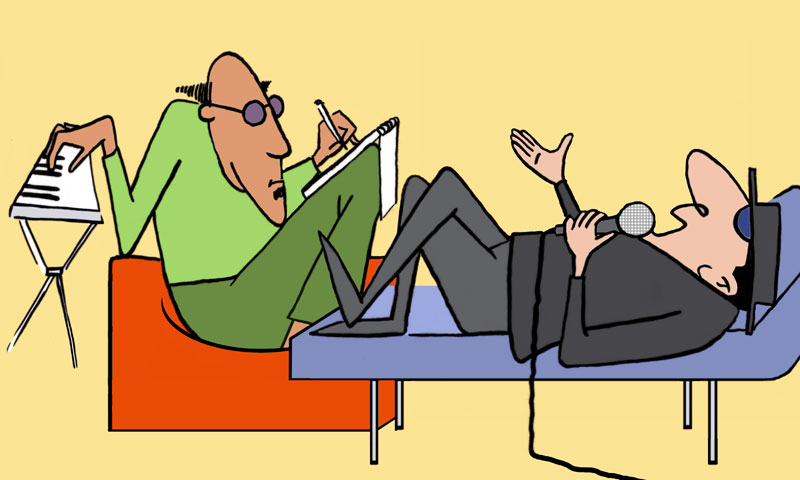
So the election happened and now a lot of people in the jazz world are upset. Can jazz itself be a healing force?
—Polly Cy
Dear Polly:
Absolutely! And that probably explains why the jazz audience is so small—they get better and move on.
Have a question for Mr. P.C.? Ask him.
 FOLLOW Mr. P.C.
and get notified whenever a new article published.
FOLLOW Mr. P.C.
and get notified whenever a new article published.
Inspired by the cutting edge advice of Abigail Van Buren, the storied bass playing of Paul Chambers, and the need for a Politically Correct doctrine for navigating the minefields of jazz etiquette, I humbly offer my services.
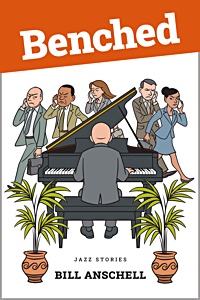
Get 'Benched!'
Benched, Bill Anschell's debut book of short stories / jazz humor. The stories are interspersed with the very best of Mr. P.C., hand-picked from the 400+ questions answered over the column's 16-year history. Benched is available on Amazon (paperback and Kindle) and most online booksellers.
Tags
PREVIOUS / NEXT


Become a Sustaining Member

Since 1995, All About Jazz has championed jazz as an art form and supported the musicians who create it. Over three decades, it has grown into one of the world's leading jazz resources, serving hundreds of thousands of readers, musicians, presenters and industry professionals each month.
Help Build the Future of All About Jazz
Your support helps us continue building All About Jazz for the next generation—expanding our editorial coverage, preserving jazz history, developing new community features and creating better ways to discover the music and the people behind it.
Become a sustaining member for as little as $20 per year and you'll immediately enjoy an ad-free experience along with access to subscriber features and future articles for a full year.
Together, we're not simply sustaining All About Jazz—we're building its future. Thank you for being part of the journey.