Home » Jazz Articles » Album Review » Larry Stabbins: Aurora
Larry Stabbins: Aurora

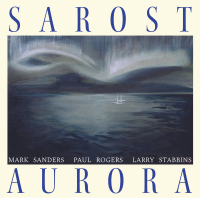
Stabbins' broad hinterland encompasses not only stints with freedom-loving heavyweights such as reedman Peter Brötzmann, pianist Keith Tippett and drummer Tony Oxley, but also charted success as an integral part of soul jazz pop group Working Week in the 1980s. As a consequence, his fondness for reiterated phrases can as easily settle into extemporized melodies as muffled bleats, avoiding predictable resolution. Rather than defaulting to lead voice as so often the case in saxophone trios, his recurring patterns also bestow a loose structure to unruly developments, serving as a center around which drums and bass gyre.
This outfit's wide open expanses make a fine vantage point from which to appreciate Rogers' talents. A longtime comrade of saxophonist Paul Dunmall, most notably in Mujician, his custom-built 7-string bass gifts him an extended range that he possesses the musicality to fully exploit, spanning subterranean plucked pedal points, resonant slurred notes and ringing harmonics. He likewise has few peers when applying bow to strings, whether evoking the lyricism and logic of Bach's Cello Suites or careening up and down the bass clef with volatile sawing.
At one time, Sanders and Rogers formed the go-to rhythm axis in the London improvised arena until the bassist's move to France in 1991. On the evidence of their preternatural communication here—effortless shifts from conversational flurries to urgent churn—that longstanding connection survives intact. Sanders colors, accents and propels, often all at the same time, showing just why colleagues such as flautist Nicole Mitchell, pianist Myra Melford, trumpeter Wadada Leo Smith, reedmen Evan Parker and John Butcher, to name just a few, value him so much.
The closing "Boreas Curtains" acts as a summation: from the introspective start of low key hushed exchanges between Stabbins and Rogers, insistently repeated figures and a growing drum rumble gradually heighten tension, before the saxophonist's line solidifies into a stately anthemic theme from Tippett's Frames: Music For An Imaginary Film (Ogun, 1978), creating a conclusion in which the band honors lineage without leaning on it, fearlessly moving forward, even as they keep sight of where they have come from.
Track Listing
First Lights; South; North; Boreas Curtains.
Personnel


Album information
Title: Aurora | Year Released: 2025 | Record Label: Jazz in Britain / Jazz Now
About Larry Stabbins
Tags
PREVIOUS / NEXT


Become a Sustaining Member

Since 1995, All About Jazz has championed jazz as an art form and supported the musicians who create it. Over three decades, it has grown into one of the world's leading jazz resources, serving hundreds of thousands of readers, musicians, presenters and industry professionals each month.
Help Build the Future of All About Jazz
Your support helps us continue building All About Jazz for the next generation—expanding our editorial coverage, preserving jazz history, developing new community features and creating better ways to discover the music and the people behind it.
Become a sustaining member for as little as $20 per year and you'll immediately enjoy an ad-free experience along with access to subscriber features and future articles for a full year.
Together, we're not simply sustaining All About Jazz—we're building its future. Thank you for being part of the journey.