Home » Jazz Articles » Album Review » J. Peter Schwalm / Markus Reuter: Aufbruch
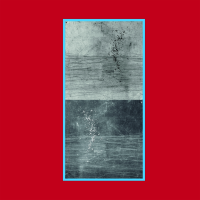
J. Peter Schwalm / Markus Reuter: Aufbruch

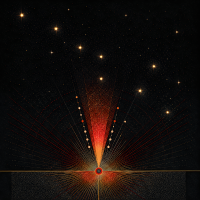
"Wall of sound" is a phrase used to describe the late producer Phil Spector's approach to recording (the 1963 single by Ronnie and the Ronettes, "Be My Baby," is an early example of this). Schwalm and Reuter make their own futuristic wall of sound, as dense as Jupiter's atmosphere, it sometimes seems; at other times as thin and vaporous as the "air" on Mars. Reuter is ofttimes making noise unlike anything you'll hear from a conventional guitar, and separating his contributions from keyboardist Schwalm is near impossible. A luminescent nebula spinning in space—in the fictional context of its existence within an atmosphere—might sound like this.
The project was initially conceived as a long distance, swapping files affair. This was shelved for an "in the flesh" recording, with Reuter sculpting angular blocks of sound, while Schwalm painted on thick layers of synth sound color, in cinematic landscape creations without borders, warped by surreal "Twilight Zone" backdrops.
A beautiful and fortuitous oddity surfaces in the set's seventh and eighth tracks ("Lebewohl" and "Losgelost") with Sophie Tassignon's ghostly vocals softening the overall concept, evoking spectral apparitions looming in out of the mists of dark forests. The album closes out with the placid "Abschied," that features an oceanic ebb and flow of sound—made by a twenty-first century, two-man electro-orchestra.
 FOLLOW Dan McClenaghan
and get notified whenever a new article published.
FOLLOW Dan McClenaghan
and get notified whenever a new article published.
A lover of sounds, and the way they fit together.
Track Listing
Der Aufbruch; Von Anbeginn; Ruckzug; Abbau; Ein Riss; Der Iange Weg; Lebewohl; Losgelost; Abschied.
Personnel


Additional Instrumentation
J. Peter Schwalm: Synths, Pianos, live treatments, electronic percussion, programming; Markus Reuter: Touch Guitars® AU8 and U8 Deluxe, Soundscapes, Electronics; Sophie Tassignon: Vocals on „Lebewohl“ and „Losgelöst.“
Album information
Title: Aufbruch | Year Released: 2021 | Record Label: RareNoiseRecords
About J. Peter Schwalm
Tags
PREVIOUS / NEXT


Become a Sustaining Member

Since 1995, All About Jazz has championed jazz as an art form and supported the musicians who create it. Over three decades, it has grown into one of the world's leading jazz resources, serving hundreds of thousands of readers, musicians, presenters and industry professionals each month.
Help Build the Future of All About Jazz
Your support helps us continue building All About Jazz for the next generation—expanding our editorial coverage, preserving jazz history, developing new community features and creating better ways to discover the music and the people behind it.
Become a sustaining member for as little as $20 per year and you'll immediately enjoy an ad-free experience along with access to subscriber features and future articles for a full year.
Together, we're not simply sustaining All About Jazz—we're building its future. Thank you for being part of the journey.