Home » Jazz Articles » Mr. P.C.'s Guide to Jazz Etiquette and Bandstand Decorum » Audience Requests, Invisible Soloists and Rhythm Changes
Audience Requests, Invisible Soloists and Rhythm Changes
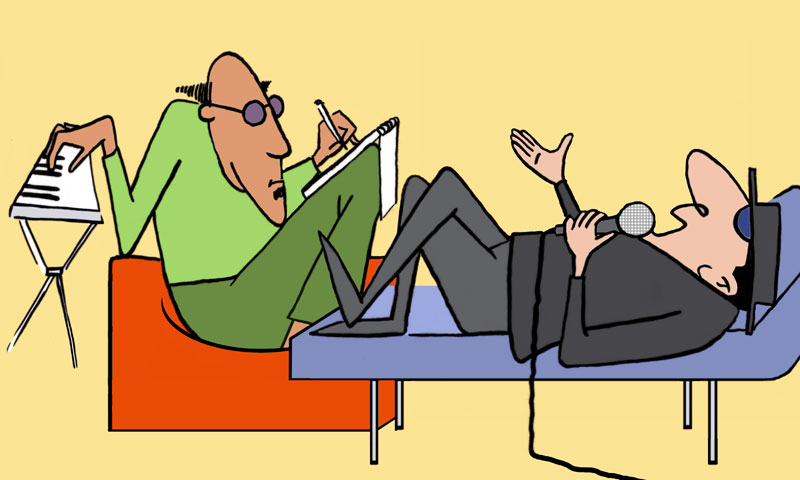
I'm just an audience member, but I have a question on behalf of a lot of us listeners:
If I make a request and the band plays it, do I have to listen to the whole thing? After they play the melody and then go into all the other stuff, sometimes I'd rather talk to my friends or just leave.
—Short Attention Span Suzie
Dear SASS:
Don't you think the guys in the band would rather talk to their friends or just leave too? Your request—which you never should have made—is a compact; it binds you and the band together in what becomes a set period of shared suffering.
Only the silence at the end can set you and the band free; that's why the last note of "Moondance" is always the sweetest.
Dear Mr. P.C.:
A vocalist counted off a blues, and we (the trio) played a chorus up front, since that's the easiest way to set it up. So I'm soloing through the intro chorus, and the singer comes up and says to me "I want you to solo on this."
I can't talk while I play, but also my brain was exploding. Couldn't she tell I was soloing? Did she want me to stretch out longer even though it was an intro? Did she want to make sure I took a solo during the song as well?
So I couldn't talk and didn't know what to say anyway. Thinking I'm ignoring her she says more insistently "I mean it, I want you to solo on this!" She was getting kind of mad. I was still soloing, still utterly baffled, and I've stayed that way to this day.
—Confused in Carolina
Dear Confused:
Were you making it clear that you were soloing, or were you so caught up in making music that you completely neglected to show it? Just how did you expect this singer—or the audience—to know you were soloing if all you did was play a bunch of notes? That's exactly why people don't like jazz, you know—too many notes, too little action.
Maybe someday you'll share your singer's concern for the music, its audience, and its future; until then, would it kill you to look like you care?
Dear Mr. P.C.:
Why does "I Got Rhythm" begin on beat two? If they have rhythm shouldn't it begin on beat one?
And why do chords to "rhythm changes" change? Shouldn't the rhythm change?
—Jazzprof
Dear Jazzprof:
Most jazz players—like their symphony counterparts—are afraid of an exposed mistake, so they're not ready to commit until they've already heard beat one. "I Got Rhythm" is actually supposed to start on beat one, but performer latency displaces it to beat two. That's why it's a "rhythm changes" song—because the rhythmic execution doesn't match the composer's intent.
As for your second question: The term "rhythm changes" has nothing to do with the chords. "Chord changes" are changes to chords, and like rhythm changes, they're just something we all have to endure.
Have a question for Mr. P.C.? Ask him.
 FOLLOW Mr. P.C.
and get notified whenever Mr. P.C. has a new article published.
FOLLOW Mr. P.C.
and get notified whenever Mr. P.C. has a new article published.
Inspired by the cutting edge advice of Abigail Van Buren, the storied bass playing of Paul Chambers, and the need for a Politically Correct doctrine for navigating the minefields of jazz etiquette, I humbly offer my services.
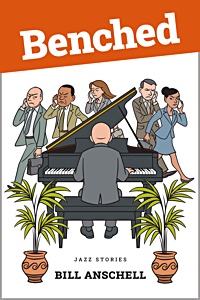
Get 'Benched!'
Benched, Bill Anschell's debut book of short stories / jazz humor. The stories are interspersed with the very best of Mr. P.C., hand-picked from the 400+ questions answered over the column's 16-year history. Benched is available on Amazon (paperback and Kindle) and most online booksellers.
Tags
PREVIOUS / NEXT
Become a Sustaining Member

Since 1995, All About Jazz has championed jazz as an art form and supported the musicians who create it. Over three decades, it has grown into one of the world's leading jazz resources, serving hundreds of thousands of readers, musicians, presenters and industry professionals each month.
Help Build the Future of All About Jazz
Your support helps us continue building All About Jazz for the next generation—expanding our editorial coverage, preserving jazz history, developing new community features and creating better ways to discover the music and the people behind it.
Become a sustaining member for as little as $20 per year and you'll immediately enjoy an ad-free experience along with access to subscriber features and future articles for a full year.
Together, we're not simply sustaining All About Jazz—we're building its future. Thank you for being part of the journey.