Jazz Articles
Our daily articles are carefully curated by the All About Jazz staff. You can find more articles by searching our website, see what's trending on our popular articles page or read articles ahead of their published dates on our Coming Soon page. Read our daily album reviews.
Sign in to customize your My Articles page —or— Filter Article Results
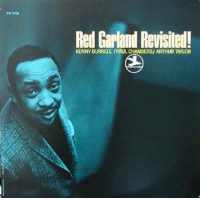
Red Garland Revisited!
by C. Michael Bailey
Prestige Records released Red Garland Revisited in 1969. However, Rudy Van Gelder recorded the eight selections comprising the album 12 years earlier at his Hackensack, New Jersey studio. Using bassist Paul Chambers and drummer Art Taylor as his rhythm section, adding guitarist Kenny Burrell on two pieces--Miles Davis's “Four" and “Walkin.'" Recorded May 24, 1957, this session took place during a busy period for Garland, between a date for trombonist Curtis Fuller on May 14 resulting in Curtis Fuller with ...
Continue ReadingThe Duke Ellington Carnegie Hall Concerts: January 1943

by Chuck Lenatti
Duke Ellington was one of the most popular and successful jazz musicians of the first half of the 20th century and according to composer Gunther Schuller and musicologist and historian Barry Kernfeld, “the most significant composer of the genre." Radio broadcasts from his residency at New York's Cotton Club beginning in 1927 extended Ellington's orchestra's national exposure and a parade of hit records, from “East St. Louis Toodle-Oo" in 1926 to “C Jam Blues" in 1942, among many ...
Continue ReadingRed Garland's Piano

by C. Michael Bailey
Pianist Red Garland follows up his debut recording A Garland of Red (Prestige, 1956) with what might be his finest statement leading a jazz trio, Red Garland's Piano. Garland continues his association with bassist Paul Chambers and drummer Art Taylor forming his most durable rhythm section, and one that would record with him on ten of his 45 recordings as a leader. The trio recorded the sides that would become Red Garland's Piano in December 1956 and March 1957 at ...
Continue ReadingA Garland of Red

by C. Michael Bailey
Like pianist Wynton Kelly and Kelly's debut recording New Faces -New Sounds (Blue Note, 1951), William McKinley Red Garland performed for years as a sideman before releasing his first recording as a leader, A Garland of Red. Originally from Dallas, Texas, Garland migrated to New York City after a stint with Hot Lips Page in 1946. There, Garland recorded with Eddie “Lockjaw" Davis and Charlie Parker, basically just kicking around until drummer Art Blakey heard him one night playing a ...
Continue ReadingMiles Davis Quintet: Relaxin’ With the Miles Davis Quintet

by C. Michael Bailey
Relaxin' With the Miles Davis Quintet was the second of four releases resulting from Davis' famous May and October 1956 marathon sessions. The other three recordings were Cookin' with the Miles Davis Quintet (1957), Workin' with the Miles Davis Quintet (1959), and Steamin' with the Miles Davis Quintet (1961). All of the music from these sessions would eventually collected and released on The Legendary Prestige Quintet Sessions (2006). Chronologically, Relaxin' shows up between Bag's Groove (Prestige, 1957) and Miles Davis ...
Continue ReadingJazzmeia Horn: A Social Call

by James Nadal
Coming from a gospel oriented family in Dallas, Texas, given a unique name and early tutelage by her piano playing grandmother, Jazzmeia Horn was destined to be a jazz singer. After relocating to New York City to pursue music studies, she went on to conquer the 2013 Sarah Vaughan International Jazz Competition, topping that by winning the Thelonious Monk Institute International Jazz Competition in 2015. All of this preparation and recognition has culminated in her debut release A Social Call, ...
Continue ReadingGene Ammons: Boss Tenor

by Matthew Aquiline
Tenor saxophonist Gene Ammons' tone can be best described using the qualities of an ideally brewed cup of joe: rounded, bold, smooth, and exhilarating after first taste. Widely regarded as an original founder of the “Chicago school of tenor sax," Ammons' nonchalant, yet indelible sound--echoing the soft, breathy tone of Lester Young--drove him to a great deal of fame within the post- World War II jazz crowds of the '50s. Ammons, famously nicknamed “Jug," had an inherent ability ...
Continue ReadingThelonious Monk: Thelonious Monk
by Chris Kompanek
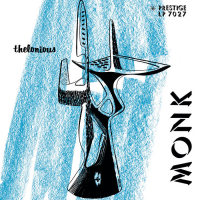
The remastered Monk is actually two mini-sets melded into one with the first quintet consisting of the underrated trumpeter Ray Copeland, tenor saxophonist Frank Foster and bassist Curly Russell, with the legendary Art Blakey holding it all together on drums. These first four tracks (including a beautiful rendition of the Jerome Kern classic “Smoke Gets in Your Eyes") are upbeat and decidedly lighter in tone. This half ends with a masterfully syncopated solo by Blakey on the jaunty “Hackensack," named ...
Continue ReadingJohn Coltrane: Side Steps

by Chris May
John Coltrane Side Steps Prestige Records 2009 The 5-CD Side Steps follows two other Prestige box sets--the 6-CD Fearless Leader (2006) and 5-CD Interplay (2007)--which together catalogue saxophonist John Coltrane's recordings for the label 1956-58. The three boxes, each packed with extraordinary music, chronicle on parallel paths the years during which Coltrane's revolutionary style began to emerge, but before he achieved iconic status first, from 1959, on Atlantic, and then, from ...
Continue ReadingJohn Coltrane: Dakar
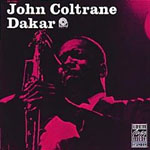
by Chris May
Often cited as saxophonist John Coltrane's first album as leader, Dakar--recorded on April 20, 1957--is a usurper. Originally credited to the Prestige All Stars (and released as part of a short-lived experiment with 16-rpm discs), it was only credited to Coltrane on its re-release in 1963, when the saxophonist's star was firmly in the ascendant. The Dakar session was one of several Coltrane appeared on as a sideman that week--on the 16th with pianist Thelonious Monk, on the 18th with ...
Continue Reading