Home » Jazz Articles » Album Review » Various Artists: The Birth of Bop
Various Artists: The Birth of Bop

This is not the first time that Teddy Reig's Savoy sides have been reissued (was he also the mysterious Buck Ram listed as producing one track?), but Craft Recordings took a lot of trouble to produce this very fine selection. If a listener were, say, twenty years old in 1946, well, congratulations to a prospective centenarian. For the younger reader or listener, especially one hearing some of these often-imperfect masterpieces, get ready for a few surprises: good, not so good, and, well, just surprises. Some very big names eventually turned out to sound rather different than they did fifty years later. Some unfamiliar names that would presumably have gone on to be very big names by virtue of their playing simply disappeared. Some rhythm sections cooked, and others occasionally got lost. Not everyone had mastered their instrument, especially when the horn, the French horn specifically, was new to jazz. Even modern remastering can't rescue a few hopeless recordings, but they are mercifully few indeed. Other Savoy reissues, such as Black California ( Arista, 1976) were not quite as well done.
A couple of players came out of the gate smoking. Others followed a slower development. Not everyone liked early bop or "rebop." There were ears that were closed and those that were receptive. What one finds is the messiness of creation, birth, and the process of discovery. That is the real, substantive contribution of the reissue: history as it was, not as we want it to have been. For some, that is very exciting. For others, it will be disappointing or even annoying. This is your Father's Oldsmobile. There were no hybrids. So be prepared for both the good and the not so good, the successes and the train wrecks. That is how history works, by fits and starts; not in straight, predetermined lines that necessarily suit our sensibilities.
One of the first things that jumps out at you is the sound. If a listener has spent a lot of time with earlier recordings, especially of swing outfits like Benny Goodman or Duke Ellington, the shock is minimal. Sometimes, you can barely hear a pianist like Al Haig comping, but you know he is there. Even a listener without perfect pitch will pick up intonation problems. Leo Parker, "Leo The Lion," with whose bari sax may be unfamiliar, sometimes sounds majestic, but other times, he is just plain flat. Parker, who outlived the better-known (and unrelated) Charlie Parker by only two years, may be a discovery for many. There are technical matters best left to engineers, but which determine the color and timbre of the instruments and sounds they produce. It is unreasonable to expect a recording made in 1947 sound like something made in 2007, no matter how proficient the instrumentalist or how sophisticated his (and it was mostly his) harmonic conception. Eddie "Lockjaw" Davis may indeed be moving toward atonality on Fats Navarro's "Maternity," but the recording is dimensionless; to some ears, Davis is simply grunting. (And what the tune had to do with motherhood is anyone's guess, even though Teddy Reig said in print it did).
None of these are deficiencies. They are artifacts of the time, place, and technology at which bop was born, not to say the technique available to even gifted players then. A trumpet player may now be able to routinely play a fourth or more above an ancestor, but that is science as much as "talent."
Another thing may be the "blindfold test" question. There may well be some who can identify Dexter Gordon or Stan Getz at the age of 20, but a listener who first came to Getz or Gordon in the 1960s or 1970s—even the 1950s—is going to hear something rather different: different in terms of time, attack, and conception, because early Gordon or Getz do not sound much like their mature versions. No one will ever know what Charlie "Bird" Parker would have sounded like at 50 or 60 any more than what Jack Kennedy would or would not have done in Vietnam had he not been assassinated in 1963. For most listeners, Bird is, well, Bird. He seemingly emerged fully formed (at least on record); there is no Late Charlie Parker. Nor is there any late Benny Harris, no matter how much the early Benny promised, because Harris drifted away from music and then, according to Red Rodney, lost his chops. What one hears of Harris here is generally impressive, but unless "enigmatic" is an adequate adjective, who knows? Similarly for Leonard Hawkins, who could hold his own with Miles Davis or Doug Mettome, only to later vanish. Then there is Fats Navarro, another monster musician: was he dead (no gravestone either) before some of the sides were even released? Like Bird, his influence persisted far beyond his life span, but any evolution was precluded. Cecil Payne recorded on alto? Who knew? Only Sonny Stitt wanted to follow Bird on alto, for better or worse.
On the other hand, it might have been for the best if Herbie Fields, at least by this evidence, had gone unrecorded, but then, he did have a reputation as a wild man. Milt Jackson and J J Johnson are also players who sounded every bit as impressive in the beginning as they did in later years, thinking in musical paragraphs, or pulling off astonishing feats of virtuosity. There are other brilliant players, Doug Mettome or Kai Winding, who are displayed to perhaps less impressive effect. Some may wonder, a bit unfairly, why Allen Eager got the exposure he did, other than as a "gray" cat playing what was very clearly—and bop was overwhelmingly—black music, even more so than Swing. This must have been particularly true with the emergence of players like Al Cohn, who clearly surpassed Eager.. In that sense, the wonderful photographs that accompany Neil Tesser's penetrating commentary in the accompanying "Birth of Bop" booklet really, if silently, drive the point home. On the other hand, there was "Albino" Red Rodney, here in Serge Chaloff's "sextette" on the excessively up-tempo "Pumpernickel." Red's playing in 1947, so accomplished as a kid, makes one wonder what he could have produced, his late-career renaissance notwithstanding had he not gotten involved with drugs and other "capers." So much talent, literally wasted.
Then there is the aesthetic and tactile aspect of the project—especially in the set of historically accurate 10-inch vinyl recordings. A whole new generation will get introduced to the phrase "turn the record over"; the artwork, the production values, the entire physical package, is first rate. With five volumes, you get thirty tracks, which is just a sampling of what Reig and Savoy produced. But what a sample it is. Very few listeners will have been lucky enough to be around then, or to have seen and heard the formative, and sometimes still inchoate versions of the players whom they would come to admire. This reissue is probably the next best thing. The team that produced the compilation really deserves congratulations for a labor of love.
 FOLLOW Richard J Salvucci
and get notified whenever a new article published.
FOLLOW Richard J Salvucci
and get notified whenever a new article published.
Richard is an emeritus professor of economics at Trinity University.
Track Listing
The Birth Of Bop, Volume 1: Charlie Parker: Romance Without Finance; Dexter Gordon: Dexter’s Minor Mad; J. J. Johnson: Jay Bird; Milt Jackson: Hearing Bells; Leo Parker: Chase ’N’ Lion (Chase’n The Lion); Stan Getz: Stan's Mood
The Birth Of Bop, Volume 2: Fats Navarro: Hollerin’ And Screamin’ (Fatso); Allen Eager: Church Mouse; Kai Winding: Always; Don Byas: Byas A Drink; J. J. Johnson: Jay Jay; Dexter Gordon: Long Tall Dexter.
The Birth Of Bop, Volume 3: Budd Johnson: Little Benny (King Kong); J. J. Johnson: Mad Be Bop; Milt Jackson: Bubu; Leo Parker: Solitude; Stan Getz: Don’t Worry ’Bout Me; Fats Navarro: Maternity (Lard Pot).
The Birth Of Bop, Volume 4: Allen Eager: Donald Jay; Kai Winding: Saxon; Budd Johnson: Dee Dee’s Dance; J. J. Johnson: Coppin’ The Bop; Milt Jackson: Junior; Dexter Gordon: Dexter Digs In.
The Birth Of Bop, Volume 5: Allen Eager: Unmeditated; Leo Parker: The Lion’s Roar (Lion Roars); Eddie “Lockjaw” Davis: Stealin’ Trash; Roy Porter: Pete’s Beat; Serge Chaloff: Pumpernickel; Morris Lane: Blowin’ For Kicks.
Personnel

Charlie Parker
saxophone, alto
Dexter Gordon
saxophone, tenor
Stan Getz
saxophone, tenor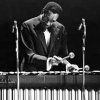
Milt Jackson
vibraphone
Allen Eager
saxophone
Fats Navarro
trumpet
J.J. Johnson
trombone
Leo Parker
saxophone, baritone
Kai Winding
trombone
Budd Johnson
saxophone, tenor
Eddie "Lockjaw" Davis
saxophone, tenor
Roy Porter
drums
Serge Chaloff
saxophone, baritone
Morris Lane
saxophoneAlbum information
Title: The Birth of Bop | Year Released: 2023 | Record Label: Craft Recordings
About Charlie Parker
Tags
PREVIOUS / NEXT


Become a Sustaining Member

Since 1995, All About Jazz has championed jazz as an art form and supported the musicians who create it. Over three decades, it has grown into one of the world's leading jazz resources, serving hundreds of thousands of readers, musicians, presenters and industry professionals each month.
Help Build the Future of All About Jazz
Your support helps us continue building All About Jazz for the next generation—expanding our editorial coverage, preserving jazz history, developing new community features and creating better ways to discover the music and the people behind it.
Become a sustaining member for as little as $20 per year and you'll immediately enjoy an ad-free experience along with access to subscriber features and future articles for a full year.
Together, we're not simply sustaining All About Jazz—we're building its future. Thank you for being part of the journey.