Home » Jazz Articles » In Pictures » The Anna Webber Nonet at the Jazz Gallery: Reflections f...
The Anna Webber Nonet at the Jazz Gallery: Reflections from the Edge of a World Gone Awry
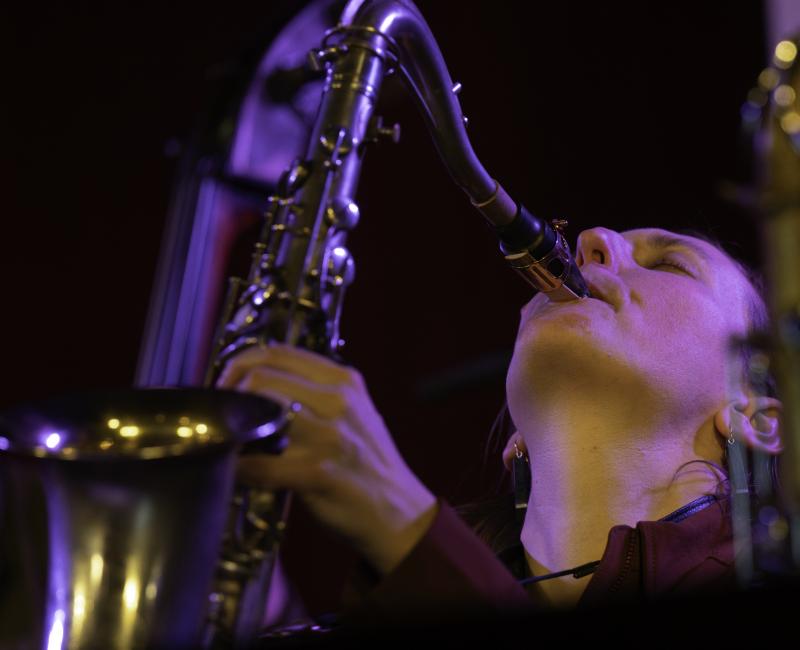
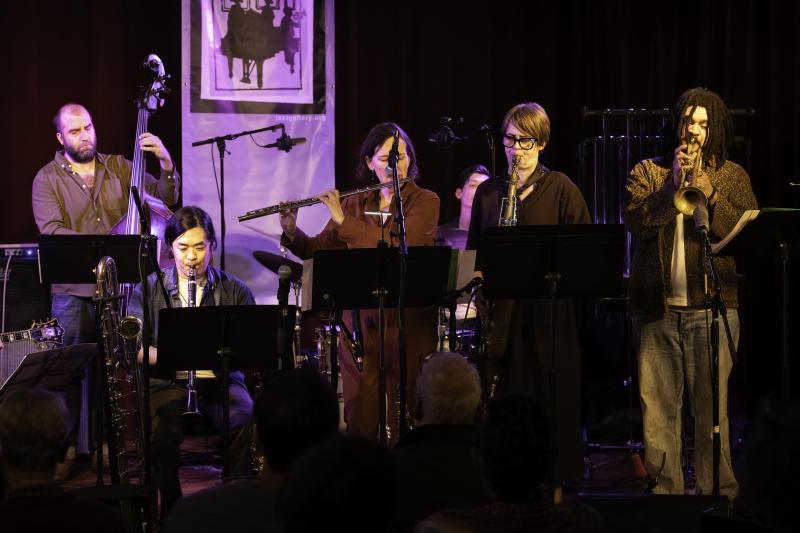
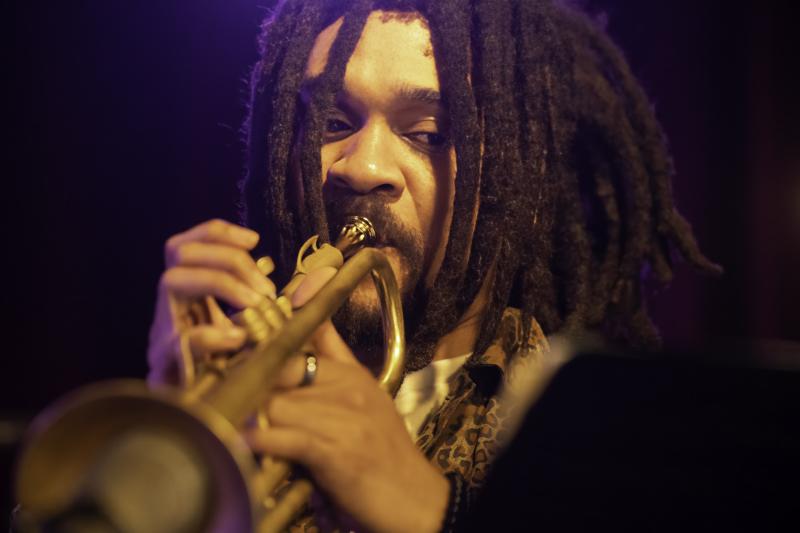
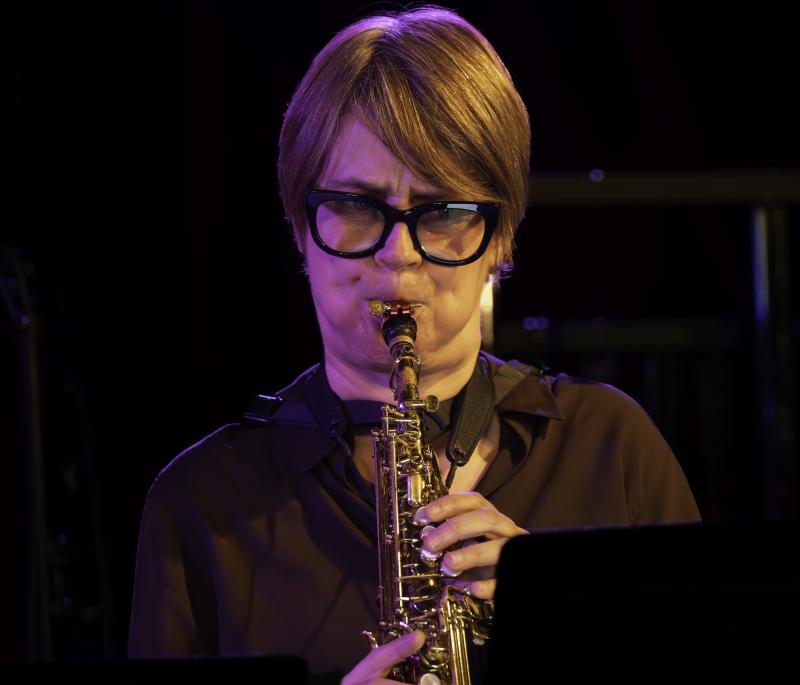
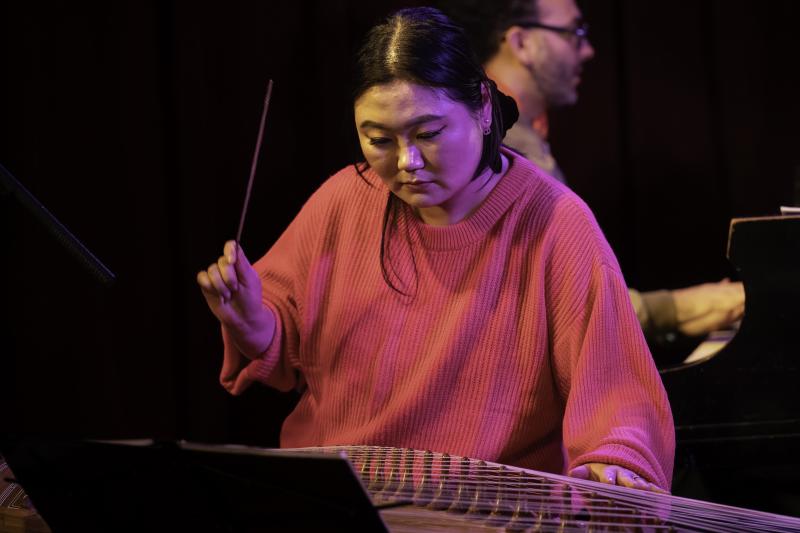
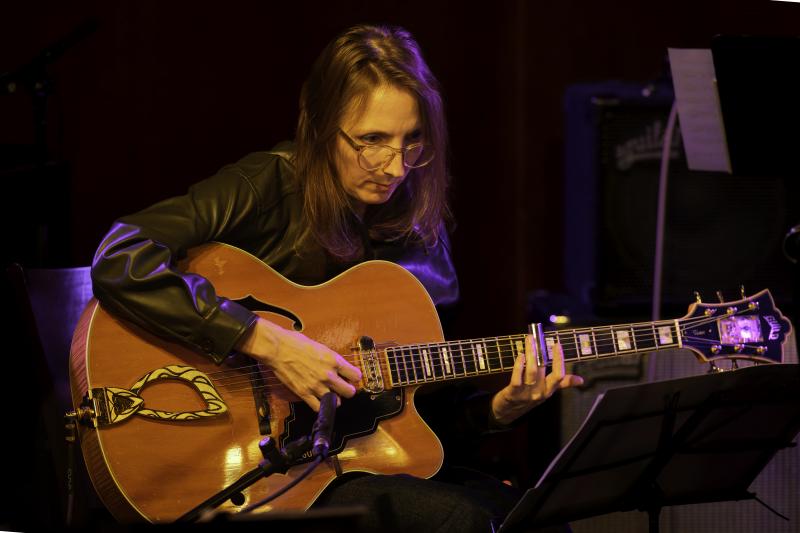
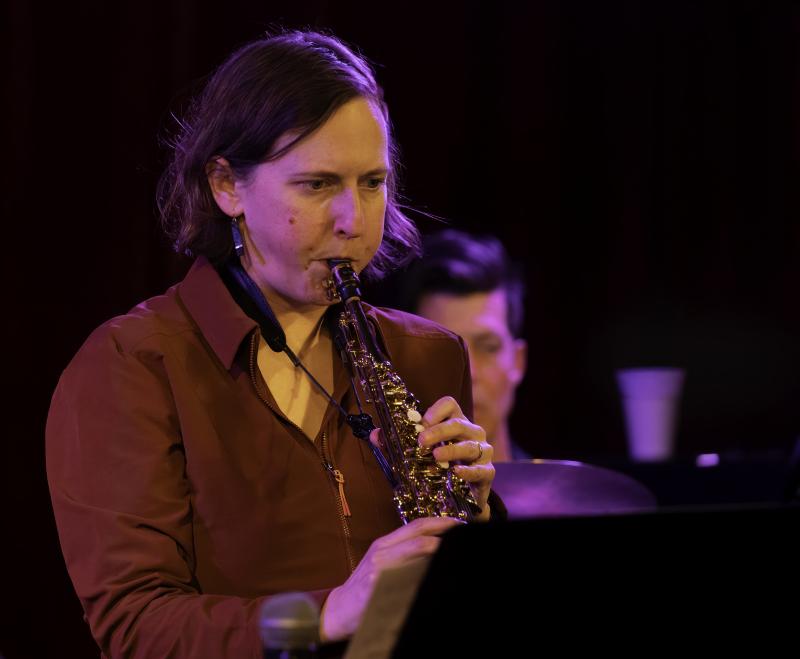
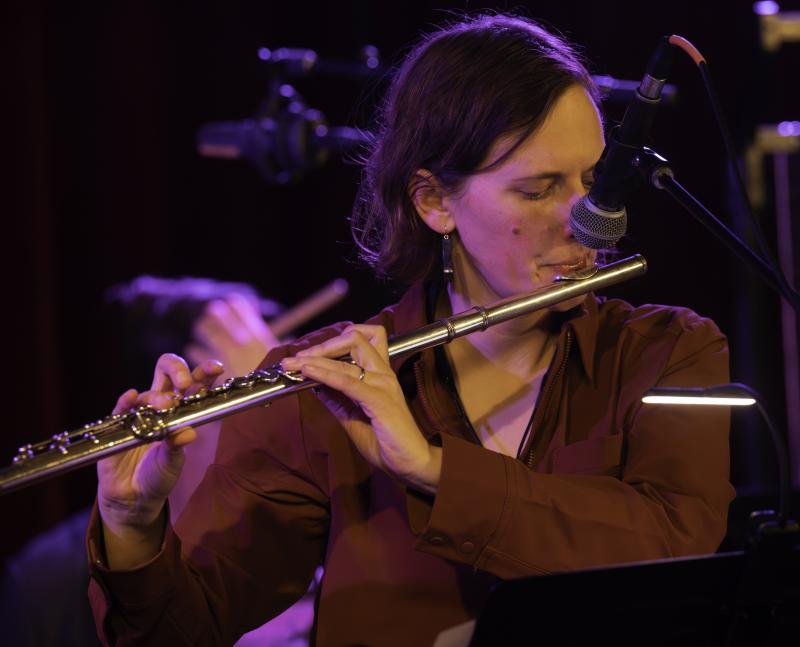
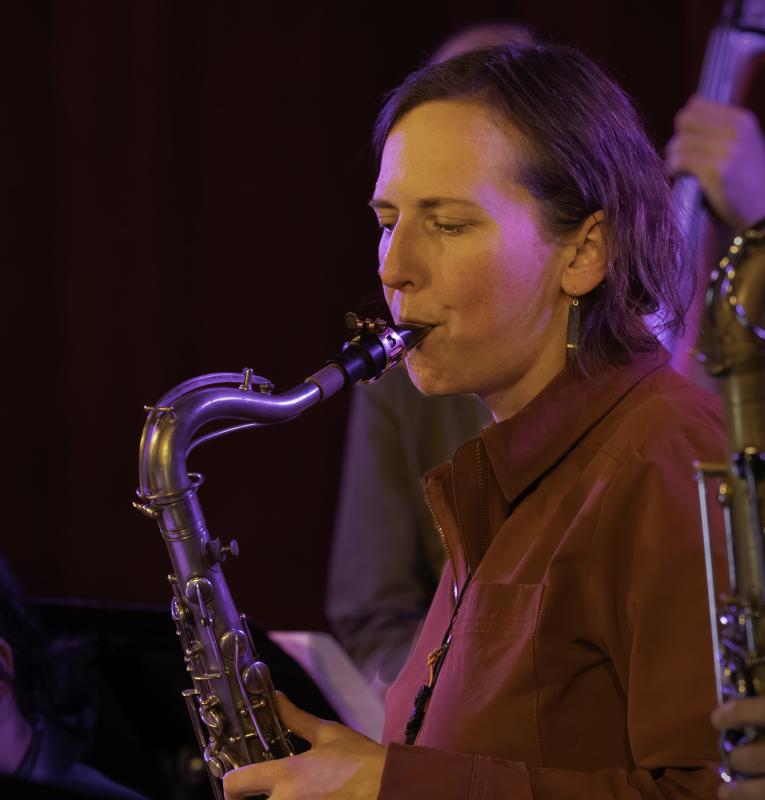
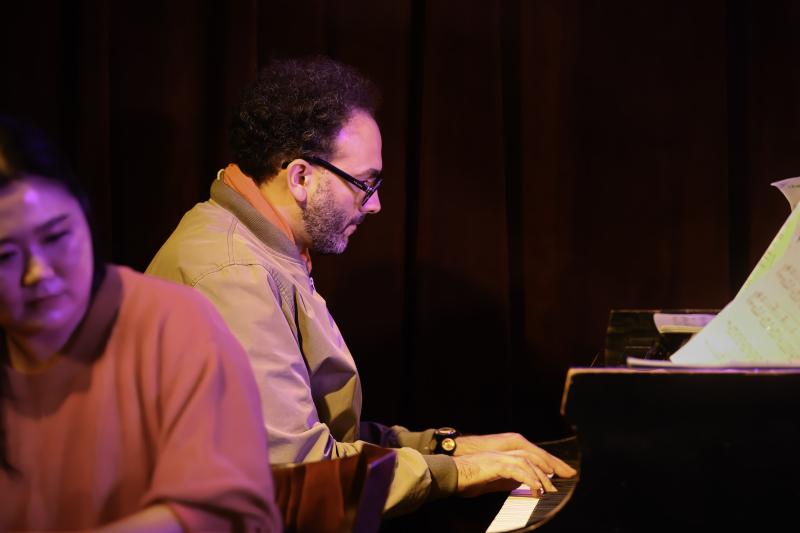
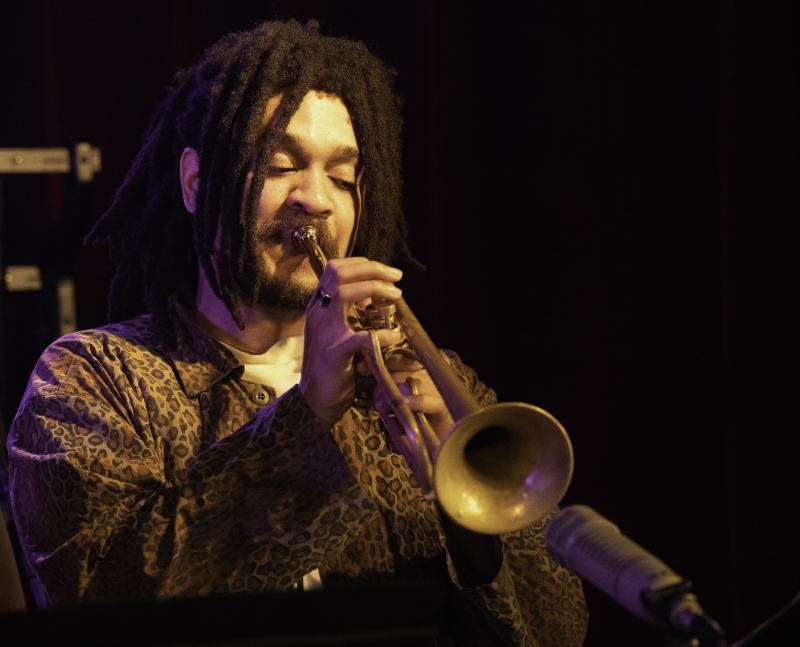
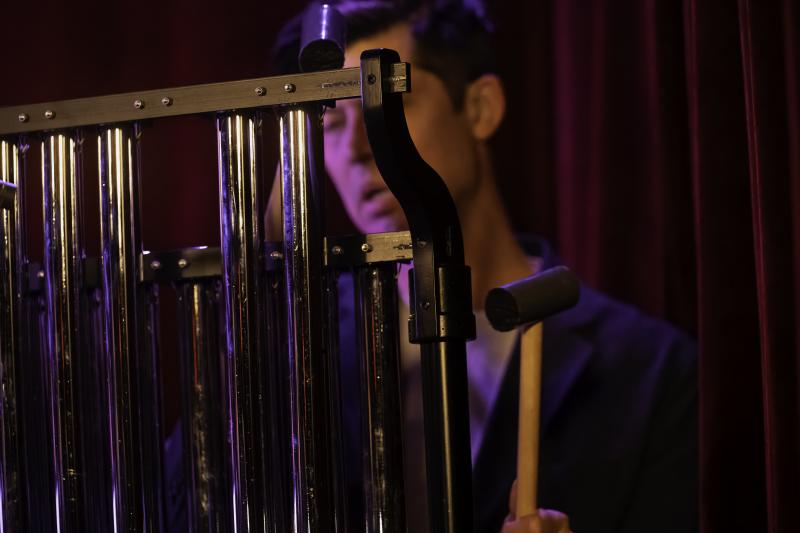
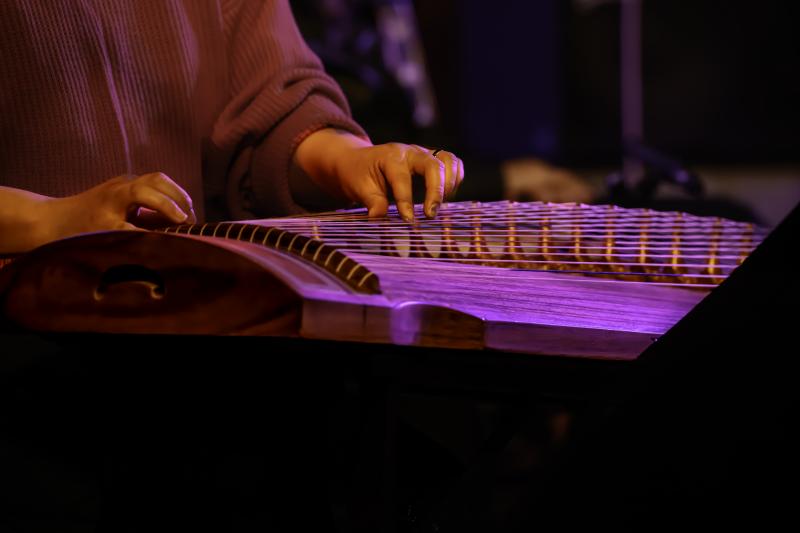
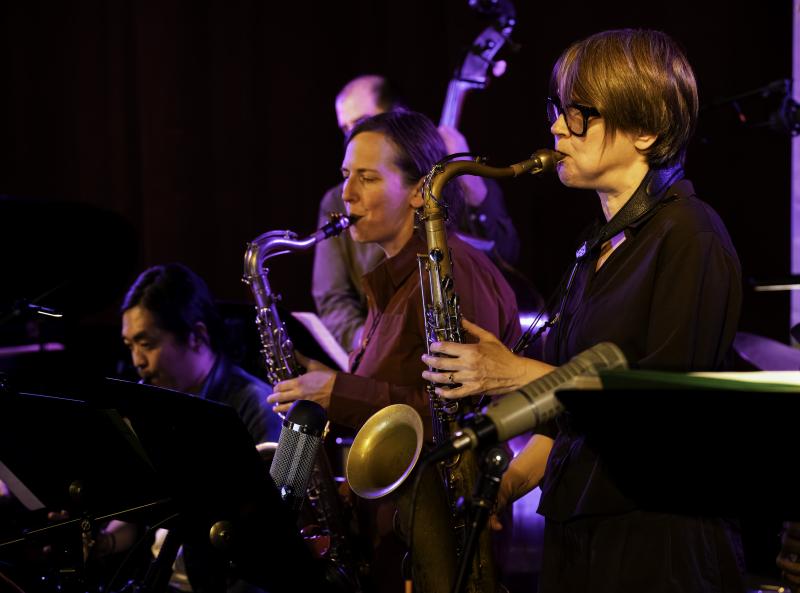
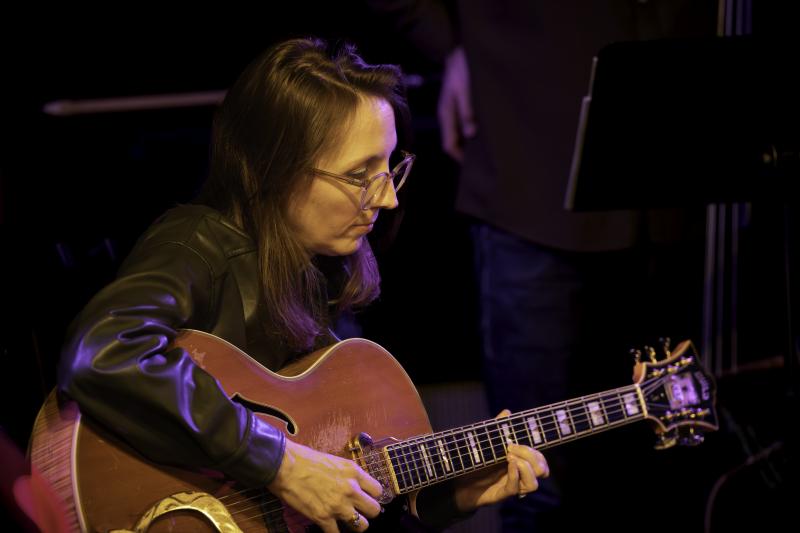
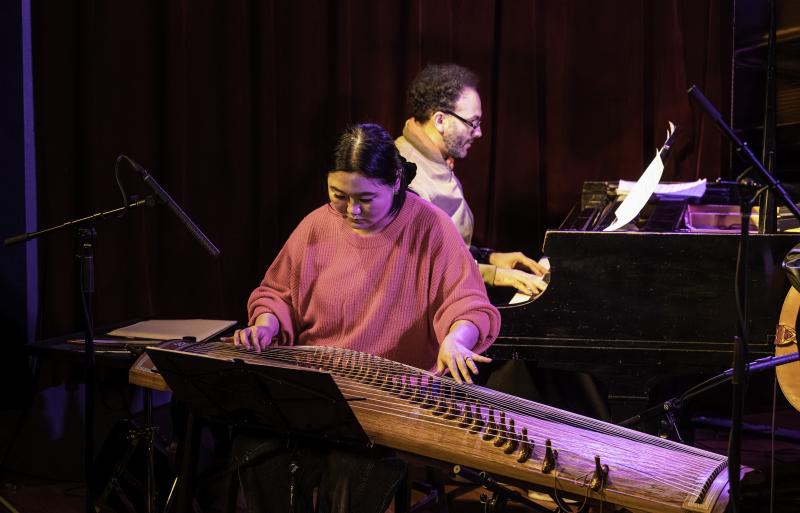
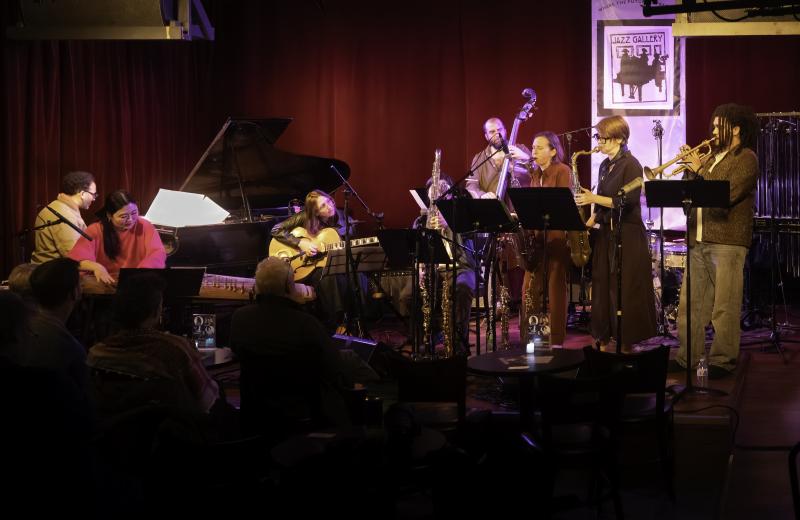
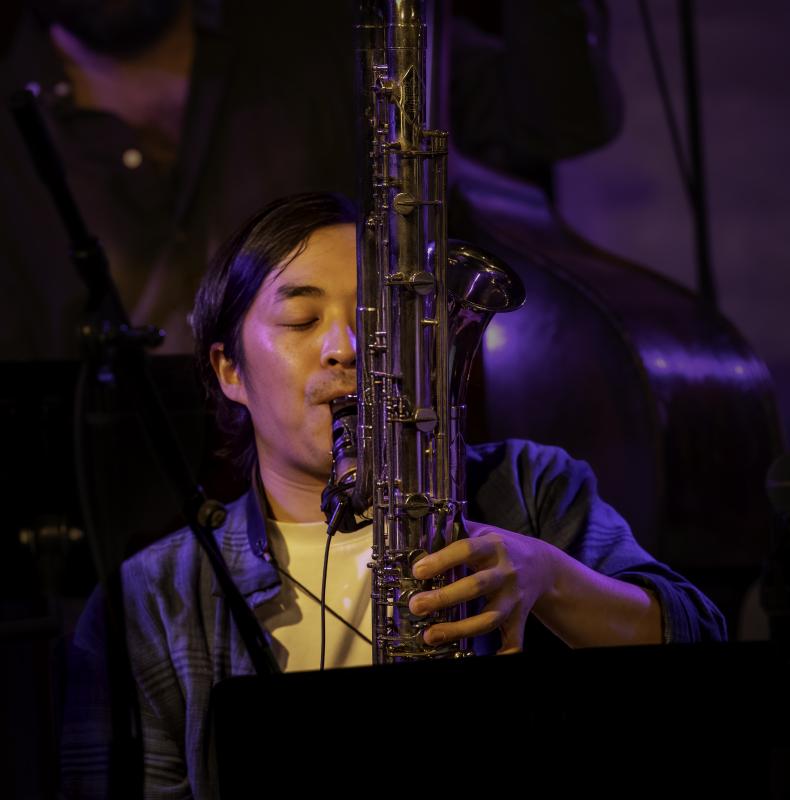
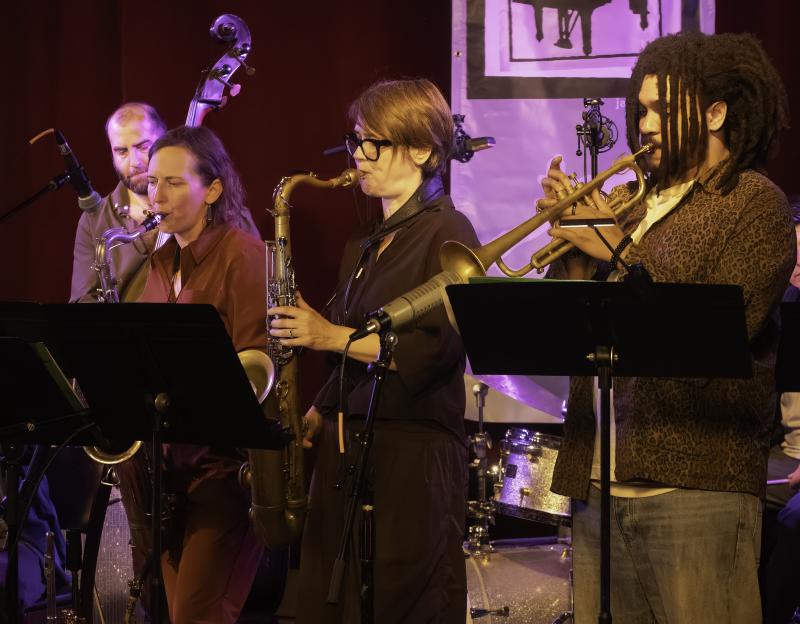
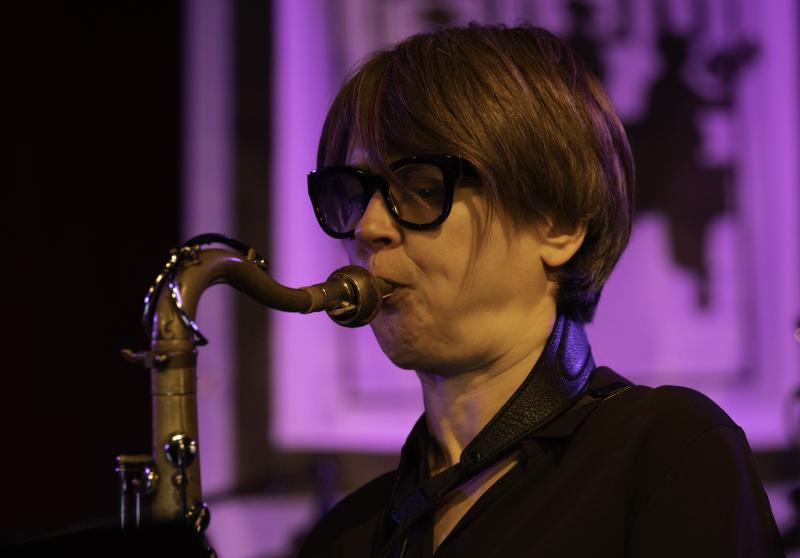
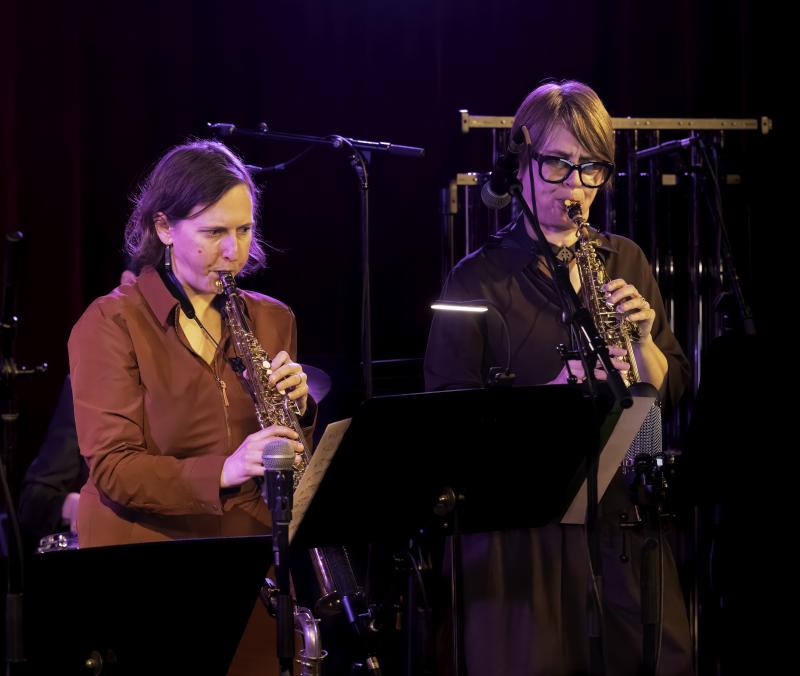
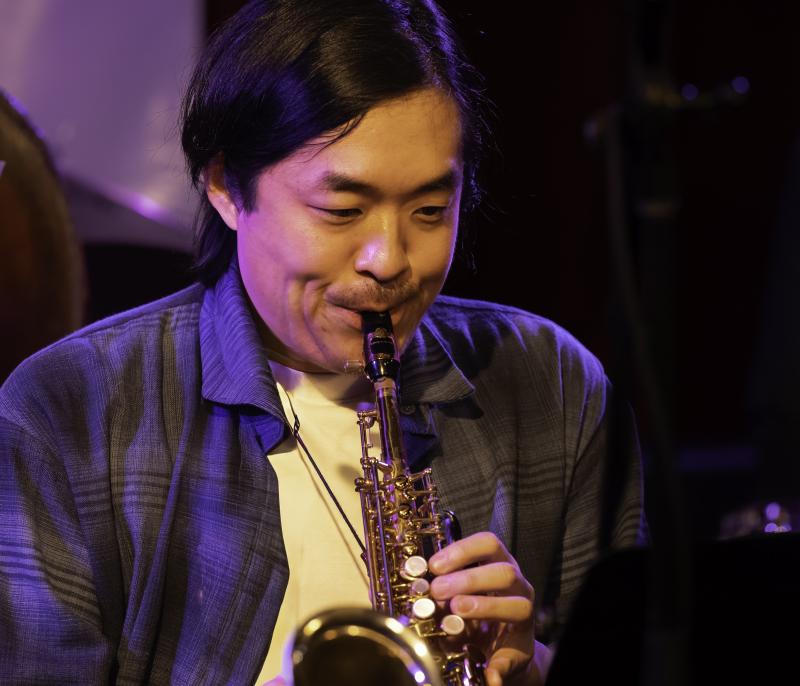
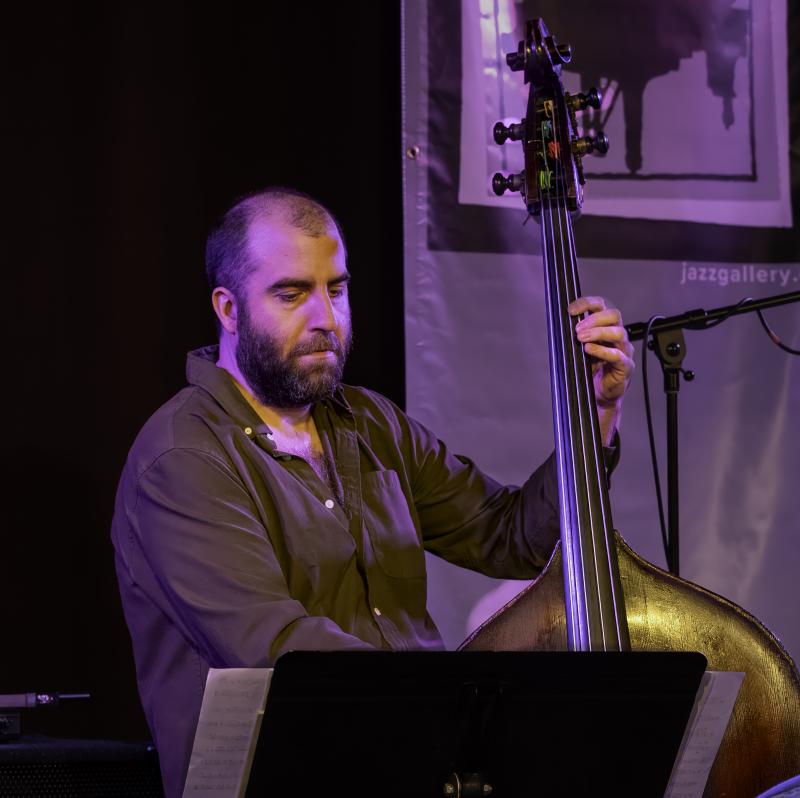
The ensemble included Webber, Ingrid Laubrock, and Yuma Uesaka anchoring a reed section that ranged from flute to soprano and tenor saxophones to contrabass clarinet. Mary Halvorson's unique guitar tunings and David Virelles' distinctive layered piano textures, alongside Ryan Easter on trumpet, contributed significantly to the ensemble's restless sound. DoYeon Kim, on gayageum, added a percussive resonance that sat beautifully between the guitar and Chris Tordini's bass. Ches Smith rounded out the group on drums and chimes, providing the rhythmic foundation for Webber's complex rhythmic ideas. Together, they turned challenging compositions into a singular, immersive experience that fit the intimate space of the Jazz Gallery perfectly.
Webber's music weaves together avant-garde jazz and new classical music to forge highly distinctive compositions that are complex yet inviting. The Nonet performed music slated for recording just days later, to be released on Intakt Records in late 2026. Webber explained that the pieces were informed by the troubling state of this country and the world, and by thinkers who imagined different possibilities for our social reality, particularly imagining a world beyond capitalism.
The first piece, inspired by an Anna Kornbluh book, was titled "Momentary Compensatory Solidities of an Imagined Contact with an Imagined Real." Kornbluh describes how social media platforms generate brief sensations of reality and presence that compensate for a lack of deeper connection. Webber's writing consistently favors long-form, phased structures built from small rhythmic and melodic cells, with particular care given to transitions. That approach, moving between controlled percussive textures and expansive passages, was clearly on display. The piece opened with Webber's tenor emerging against a dark backdrop punctuated by Smith's emphatic strikes, as bass clarinet and weighty piano chords filled the space. Brief melodic passages surfaced amid abstracted saxophone discourse and a slow, almost martial pulse, before the ensemble locked into tight, angular unisons that evoked Henry Threadgill. The music gathered momentum, resolving in a firm, collective close that underscored the work's compositional clarity.
The following tune, written for six musicians, featured the three reed players on soprano saxophone. Inspired by a George Saunders essay, it was titled "Agitation as the Goal." The piece was dominated by the wailing saxophones sustaining extremely high pitches, creating an atmosphere of anger and agitation that aligned closely with the title. A "talking" contrabass clarinet entered later, its barking, chattering figures intensifying the sense of unease. DoYeon Kim's gayageum added a striking sequence of colors—first functioning as percussion, then briefly suggesting blues-guitar phrasing, before resolving into a more traditional Korean folk voice.
The third piece took its title from a graph in a Naomi Klein book: "Corporate Tax as a Percentage of Total Revenue in the United States: 1952, 1975, and 1998." Framing the music as an implicit commentary on inequality, it opened with the horns blasting in unison, conveying a sense of urgency. This was anchored by a Monkish piano figure from Virelles and Smith's spare but insistent drumming. As the ensemble built in layers, the flute gradually assumed a central role, threading dense textures with speech-like lines and melodic fragments, again reminiscent of Threadgill.
The final piece, "It's Easier to Imagine the End of the World," opened with Webber on flute, Smith on chimes, and Halvorson's guitar. The result was an atmospheric work that exhibited little overt progression yet sustained a palpable tension throughout, intensified by Smith's aggressive assault on the chimes, which produced a persistent, ringing resonance. Toward the close, Kim's gayageum moved to the foreground, lending the piece its clearest sense of direction before it resolved. As with the other compositions performed here, the boundary between form and improvisation was fluid.
Although the music performed did not constitute a formal suite, it possessed a strong thematic continuity shaped by literary reflections on a world gone awry. Webber remains a singularly distinctive composer and arranger, joined here by a remarkably agile ensemble. Together, they created a performance that was imaginative, provocative, and exploratory, resulting in a deeply engaging and thoroughly rewarding evening of music.
 FOLLOW Dave Kaufman
and get notified whenever a new article published.
FOLLOW Dave Kaufman
and get notified whenever a new article published.
Dave loves photographing both jazz and wildlife.
About Anna Webber

Tags
PREVIOUS / NEXT
Become a Sustaining Member

Since 1995, All About Jazz has championed jazz as an art form and supported the musicians who create it. Over three decades, it has grown into one of the world's leading jazz resources, serving hundreds of thousands of readers, musicians, presenters and industry professionals each month.
Help Build the Future of All About Jazz
Your support helps us continue building All About Jazz for the next generation—expanding our editorial coverage, preserving jazz history, developing new community features and creating better ways to discover the music and the people behind it.
Become a sustaining member for as little as $20 per year and you'll immediately enjoy an ad-free experience along with access to subscriber features and future articles for a full year.
Together, we're not simply sustaining All About Jazz—we're building its future. Thank you for being part of the journey.