Home » Search Center » Results: JazzWax by Marc Myers
Results for "JazzWax by Marc Myers"
John Williams: Before Star Wars

If you intended to become a jazz musician in the 1950s, “John Williams" was probably not the most ideal name to go with. By my count, there were eight during this time period. This doesn't include several John Williams with middle initials and others known as Johnny Williams. Perhaps the best known of the bunch today ...
Frank Wess: Trombones & Flute

One of my favorite small-group jazz albums of the mid-1950s is Frank Wess's Trombones & Flute. The album, recorded for Savoy in July 1956, paired Wess on flute with four trombonists—Jimmy Cleveland, Henry Coker, Benny Powell and Bill Hughes. They were backed by Ronnell Bright (p), Freddie Green (g), Eddie Jones (b) and Kenny Clarke (d). ...
Video History of the Phonograph

It's video Friday! Today, one of the documentaries in the March of Time newsreel series that was shown in movie theaters from 1935 to 1951. This one is called In the Groove: The History of the Phonograph Industry (1949), which tracks the dramatic evolution of recording technology. The only error I caught is that the American ...
Billy May: 1951-53

Before Frank Sinatra signed with Capitol Records in 1954, the label already had on staff a growing team of arrangers and bandleaders that were pouring the foundation for a neo-swing era. With the shift to longer-playing albums, vocalists and instrumental pop music were in demand by middle-aged couples for whom teenage R&B and classical meant little. ...
Mannie Klein: Keynote, 1946
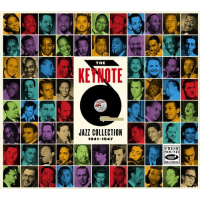
Mannie Klein is all but forgotten today. Yet the trumpeter, with 672 sessions, is among the most recorded trumpeters in jazz history, nearly matching Louis Armstrong's output. Klein began recording in 1922 and worked with a steady stream of bands. In 1928 alone, he recorded with Red Nichols and His Five Pennies, the Dorsey Brothers and ...
Jimmy Jones Trio: 1954

Jimmy Jones was an in-demand arranger and pianist throughout the 1950s and '60s, working with most leading jazz vocalists and soloists of the era. If you go into Tom Lord's Jazz Discography, you'll find Jones on 307 sessions. But if you modify your search, screened just for Jones's leadership dates, you'll find that the number is ...
Chet Baker: The Final Days

In keeping with tradition, I'm ending the week with a video—a Dutch documentary on Chet Baker's final days in Amsterdam directed by Willem Ouwerkerk. While the film doesn't have the drama or humidity of Bruce Weber's Let's Get Lost (1988), it's a fascinating and highly informative companion piece that is rich in poetry and blues. Baker ...
The Beatles at Shea: 1965

Fifty years ago on Aug. 15, 1965, the Beatles performed at New York's Shea Stadium. The Mets were in Houston playing the Astros that weekend, and the Fab Four appeared before a full house—55,600 fans, mostly screaming teenage girls. In today's Wall Street Journal (go here), I write about the concert—not about how the music was ...
George Wallington: Trios

In its infancy in the mid-1940s, bebop was about speed and generating ideas on the fly. This was particularly true of the piano, the instrument that typically kicked off bebop songs, kept the rhythm going and put meat on the bone, so to speak. At first, bebop's velocity made the style a private club, since few ...
Richie Powell in 1954
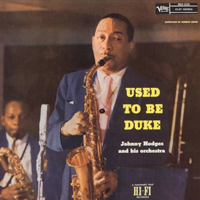
Pianist Bud Powell not only helped invent bebop in the mid-1940s with Dexter Gordon, J.J. Johnson and Charlie Parker but he also established a new, spidery playing style that was widely imitated on both coasts right up until Bill Evans' cooler introspection in the late 1950s. In the first 10 years of his small-group career, from ...
Album Showcase




Trending
 Jazz Raconteurs
Julius Hemphill: Marty Ehrlich and Tim Berne Remember a...
 In Tribute To...
John Coltrane At 100: A Global Perspective
 History of Jazz
John Coltrane in Detroit: A Brief History
 Live Review
Detroit Jazz Festival 2026: A Gathering in a Great Jazz City
 Profile
Sequoia Snyder: Growing in the Light of the Masters
 Interview
Jasur Khalilov: From Falak to Fusion
 Profile
The Discreet Charm of Tete Montoliu
VOTE!