Home » Jazz Articles » In Pictures » Strange Heavens, Sublime Music: Linda May Han Oh Trio at...
Strange Heavens, Sublime Music: Linda May Han Oh Trio at the 2026 Newport Jazz Festival
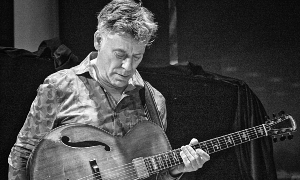
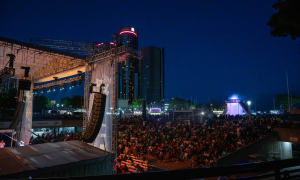
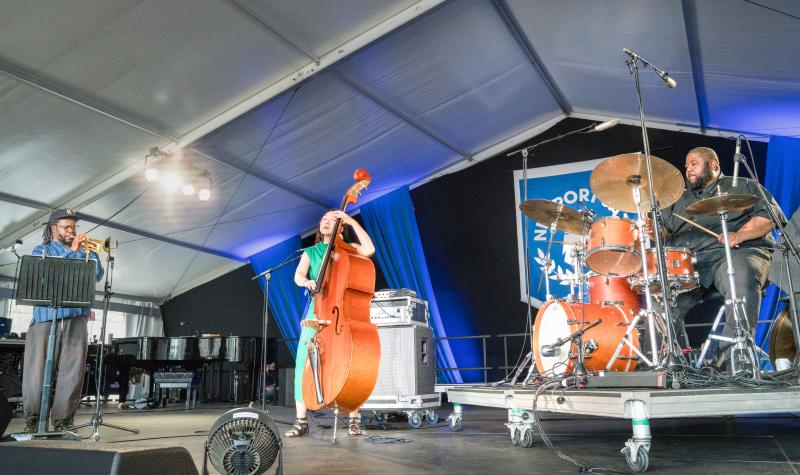
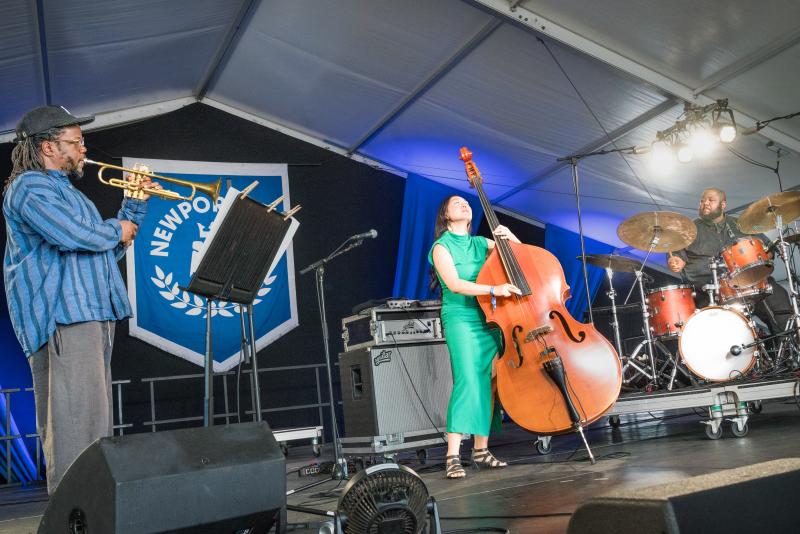
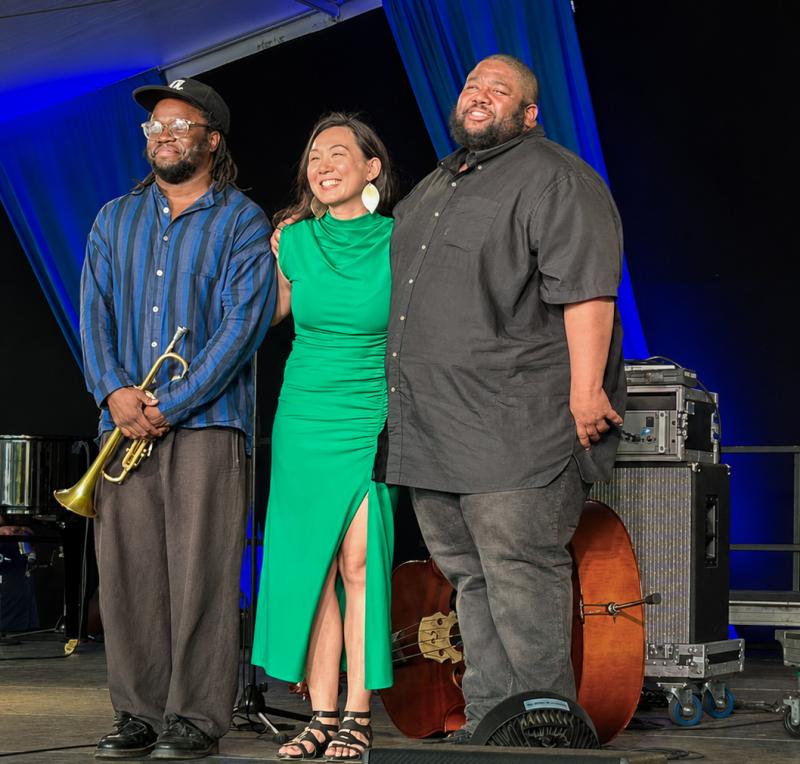
Like the vast majority of jazz festivals, Newport features a broad range of jazz-adjacent music as well as artists from other genres, much of it extremely good. But there was also no shortage of excellent jazz, including the Charles Lloyd Sky Quartet, The BAD, Marquis Hill, Nduduzo Makhathini, Brandon Woody's Upendo, and a superb duet by Dave Holland and John Scofield. The Linda May Han Oh Trio, with Ambrose Akinmusire on trumpet and Tyshawn Sorey on drums, delivered perhaps the most transcendent performance of this year's festival.
This is something of a modern jazz supergroup. All three are brilliant creative artists at the peak of their artistry. In the 2026 DownBeat Critics Poll, Oh was named Bassist of the Year and Akinmusire Trumpeter of the Year, while Strange Heavens finished third for Album of the Year. Sorey, a MacArthur Fellow, placed third among drummers and also received consideration for Artist of the Year. All three are major composers and bandleaders in their own right.
Oh has a long history of working with both musicians. Akinmusire was featured on her debut album, Entry, in 2009, while Oh and Sorey have developed a deep musical relationship through Vijay Iyer's trio, recording two albums together and performing on and off for a number of years. This particular trio's first public performance together was at the NYC Winter Jazzfest in January 2025, around the time they recorded Strange Heavens. Later that June they spent a week at the Village Vanguard, giving them concentrated time to develop the music. Some fourteen months later, they arrived at Newport sounding like a fully developed working trio. Oh had previously performed at Newport in supporting roles, but this was her debut there as a leader.
The pianoless format is central to the group's sound and is familiar territory for Oh. Entry was also a trumpet-bass-drums recording, and she has more recently played with Johnathan Blake's Trion, another chordless trio, with Chris Potter on saxophone. I had previously heard Trion and found it to place somewhat greater emphasis on extended improvisation and individual soloing, with all three musicians playing brilliantly. I wrote a photo essay for AAJ Trion In Flight: A Celebration Of Freedom and Form for the Jazz Gallery's 30th Anniversary. The Strange Heavens trio is different. The music is tighter and built more closely around Oh's compositions, while still leaving ample freedom for all three musicians. Oh has described the pieces as frameworks or vehicles for discovery and said that she wanted the album to be less composed and more open. Without a piano or guitar defining the harmony, there is considerable open space, and Oh's bass takes on an unusually large role, providing the rhythmic foundation and emerging as a lead melodic voice.
The set opener, "Noise Machinery," quickly established the trio's musical language. Oh began with a simple, repetitive bass figure, and Sorey joined her with an understated beat as the two gradually settled into a deep and infectious groove. More than a minute passed before Akinmusire entered, giving shape to the melody with slow phrases and long, beautifully rounded tones. Nothing was rushed or overcrowded. As the piece developed, his playing became increasingly varied while Oh and Sorey maintained the groove.
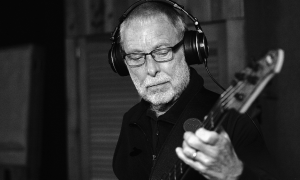
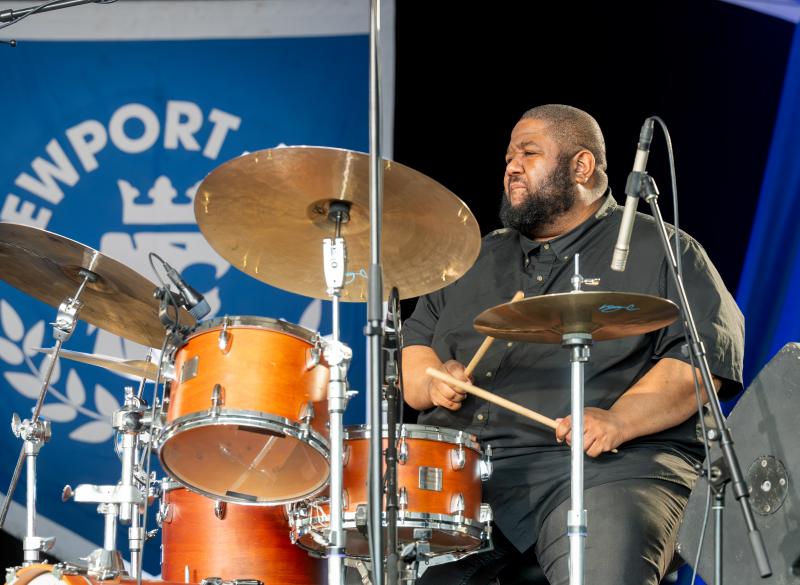
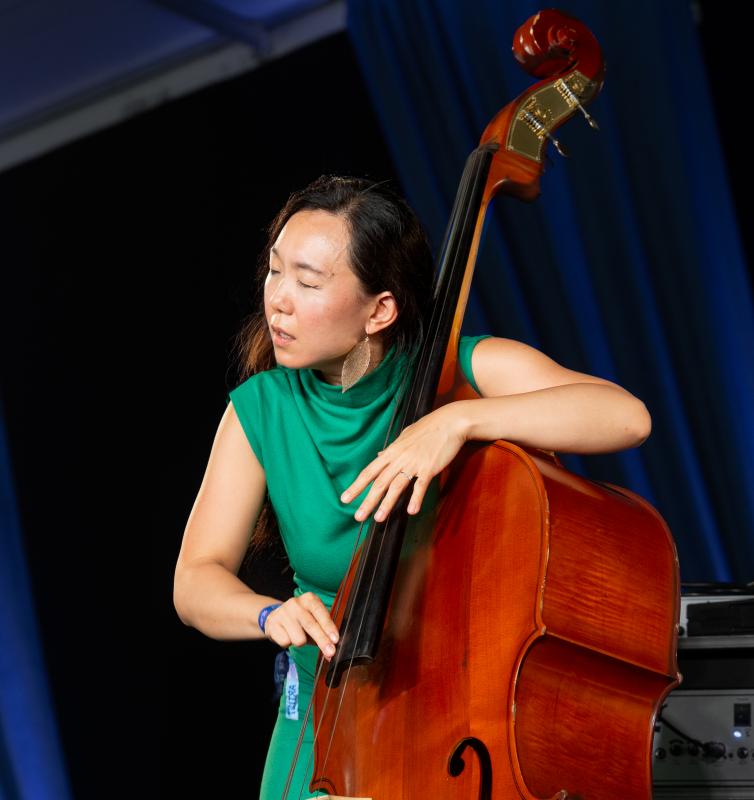
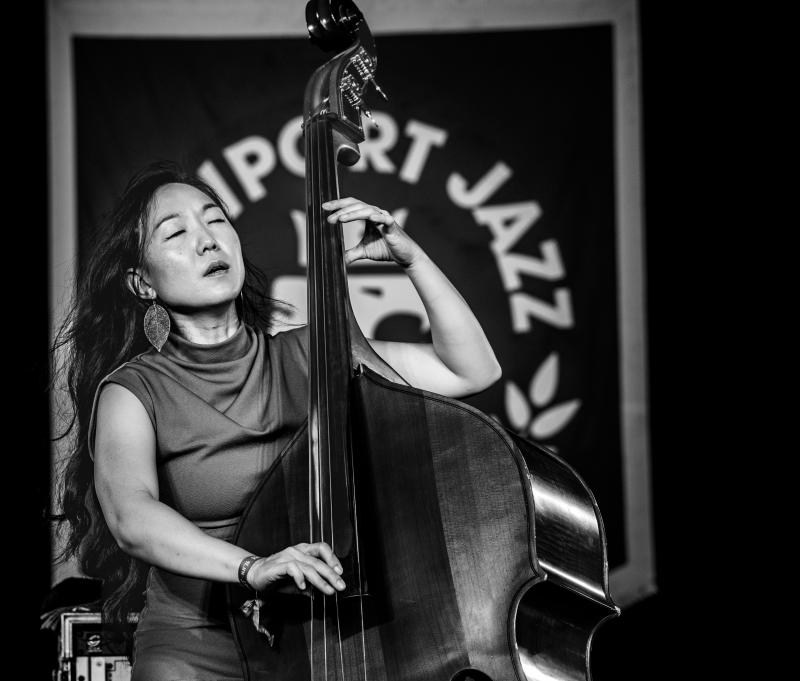
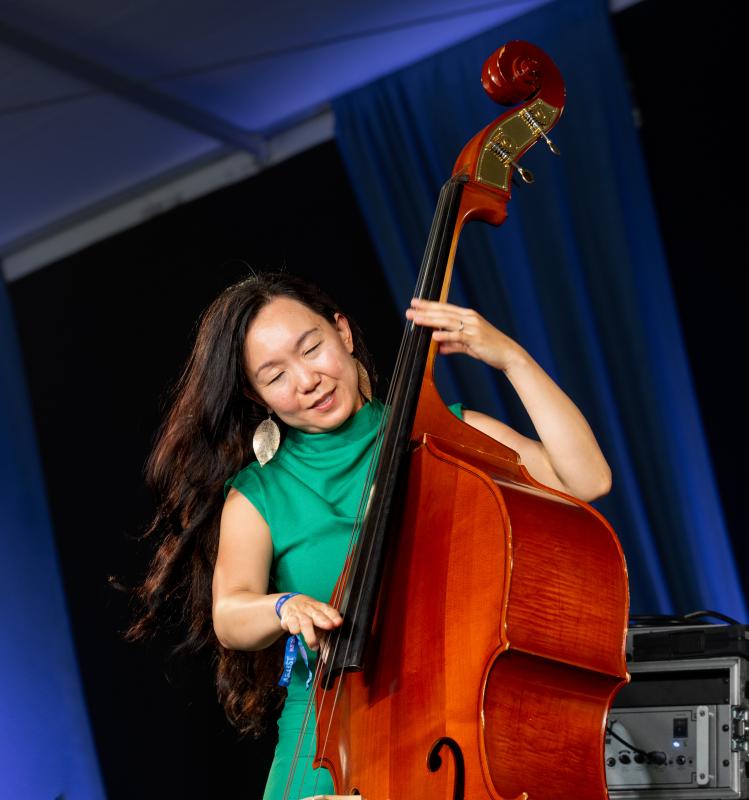
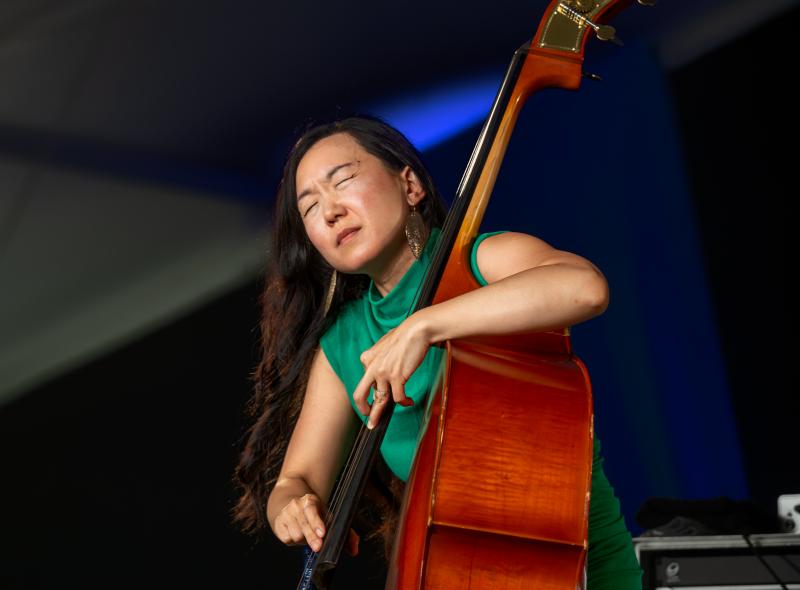
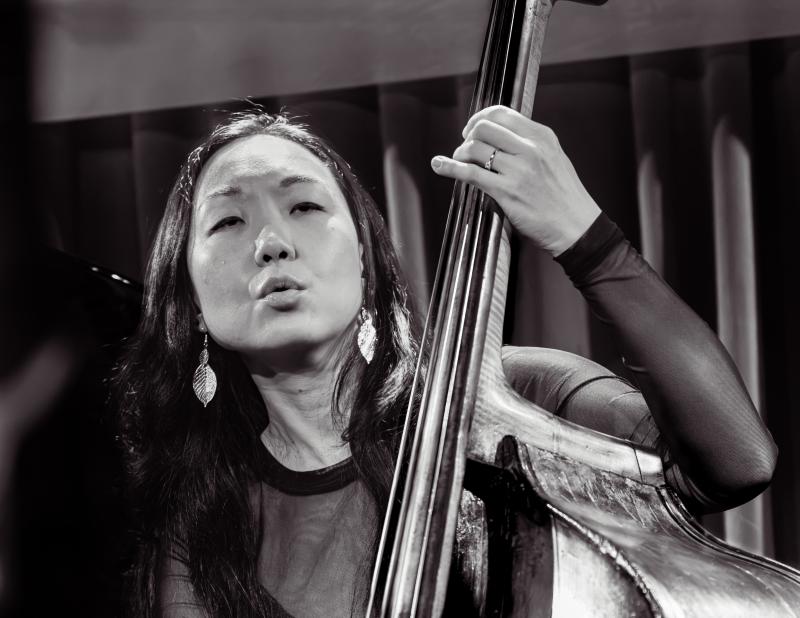
The opening immediately brought Oh's distinctive sound into focus. She has a large, highly defined bass sound, combining considerable physical force with remarkable melodic agility. Her playing sometimes reminds me of Dave Holland, particularly in the firm, articulate attack, rhythmic drive and ability to anchor the music while simultaneously functioning as an independent melodic voice. Like Holland, she is not confined to the traditional accompanist's role. On "Noise Machinery," the bass helped define the melody and rhythmic identity of the piece. Sorey locked in with her with remarkable rhythmic precision without sacrificing the looseness of the groove. He continually added accents and subtle rhythmic shifts that kept the music moving.
Oh's stage presence has evolved considerably over the years. She has become a far more animated and expressive stage performer. Throughout the set she bounced and swayed with the bass, at times dancing with the instrument, openly responding to what was happening around her. She has said that she plays better when she is able to move freely, something she resisted for many years. At Newport, that physical freedom expressed the exuberance of her playing. The energy radiated from the stage, making it difficult not to be drawn into the music.
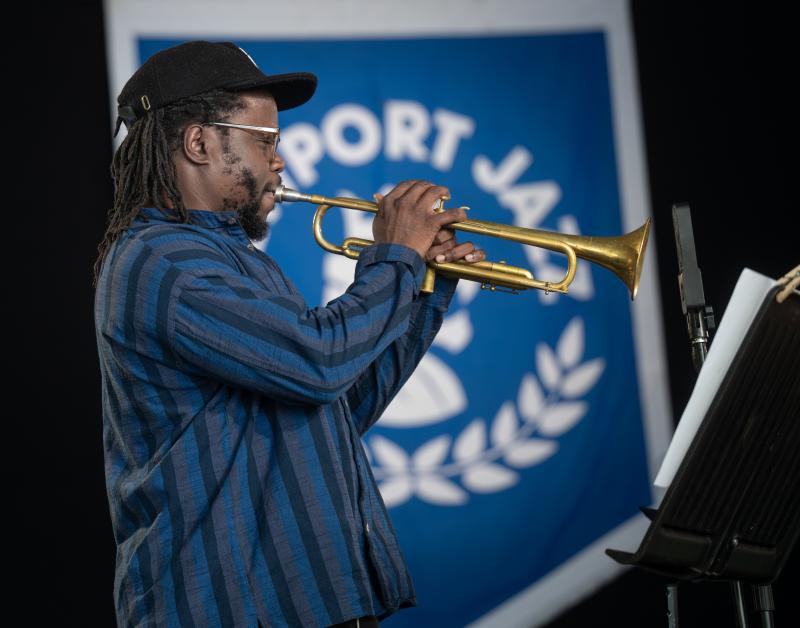
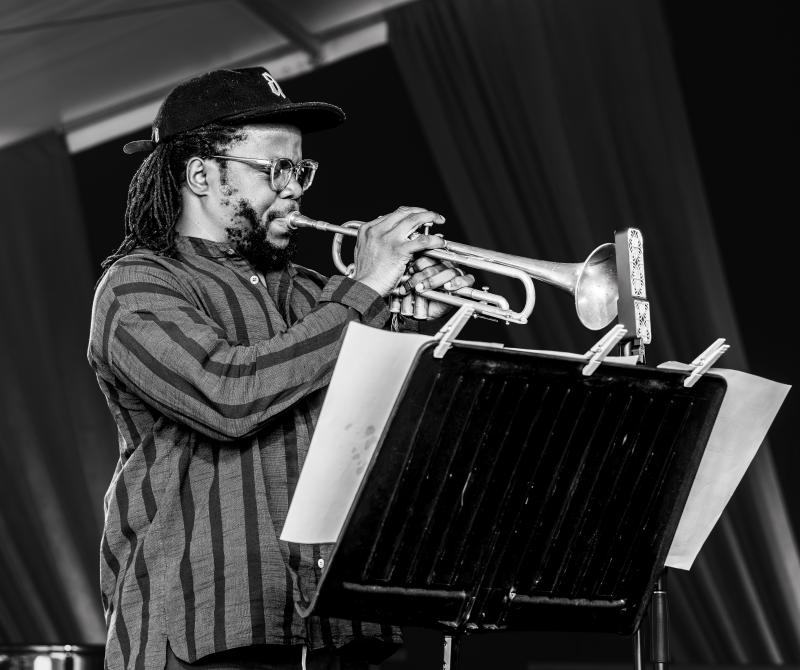
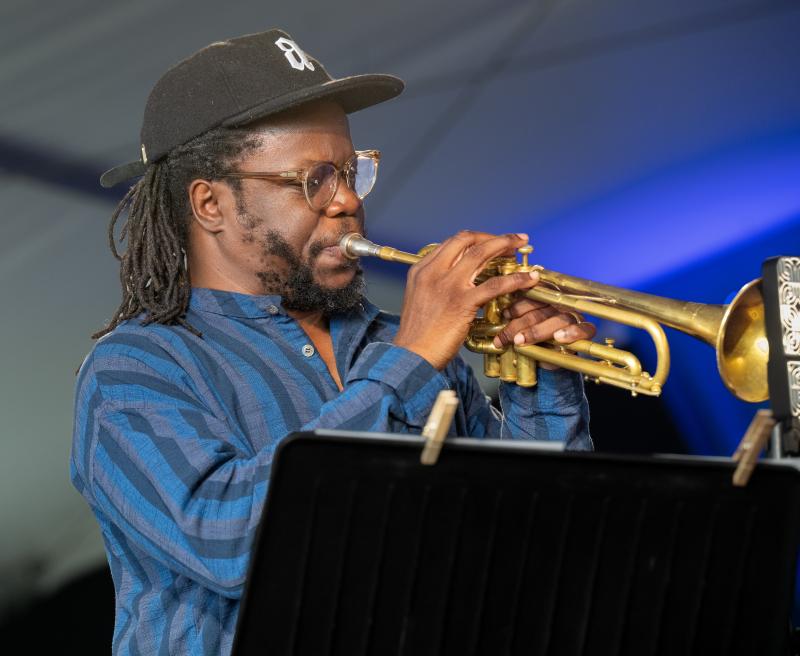
Akinmusire was equally striking. He has one of the most beautiful and distinctive trumpet sounds in contemporary jazz. At times it is warm, rounded and almost golden, with something of the resonance of a French horn. At others, the sound can become fragile and exposed, almost as though a note might fracture. He can linger over a long tone or take a seemingly simple melodic phrase and shape it into something of extraordinary beauty. He also has an exceptional sense of space, knowing when to enter, when to withdraw and when simply to let the music breathe. That combination of tonal beauty, vulnerability and expressive range makes him an ideal voice for this trio.
"Portal" shared some of the spare, groove-centered character of "Noise Machinery." Again, Oh's bass provided a persistent rhythmic foundation while she and Sorey generated an enormous amount of movement around it. The bass line had such an infectious groove that it stayed in my head for quite some time after the performance. But "Portal" had a more unsettled character. Akinmusire could move from delicate, almost tentative phrases toward increasingly agitated and fragmented lines, giving the music a sense of mounting tension. The piece was inspired by the cultural and interpersonal stress of social media and doomscrolling, and that sense of unease was readily apparent in the music.
One of the striking qualities of Oh's writing is how much the trio can build from relatively spare materials. The melodies are often remarkably clear and memorable, while the music around them can move between deep groove, open space and considerable tension. Sorey is central to that flexibility. He can play with volcanic strength but also with extraordinary nuance and restraint, moving freely around the music but settling into a remarkably deep pocket when the moment calls for it.
The title track, "Strange Heavens," brought the album's larger themes into sharper focus. Oh explained from the stage that the title invokes the tendency to choose a familiar hell over an unfamiliar or strange heaven—in other words, to stick with what we know even when moving beyond it might lead somewhere better. The music itself reflected some of that tension, with moments of melodic clarity giving way to grittier and more explosive exchanges. This was also where the extraordinary responsiveness of the trio became especially apparent. All three could change direction almost instantaneously while somehow retaining the identity and shape of the composition.
"Living Proof" moved at a brisker pace and showed that, in their own highly individual way, this unconventional trio could swing hard. Yet even at its most assertive, there was a relaxed, conversational quality to the interaction. "Acapella" returned to a quieter and more reflective mood, with Akinmusire's beautifully sustained tones again coming to the foreground.
"Paperbirds" followed before the trio concluded with Geri Allen's "Skin," the only composition in the Newport set not written by Oh. "Skin" began with an assertive bass line before Akinmusire entered with a splintery trumpet statement, pushing the trio into perhaps the freest music of the set, with Sorey's propulsive drumming adding to the intensity.
Across the performance, each musician had ample opportunity to move into the foreground, but it rarely felt like a succession of solos. The compositions remained central, and the improvisation seemed to emerge naturally from them rather than overwhelm them.
Much of Strange Heavens addresses difficult themes including, social pressures, uncertainty, struggle and the challenge of moving beyond what is familiar, but there was nothing dour about the Newport performance. The music was filled with deep grooves, memorable melodies and a palpable sense of joy. Oh, Akinmusire and Sorey are three brilliant creative artists, but what made the performance so special was the way their individual voices strengthened rather than competed with one another. They played with extraordinary responsiveness, trust and a shared sense of discovery. It was music of considerable depth performed with an unmistakable sense of joy, the kind of performance that continues to resonate long after the final notes have faded.
 FOLLOW Dave Kaufman
and get notified whenever a new article published.
FOLLOW Dave Kaufman
and get notified whenever a new article published.
Dave loves photographing both jazz and wildlife.
About Linda May Han Oh
Tags
PREVIOUS / NEXT
Become a Sustaining Member

Since 1995, All About Jazz has championed jazz as an art form and supported the musicians who create it. Over three decades, it has grown into one of the world's leading jazz resources, serving hundreds of thousands of readers, musicians, presenters and industry professionals each month.
Help Build the Future of All About Jazz
Your support helps us continue building All About Jazz for the next generation—expanding our editorial coverage, preserving jazz history, developing new community features and creating better ways to discover the music and the people behind it.
Become a sustaining member for as little as $20 per year and you'll immediately enjoy an ad-free experience along with access to subscriber features and future articles for a full year.
Together, we're not simply sustaining All About Jazz—we're building its future. Thank you for being part of the journey.