Home » Jazz Articles » Album Review » Hal Galper: E Pluribus Unum
Hal Galper: E Pluribus Unum

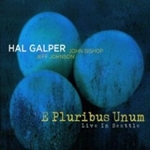
The term "rubato" refers to a flexibility in approach to tempo, the speeding up or slowing down of the rhythm at the artists' discretion. Nobody does this quite as furiously as Hal Galper, and with bassist Jeff Johnson and drummer John Bishop, he has hooked up with two like-minded compatriots.
Previous Galper recordings in this style include Agents of Change (Fabola Records, 2006), Furious Rubato (Origin Records, 2007), and Art-Work (Origin Records, 2009). All of these are exciting musical adventures, but E Pluribus Unum—with, again, Johnson and Bishop—is the most electrifying of the batch, due certainly to the on-the-edge freshness and vitality of the sound's live aspect.
Irving Berlin's "How Deep is the Ocean" opens the show, and it is a turbulent sea, wind whipped and wildly churning. The trio plays with a sense of abandon, but the thread of the familiar melody doesn't break. Other non-originals include a particularly prickly version of Duke Ellington's "Take the Coltrane," and a calamitous reading of Charlie Parker's "Constellation" to close the show. In between, Galper includes four tunes from his own pen, starting with the searing, headlong "Rapunzel's Luncheonette," the reflective but still energetic "Wandering Spirit," and the aptly-titled "Invitation to Openness."
The appreciative crowd, the night of this recording at the 2009 Earshot Jazz Festival, accepted that invitation, and E Pluribus Unum permanently documents Galper taking his artistry to a new level.
Track Listing
How Deep Is the Ocean; Rapunzel's Luncheonette; Wandering Spirit; Take the Coltrane; Invitation to Openness; Soliloquy; Constellation.
Personnel

Hal Galper
pianoHal Galper: piano; Jeff Johnson: bass; John Bishop: drums.
Album information
Title: E Pluribus Unum | Year Released: 2010 | Record Label: Origin Records
About Hal Galper
Tags
PREVIOUS / NEXT

Become a Sustaining Member

Since 1995, All About Jazz has championed jazz as an art form and supported the musicians who create it. Over three decades, it has grown into one of the world's leading jazz resources, serving hundreds of thousands of readers, musicians, presenters and industry professionals each month.
Help Build the Future of All About Jazz
Your support helps us continue building All About Jazz for the next generation—expanding our editorial coverage, preserving jazz history, developing new community features and creating better ways to discover the music and the people behind it.
Become a sustaining member for as little as $20 per year and you'll immediately enjoy an ad-free experience along with access to subscriber features and future articles for a full year.
Together, we're not simply sustaining All About Jazz—we're building its future. Thank you for being part of the journey.