Home » Jazz Articles » Multiple Reviews » Phillip Golub's Notes Between the Notes
Phillip Golub's Notes Between the Notes
 Phillip Golub
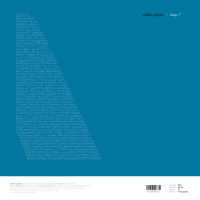
Loop 7
Greyfade
2025
This particular challenge to the ears drifts sparsely through its range of micro-tones with the patience of a slow breeze—or perhaps an even gentler current wafting lightly enough to barely be felt. The preceding Loops (at least the ones that have been released) reside somewhere between Philip Glass and Brian Eno, finding beauty in hypnotic repetition that never actually strictly repeats. Loop 7 is slightly reminiscent of Eno's experiments with tapes, where the same sound might gradually be stretched out more slow and low with each loop. Instead of setting parameters for a machine to run within, however, Golub sets out a gradually descending minimalist motif and the players perform it by hand in all its painstaking precision.
The harmonic system here is to split an octave into 22 notes rather than the conventional twelve. With keys exactingly set to those ear-bending pitches, he overdubs a pair of re-tuned pianos drifting through a leisurely circular pattern that sinks ever-so-slightly lower with each pass. Lest the calculated framework feel too robotic, the studio collage then adds increasing glimmers of increasingly organic sounds on the sides—hovering guitar notes are joined by equally floaty vibraphone chimes to make a mini-collage weaving all the complementary timbres as they hang in the air. The tones never feel quite settled—or perhaps it would take reprogramming your brain to feel as if they actually were—but twist your ears enough and it starts to reveal a perverse logic of its own.
 Phillip Golub
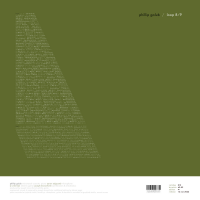
Loop 8/9
Greyfade
2026
Taking a step onward from #7, these Loops increase the challenge in both conception and execution. "Loop 8" is based around quarter-toned notes, even more finely thin-sliced than before, while the steady circular pattern is performed live with no overdubs. Guitar and vibraphone tiptoe through the exacting steps alongside the crystalline piano and synthesizer clouds, while the less-is-more arrangement makes the whole quartet never sound as full as a quartet. Each player pulls back as much as they step forward, yet they always keep moving enough to slow-walk somewhere new, even if it is somewhere endlessly unsettling.
"Loop 9" may technically be steady and repetitive in the same way, but somehow feels most freeform of all. The pattern of Golub's piano is lugubrious enough that even the precise intervals feel like a sleepy dreamwalk. Foggy swirls rise after each static piano chord; the ping of the vibraphone offsets the keys in ways veering between calm and queasy. The shifting pitches are doubtlessly precise as ever, yet not stacked into a structure as exact as the previous quarter-tones—or if the pitching is exact, this time it manages not to feel exact. The group seems to be guided by intuition more than math, gently squeezing the sounds into something like tape being stretched and then magically un-stretched. By the finish, it is hard to tell if the group disappears into the ether or the ether comes in to swallow them and us.
Tracks and Personnel
Loop 7 Tracks: Loop 7.Personnel: Phillip Golub: midi-controlled disklavier pianos; Ty Citerman: electric guitar; Aaron Edgcomb: vibraphone; Joseph Branciforte: live electronics & synthesizer.
Loop 8/9 Tracks: Loop 8; Loop 9.
Personnel: Phillip Golub: microtonal acoustic piano; Aaron Edgcomb: vibraphone; Ty Citerman: electric guitar; Joseph Branciforte: synthesizers & electronics.
 FOLLOW Geno Thackara
and get notified whenever a new article published.
Book addict, arts/theater enthusiast and insatiable musicologist, almost in that order
PREVIOUS / NEXT

About Phillip Golub

Tags
Become a Sustaining Member

Since 1995, All About Jazz has championed jazz as an art form and supported the musicians who create it. Over three decades, it has grown into one of the world's leading jazz resources, serving hundreds of thousands of readers, musicians, presenters and industry professionals each month.
Help Build the Future of All About Jazz
Your support helps us continue building All About Jazz for the next generation—expanding our editorial coverage, preserving jazz history, developing new community features and creating better ways to discover the music and the people behind it.
Become a sustaining member for as little as $20 per year and you'll immediately enjoy an ad-free experience along with access to subscriber features and future articles for a full year.
Together, we're not simply sustaining All About Jazz—we're building its future. Thank you for being part of the journey.