Home » Jazz Articles » Album Review » Higino Andrade: In Depth
Higino Andrade: In Depth
Like many other debuts, In Depth is a travelogue tracing its creator's own migrations—from Madeira to Porto, where he studied at ESMAE (Escola Superior de Música e Artes do Espetáculo), and onward to Finland (Joensuu Conservatory) and Berlin, where he currently lives and teaches. His travels also took him to the Polish recording studio RecPublica in Lubrza, where the trio spent three days, only one of which was devoted to recording the album, with the remaining time spent rehearsing and filming videos.
In 2026, Andrade returned to Madeira for his most recent project, Laura—a cartographic songbook of the island's Laurissilva forest. It seems only natural, then, that geography should form the warp of the album's tapestry. Most tracks practically come with spatial coordinates. They range from geographically specific titles such as "Skardu" to the cultural milieu of "Pinocchio's Spiritual Impressions," seemingly pulled straight out of Nino Rota's cabinet of curiosities. Meanwhile, the evocative textures of "Indian Red" transport the listener to Kerala.
The record opens with a "warm-up"—merely a few bars on double bass. On the surface, "In Doubt" plays against the album's title while serving as an echo sounder mapping the depths ahead. What follows advances with a waltzing stride: "now dreaming, now awake, one step on crazy, one step on sane," Andrade writes in his notes. The mazur is a traditional folk dance from Masovia, and the mazurka, the musical form it inspired, was popularized by Fryderyk Chopin, who wrote nearly 60 pieces in the genre. Rather than interpreting the classical form, Andrade offers his own impression with "Mazurka (des)Enchanted"—a sober variation that takes the listener to the region's sweeping plains.
The geographical leap from this tune to the warmer climate of "Indian Red" is considerable. Deep pizzicato lines run parallel to percussive clapping and occasional hi-hat splashes. Rather than emerging clearly and fully formed, the piano melody is faintly traced, as if carving the composition's outline in negative space. A recurring four-bar motif evokes a busy street, serving more as a reminder than as the driving force of the tune.
"Pinocchio's Spiritual Impressions" is full of vigor and buoyancy. It begins almost like a bossa nova but proves too restless to settle into a steady groove. Each player has a moment in the spotlight. The five-note seesaw melody feels like a jig in slow motion. The piece would surely have brought a smile to Rota's face.
The first of two improvised pieces is nestled between this composition and "Skardu," named after a city in northern Pakistan. Of the album's geographically inspired compositions, this one most vividly conveys a sense of journey, largely through its hushed piano notes and abrupt pauses. In his notes, the composer evokes an ascent of K2, an image reflected in the persistent piano and stumbling percussion. After an arduous climb comes a moment of repose. At around the 3:30 mark, the piece gathers renewed determination. Now the trio moves in unison, with drums, piano, and intermittent double bass building toward a harmonic summit and one of the record's most surprising moments of reverent grace.
"Improv#2 Nocturne," the second brief improvisation, separates two of the record's peaks—"Skardu" and "Elogio a Sesshu Toyo," both mountainous in character. The latter evokes the artist's ink-blot mountainsides. Particularly noteworthy is the feisty drum and piano motif reminiscent of A Passion Play-era Jethro Tull, arriving at around 2:40. Beyond that point, the tune opens out into a panoramic view of Fuji-san, with the unaccompanied double bass resonating in the recording space.
"Schwarzdrossel"—German for blackbird—is anything but a predictable conclusion. It welcomes the listener with a clear, strong melody—almost a pop song in its own right—and bids farewell with the warmth of a horn section.
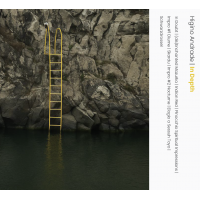
In Depth brims with colors and impressions that lend flexibility to its musical structures. It anchors itself in distinct geographies, their topographical contours almost traced onto the sheet music. Although its cover photograph captures a rock formation with a vivid yellow safety ladder disappearing into a lake, In Depth is closer to a musical rendering of suibokuga, enchanting with its six expansive handscrolls and three suggestive brushstrokes. Ultimately, Andrade and his ensemble leave the listener with a vivid impression of the musical depths they have explored.
 FOLLOW Maciej Stasiowski
and get notified whenever a new article published.
A jazzophile, although open to all sort of cross-pollinations with rock, ambient, new classical.
Track Listing
In Doubt; Mazurka (Des)Encanto; Indian Red; Pinocchio's Spiritual Impressions; Improv #1 Momentum; Skardu; Improv #2 Nocturne; Elogio A Sessuh Toyo; Schwarzdrossel.
Personnel
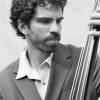
Higino Andrade
bass, acousticAaron Castrillo
drumsDuarte Nuno
pianoFrancisco Andrade
saxophone, tenorAlexandre Andrade
trumpetXavier Sousa
tromboneAlbum information
Title: In Depth | Year Released: 2025 | Record Label: Melro Preto
PREVIOUS / NEXT
About Higino Andrade
Tags
Become a Sustaining Member

Since 1995, All About Jazz has championed jazz as an art form and supported the musicians who create it. Over three decades, it has grown into one of the world's leading jazz resources, serving hundreds of thousands of readers, musicians, presenters and industry professionals each month.
Help Build the Future of All About Jazz
Your support helps us continue building All About Jazz for the next generation—expanding our editorial coverage, preserving jazz history, developing new community features and creating better ways to discover the music and the people behind it.
Become a sustaining member for as little as $20 per year and you'll immediately enjoy an ad-free experience along with access to subscriber features and future articles for a full year.
Together, we're not simply sustaining All About Jazz—we're building its future. Thank you for being part of the journey.